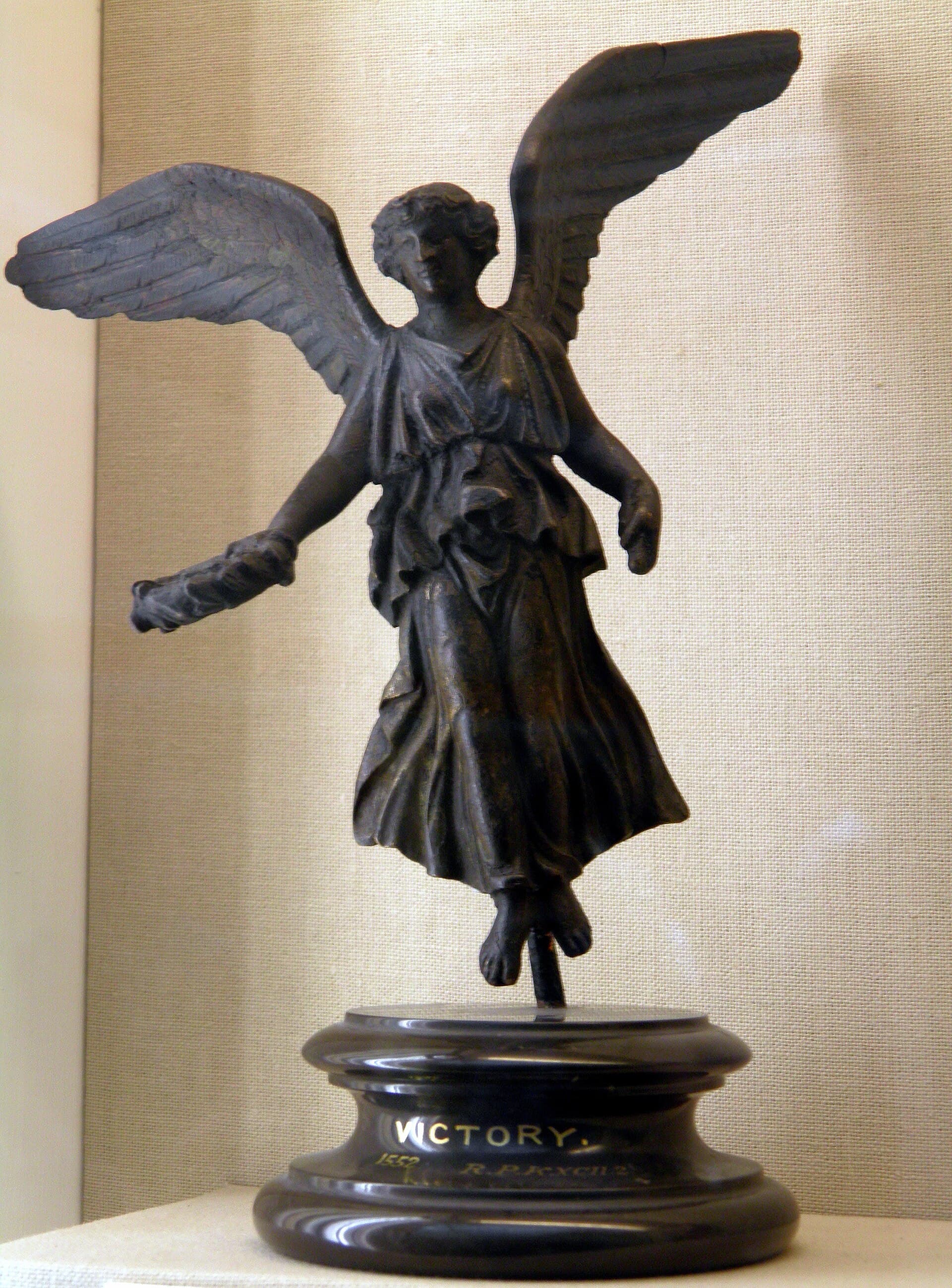
War
Nike
ΝίκηRoman: Victoria
Stands beside the throne of Zeus and lands on whoever has just won.
Marble, Roman, c. 50–100 CE — British Museum
- 2
- epithets
- 3
- cult sites
- 0
- offspring
- 0
- unions
- 1
- recorded birth
Vitals
- Kind
- Personification
- Generation
- 3
- Domains
- victory in war, victory in games, the moment a contest is decided
- Accent
- War — battle, strife, victory
- Sacred symbols
- wings, the palm branch, the wreath, the trophy
- Principal cult sites
- Athens (the temple of Athena Nike), Olympia, Terracina
What they were called
Ἄπτερος
wingless — the Athenian statue with no wings, so victory could not leave
καλλίσφυρος
fair-ankled
Lineage
See in the treeDescent
 MotherStyxHesiod, Theogony
Her father is the Titan Pallas, son of Krios, who is not in the v1 roster.
Offspring in this roster
None recorded among the figures modelled here.
Notable myths
First to the Muster
Styx brought Zelos, Nike, Kratos and Bia to Olympos before the war began. Zeus honoured them for coming first, and they have never had a house or a road of their own since: they go where he goes and sit where he sits. Victory in Greek thought is not a thing you earn and keep. It is a divine attendant standing next to somebody else.
Hesiod, Theogony 383-403
The account
Nike is one of four children Styx brought to Zeus at the start of the war and left there permanently: Zelos, Nike, Kratos and Bia — Rivalry, Victory, Power and Force. Hesiod says they have no house apart from Zeus and no seat except where he leads them, and that they dwell with him forever. That is a precise theological claim about where victory comes from. She has almost no narrative and an enormous presence in art, because she is the figure you put on a monument: winged, alighting, robes still moving from the descent, usually crowning someone or setting up a trophy. Athens built her a small temple on the bastion beside the entrance to the Acropolis, and the cult statue there had no wings — Pausanias reports the Athenians explaining that they had made her wingless so that she would stay. She merges steadily with Athena, who is worshipped there as Athena Nike, and in Roman hands she becomes Victoria and stands over the empire's coinage for four hundred years.
Ancient sources
- Hesiod, Theogony 383-385
- Hesiod, Theogony 383-403
Where a line reference is not given, the work is cited without one rather than guessed at.
Image credit
- Title
- Flying Nike, goddess of Victory, Roman AD 50-100, Winning at the ancient Games, British Museum (7667181532)
- Artist
- Carole Raddato from FRANKFURT, Germany
- Date
- Unknown
- Licence
- CC BY-SA 2.0
.jpg)