Wisdom
The Muses
ΜοῦσαιRoman: Camenae
Told Hesiod to his face that they can tell lies that sound exactly like the truth.
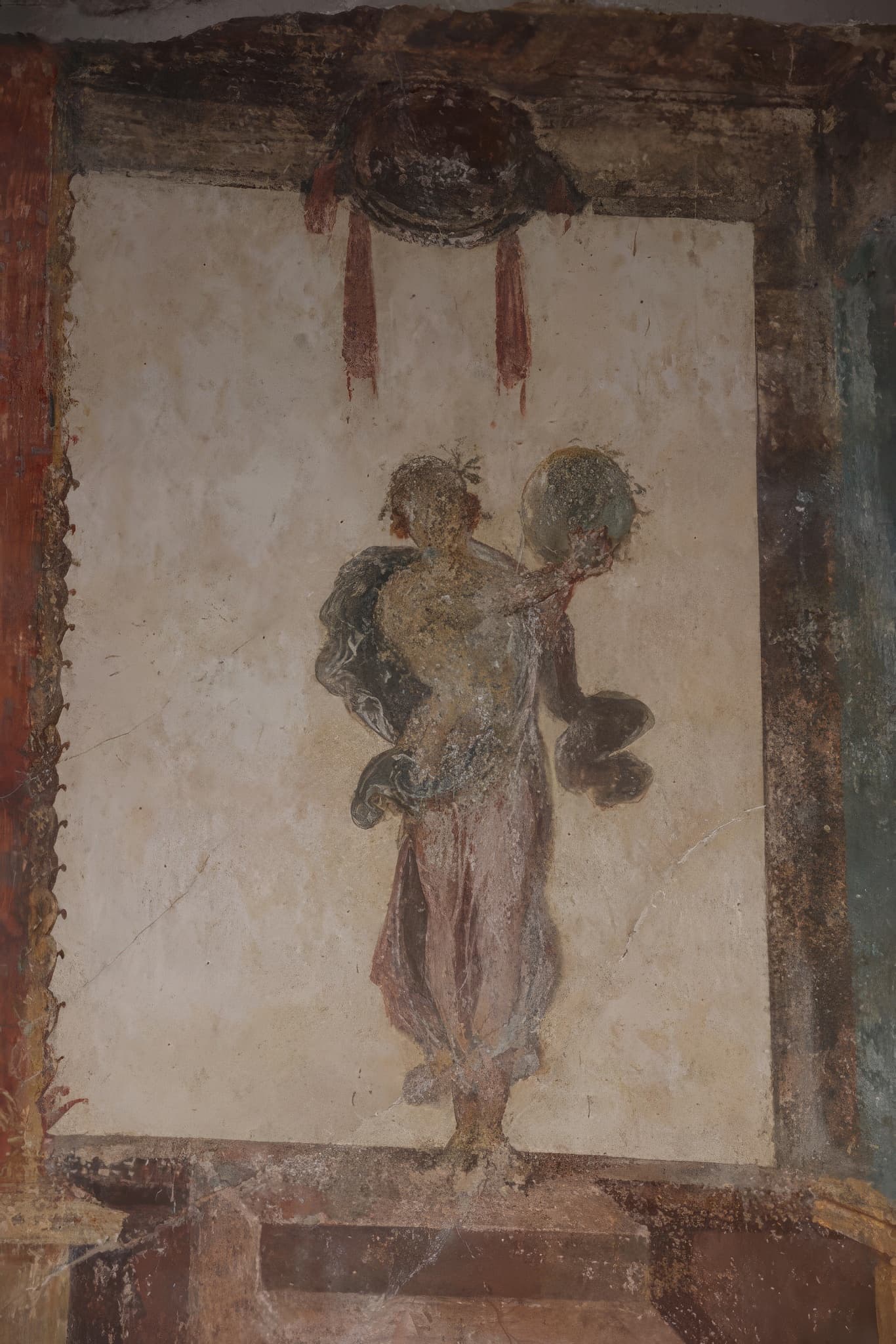
Wall painting, House of the Vettii, Pompeii — 1st century BCE–1st century CE
- 3
- epithets
- 4
- cult sites
- 0
- offspring
- 0
- unions
- 1
- recorded birth
Vitals
- Kind
- Collective
- Generation
- 3
- Domains
- song, the recall of what happened, the authority of a poem
- Accent
- Wisdom — counsel, craft, memory, cunning
- Sacred symbols
- the laurel staff, the lyre, the spring on Helikon, the writing tablet
- Principal cult sites
- Mount Helikon, Pieria, Delphi, the Mouseion at Alexandria
- Members
- Kalliope, of epic
- Kleio, of history
- Erato, of love poetry
- Euterpe, of the pipes
- Melpomene, of tragedy
- Polyhymnia, of hymns
- Terpsichore, of dance
- Thaleia, of comedy
- Ourania, of the stars
What they were called
Ὀλυμπιάδες
of Olympos
Πιερίδες
of Pieria, where they were born
ἀρτιέπειαι
of ready speech
Lineage
See in the treeDescent
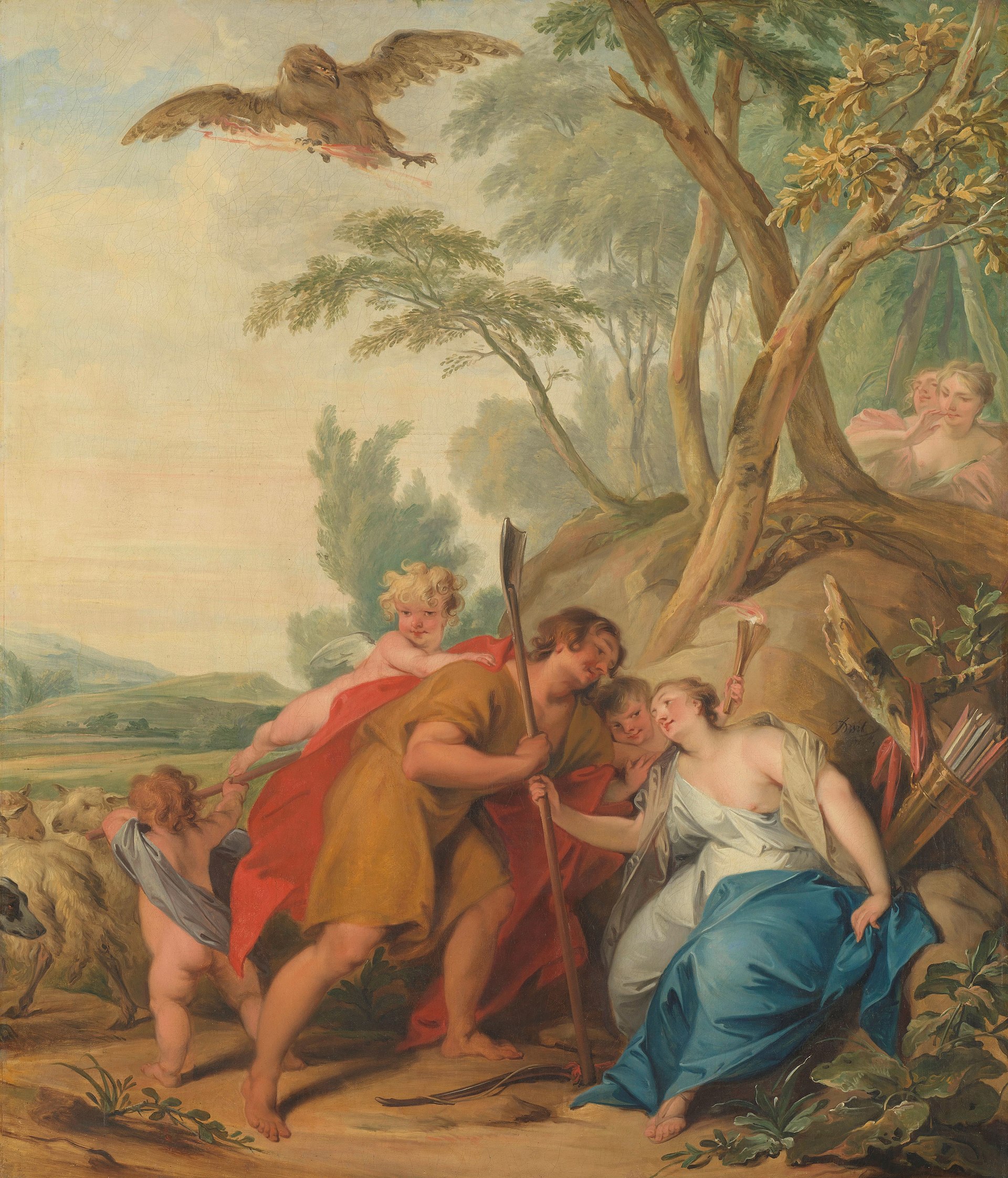 MotherMnemosyneHesiod, Theogony
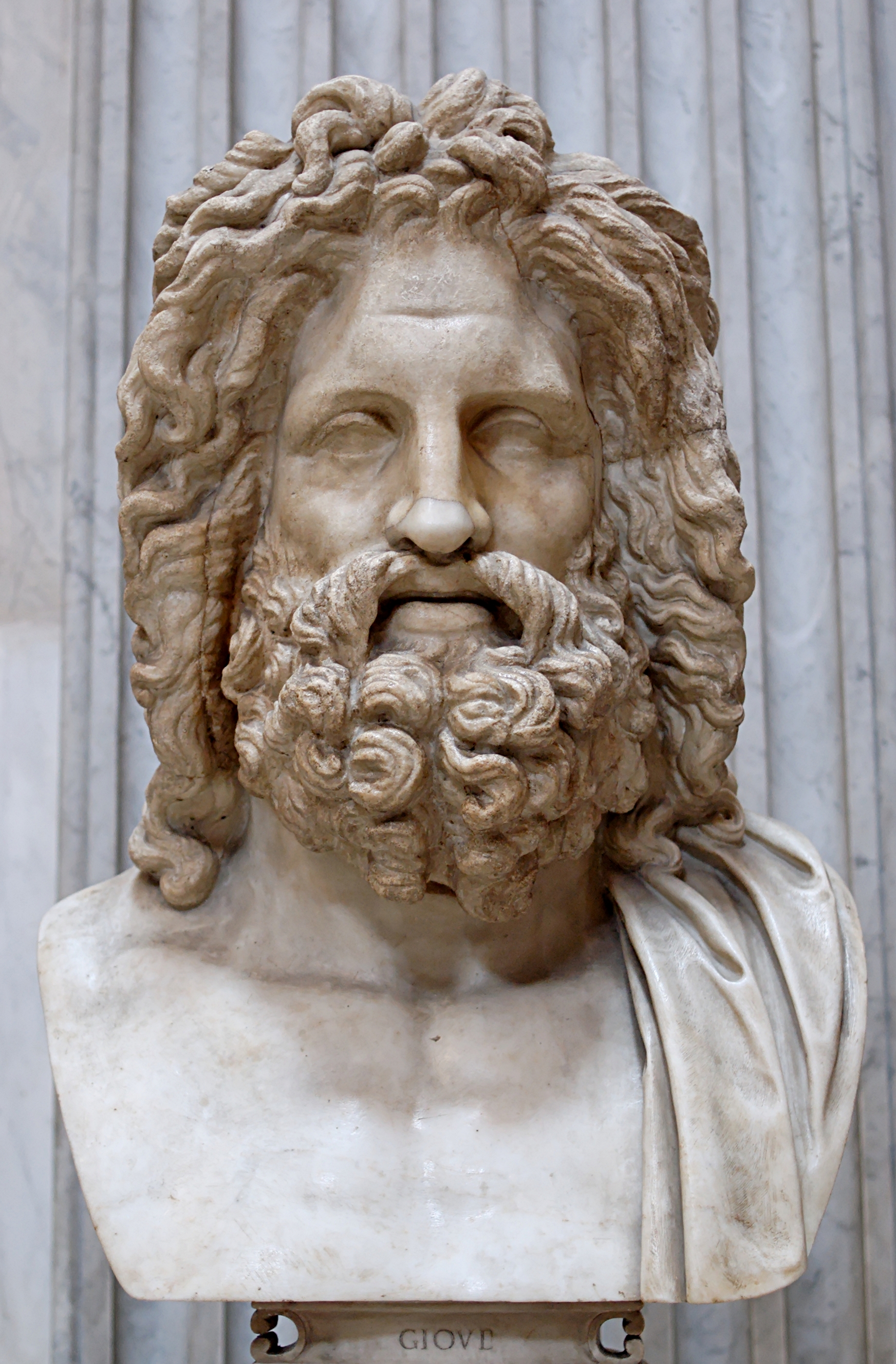 FatherZeusHesiod, Theogony
Nine nights, nine daughters. Memory and power together produce the art that records both.
Offspring in this roster
None recorded among the figures modelled here.
Notable myths
On Helikon
The Muses found Hesiod herding sheep on the slopes of Helikon and taught him song. They began by insulting him, told him plainly that they could make convincing falsehoods when they chose, handed him a laurel branch and put a divine voice in him so that he could sing of what will be and what was. He names himself in the passage, which almost no archaic poet does.
Hesiod, Theogony 22-34
Thamyris
The Thracian singer Thamyris boasted that he would win even if the Muses themselves competed against him. They met him on the road, maimed him, took away his divine song and made him forget how to play the lyre. Homer mentions it in passing, in a catalogue, as a place-name's explanation.
Homer, Iliad 2.594-600
The account
The Theogony opens with the Muses and with a warning. Hesiod says they came to him while he was pasturing lambs under Helikon, called him and his kind mere bellies, and said: we know how to say many false things that resemble the truth, and we know, when we want to, how to speak the truth. Then they gave him a staff of laurel and breathed a voice into him. That is the founding statement of Greek poetics and it is not reassuring. They are Mnemosyne's daughters, born on nine consecutive nights, and their gift is the ability to hold and transmit — in a culture without books, that is the only way anything survives. They also console: Hesiod says a man with grief fresh in his heart who hears a singer forgets it entirely. Kalliope is the eldest and attends on kings, putting sweetness on the tongue of a ruler so that people accept his judgements. The nine specialisations everyone knows — tragedy, astronomy, dance — are a much later Hellenistic tidying.
Ancient sources
- Hesiod, Theogony 53-62
- Hesiod, Theogony 22-34
- Homer, Iliad 2.594-600
Where a line reference is not given, the work is cited without one rather than guessed at.
Image credit
- Title
- House of the Vettii VI 15,1 Pompeii 2023 Painted figure of Muse Urania, from west end of south wall of oecus courtesy of Klaus Heese
- Artist
- Unknown 1st century CE Roman artist; original photography by Klaus Heese
- Date
- 1st century BCE - 1st century CE
- Licence
- Public domain
