Sun
Apollo
ἈπόλλωνRoman: Apollo
Answers every question truthfully and in a form nobody understands until afterwards.
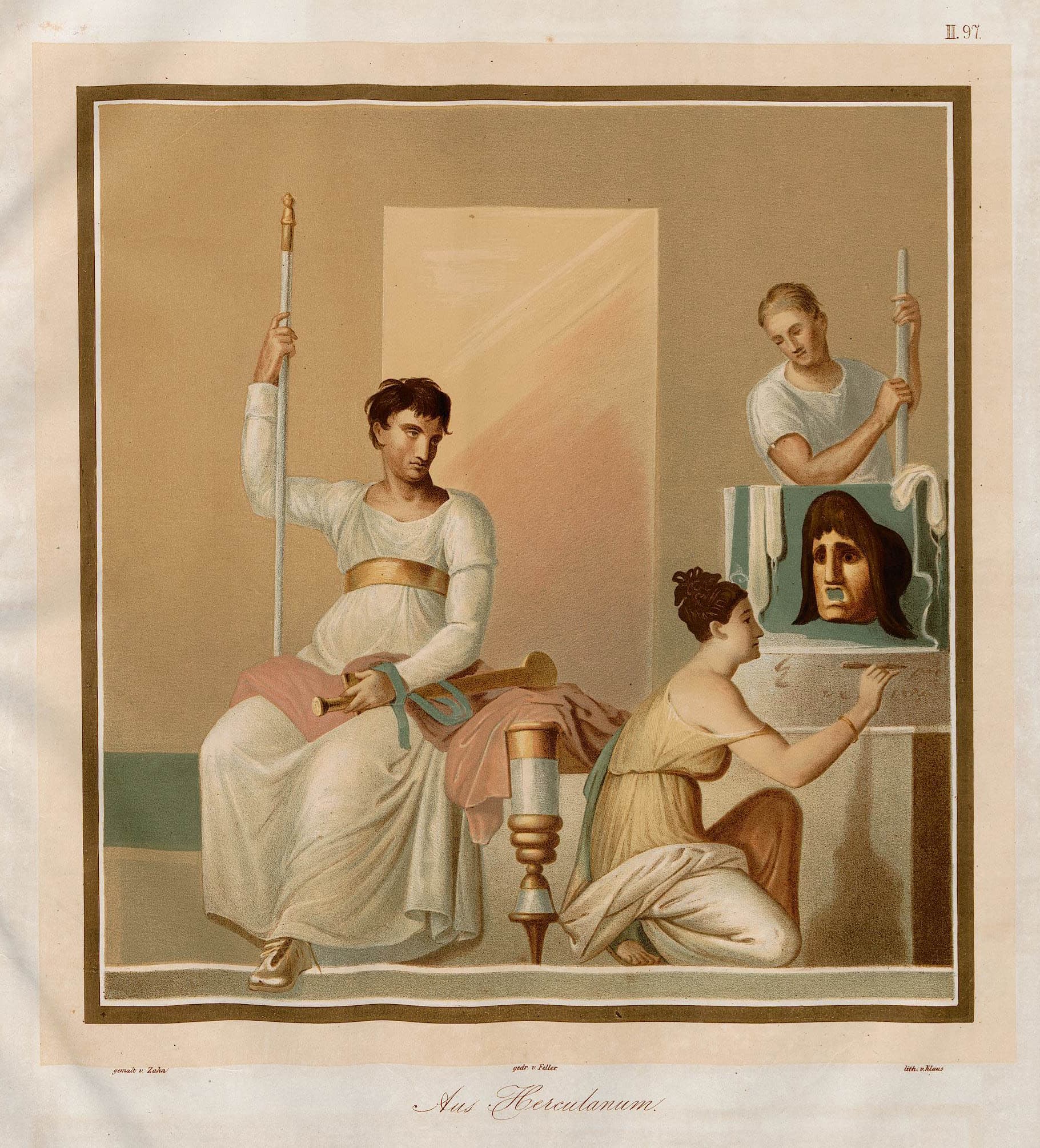
Engraving after a fresco from Herculaneum — Wilhelm Zahn, before 1871
- 5
- epithets
- 4
- cult sites
- 0
- offspring
- 0
- unions
- 1
- recorded birth
Vitals
- Kind
- Olympian
- Generation
- 3
- Domains
- prophecy, music, plague and healing, the archer's distance
- Accent
- Sun — daylight, the dawn, far-shooting brightness
- Sacred symbols
- the lyre, the silver bow, the laurel, the tripod, the raven
- Principal cult sites
- Delphi, Delos, Didyma, Klaros
What they were called
Φοῖβος
bright — inherited from his great-grandmother Phoibe
Ἑκηβόλος
who shoots from far off
Λοξίας
the slanting one, the oblique speaker
Μουσαγέτης
leader of the Muses
Σμινθεύς
of mice — the god who sends plague and lifts it
Lineage
See in the tree
Offspring in this roster
None recorded among the figures modelled here.
Notable myths
Nine Days of Arrows
Agamemnon refused to return the daughter of Apollo's priest and insulted the old man. The priest walked down the beach and prayed. Apollo came from the peaks of Olympos with his bow, angry, and shot for nine days — first the animals, then the men — until the pyres were burning continuously and the Greeks worked out what they had done.
Homer, Iliad 1.43-52
Marsyas
The satyr Marsyas found the pipes Athena had thrown away and became good enough to challenge Apollo to a contest. Apollo won — by turning his lyre upside down and playing it, which Marsyas could not do with a flute — and the agreed forfeit was that the winner could do whatever he liked to the loser. He hung him from a pine and flayed him alive. Ovid tells it at length and does not soften it.
Ovid, Metamorphoses 6.382-400 (Roman-era)
The account
The Iliad opens with Apollo and it opens badly: a priest is insulted, Apollo comes down from Olympos like nightfall, and his arrows kill the mules, the dogs and then the men for nine days. That is the god the Greeks actually had — not sunlight and reason, but distance and precision, the power that can reach you from where you cannot reach it. He is also the source of every important prophecy in the tradition. The Delphic oracle was consulted by cities before founding colonies and going to war, and the answers were notoriously slanted; his title Loxias means the oblique one. He never lies and is almost never understood. Music is his in the same register: he invented nothing, he took the lyre from Hermes in exchange for the cattle Hermes had stolen from him hours after being born, and thereafter led the Muses. Healing and plague are one department, which is exact rather than paradoxical — the god who can stop an epidemic is the one who sent it.
Ancient sources
- Hesiod, Theogony 918-920
- Homer, Iliad 1.43-52
- Ovid, Metamorphoses 6.382-400
Where a line reference is not given, the work is cited without one rather than guessed at.
Image credit
- Title
- Fresco from Herculaneum by Wilhelm Zahn (Apollo, god of music and the arts, watching a female artist)
- Artist
- Wilhelm Zahn (d. 1871)
- Date
- before 1871
- Licence
- Public domain
.jpg)