Night
Leto
ΛητώRoman: Latona
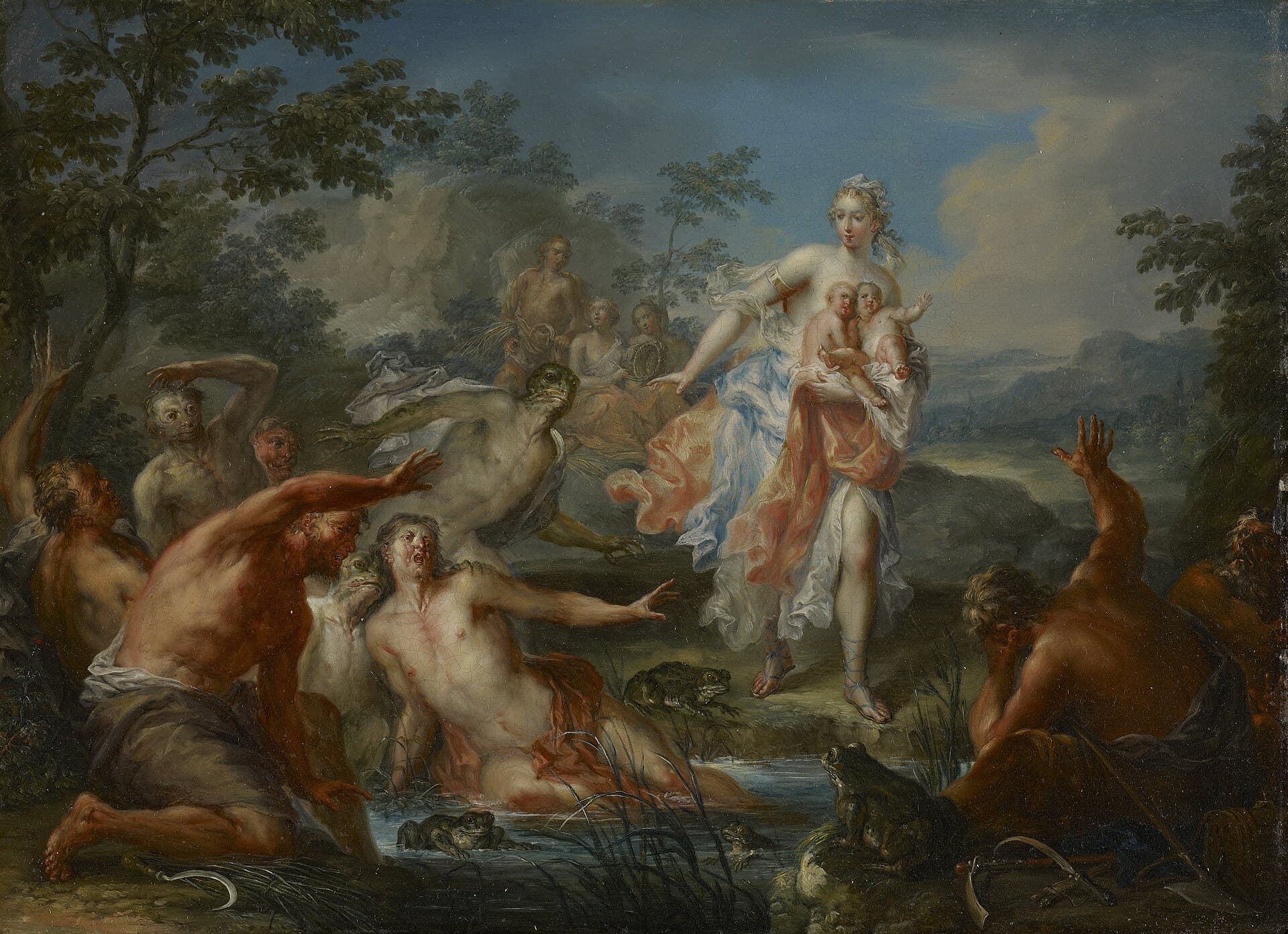
Nine days in labour, refused by every land that feared Hera.
Johann Georg Platzer, 1730
- 2
- epithets
- 3
- cult sites
- 2
- offspring
- 1
- union
- 1
- recorded birth
Vitals
- Kind
- Titan
- Generation
- 2
- Domains
- motherhood, modesty, the protection of the young
- Accent
- Night — darkness, the moon, sleep, the crossroads
- Sacred symbols
- the palm tree of Delos, the veil
- Principal cult sites
- Delos, Lykia, Argos
What they were called
κυανόπεπλος
dark-robed
ἠΰκομος
lovely-haired
Lineage
See in the tree
Offspring in this roster
Notable myths
The Rock That Said Yes
Every land refused the labouring Leto out of fear of Hera until she came to Delos, which was poor enough to bargain. Delos asked for a promise that the child would not despise the island and push it under the sea, and Leto swore by the Styx that Apollo's first temple would stand there. Nine days later, holding a palm tree, she bore him, and the island turned to gold.
Homeric Hymns, Hymn to Apollo 25-126
The account
Leto is pregnant by Zeus and cannot find anywhere to give birth. Hera has forbidden any land to receive her, and the Homeric Hymn lists the places that refused, one after another, until she reaches Delos — a bare rock with nothing to lose — and asks. Delos is afraid the god will be born, look at the poor stony ground and kick it into the sea, so Leto swears a great oath by the Styx that Apollo will keep his first temple there. Then she is nine days and nine nights in hard labour, because Hera has kept Eileithyia, the goddess of childbirth, from hearing about it; the other goddesses eventually bribe Eileithyia to come with a nine-cubit necklace. She bears Artemis and Apollo, and afterwards her role is entirely as their mother — most visibly when Niobe boasts of having fourteen children to Leto's two, and the two shoot all fourteen. She is honoured, in the end, exactly in proportion to what her children can do.
Ancient sources
- Hesiod, Theogony 404-410
- Homeric Hymns, Hymn to Apollo 25-126
Where a line reference is not given, the work is cited without one rather than guessed at.
Image credit
- Title
- Latona Turning the Lycian Peasants into Frogs
- Artist
- Johann Georg Platzer
- Date
- 1730
- Licence
- Public domain
