Fate
Phoibe
ΦοίβηRoman: Phoebe
Held the Delphic oracle, and handed it to her grandson as a birthday gift.
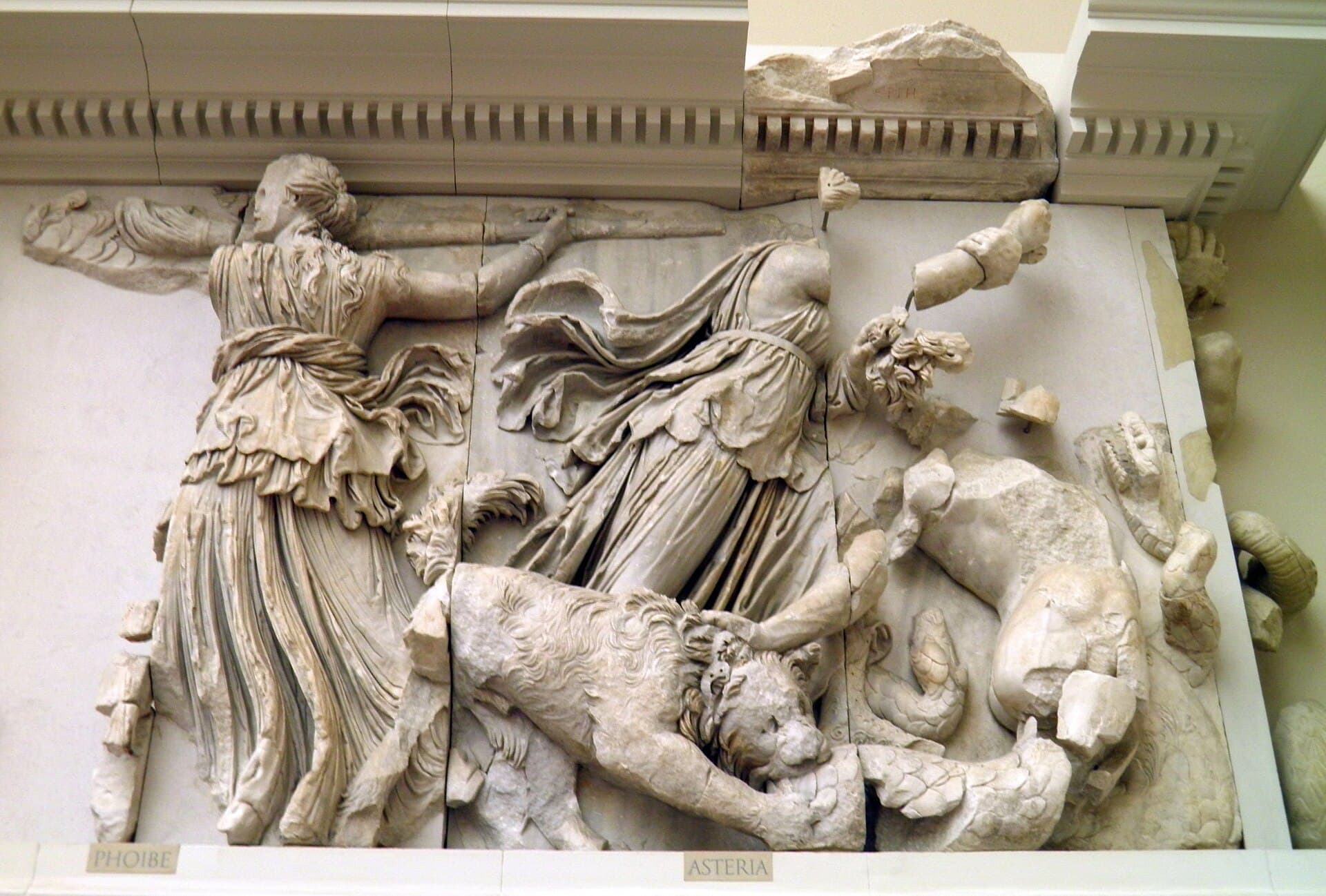
Marble frieze, Pergamon Altar, south frieze — Pergamon Museum, Berlin
- 2
- epithets
- 1
- cult site
- 2
- offspring
- 1
- union
- 1
- recorded birth
Vitals
- Kind
- Titan
- Generation
- 1
- Domains
- prophecy, the oracle at Delphi before Apollo
- Accent
- Fate — allotment, law, retribution, prophecy
- Sacred symbols
- the laurel, the tripod
- Principal cult sites
- Delphi
What they were called
χρυσοστέφανος
gold-crowned
Φοίβη
bright, radiant
Lineage
See in the tree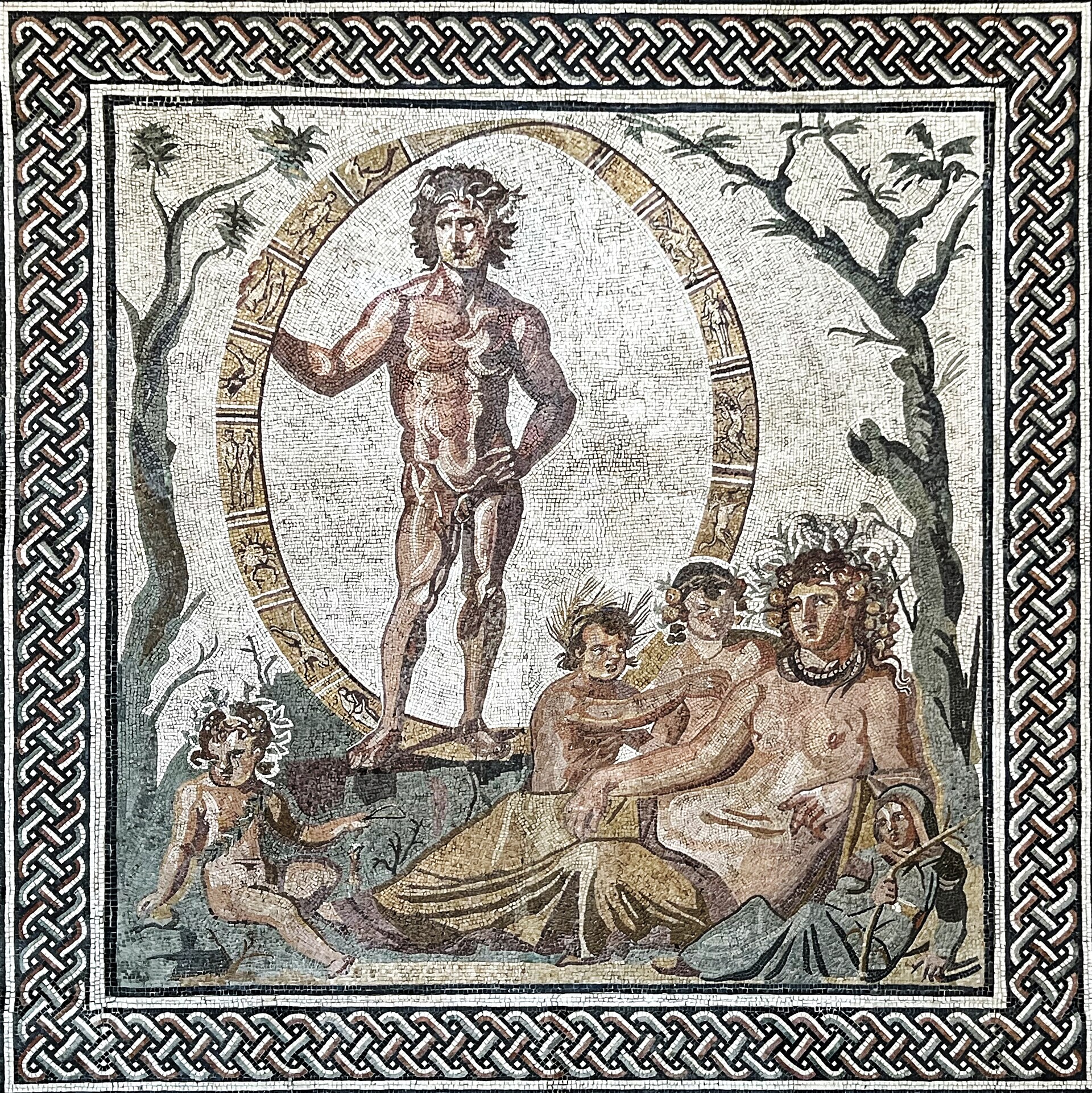
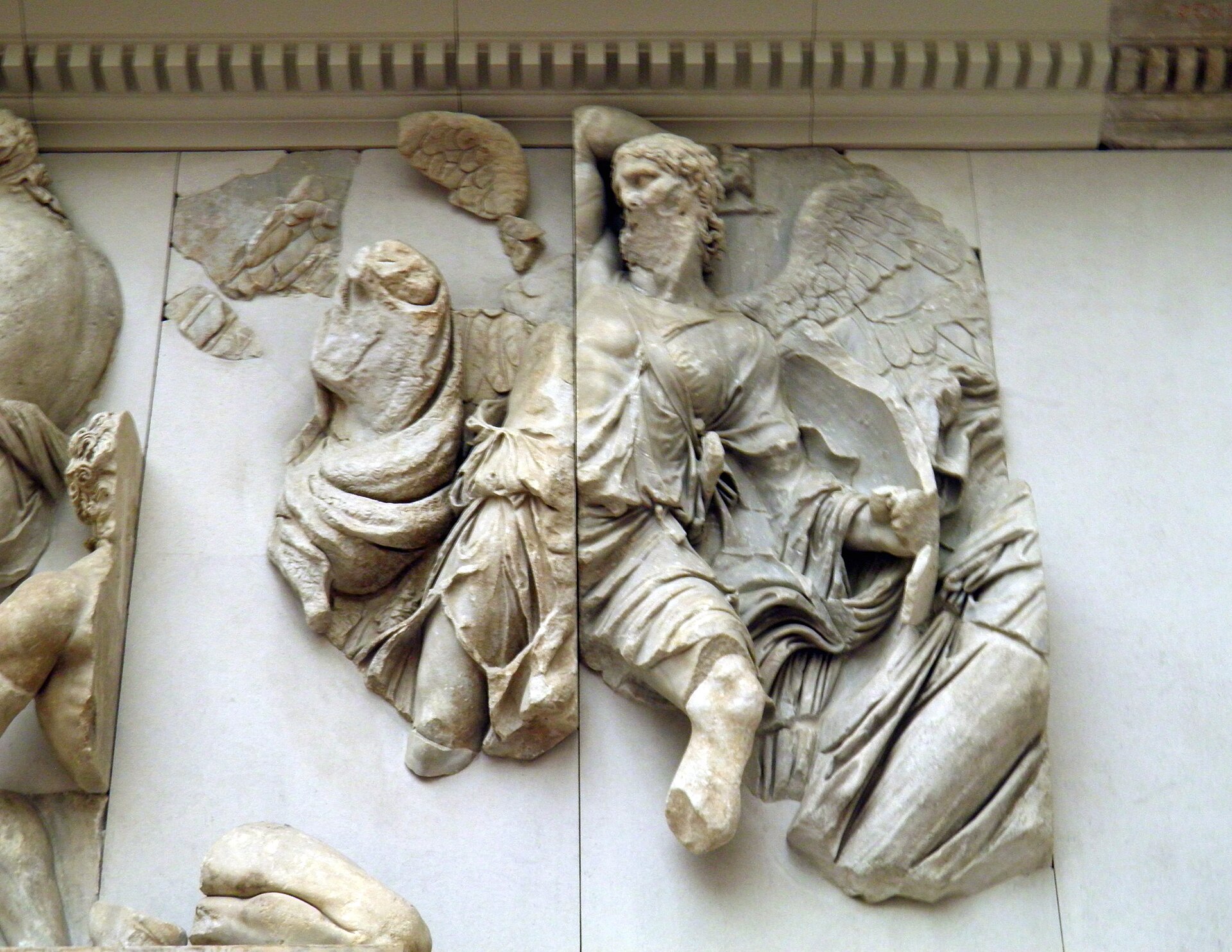
Offspring in this roster
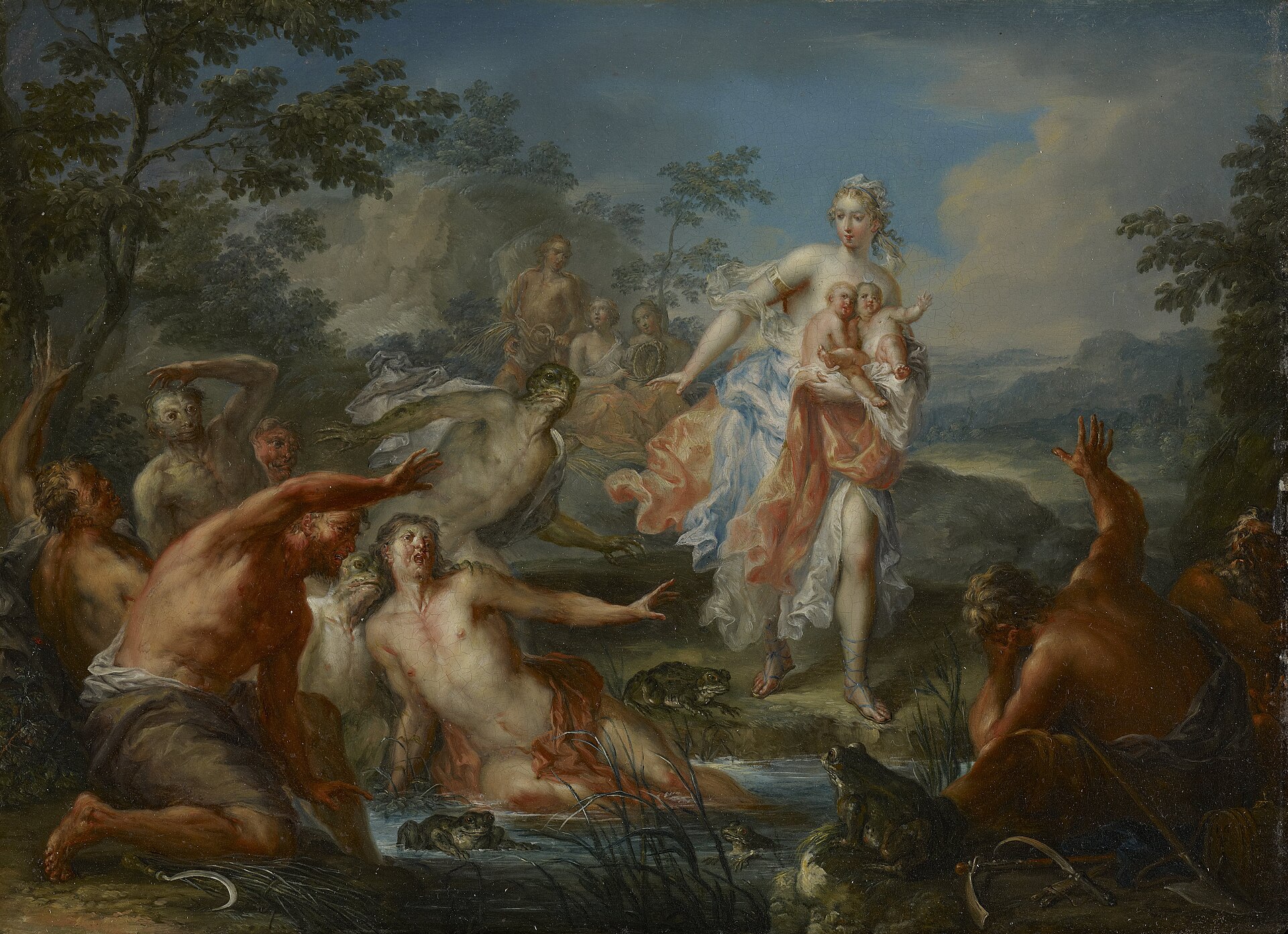
Notable myths
The Succession at Delphi
Aeschylus has the Delphic priestess open the play by naming the oracle's owners in order: Gaia first, then Themis her daughter, then Phoibe, who gave the seat to Apollo as a birth-gift and lent him her name. It is a legal account of a takeover, offered as an alternative to the version where Apollo kills what he finds there.
Aeschylus, Eumenides 1-8
The account
Aeschylus gives Phoibe the one detail that makes her matter. In the opening speech of the Eumenides the Pythia recites the succession of Delphi: Gaia held the oracle first, then gave it to Themis, then Themis to Phoibe, and Phoibe gave it to Apollo as a birth-gift, and he took her name with it. That line quietly resolves an awkward question — how a young god came to hold the oldest oracle in Greece — by making the transfer a gift within a family rather than a seizure. The other Delphic story, in which Apollo simply kills the serpent Python and takes the site, does not agree with it, and both were current. Phoibe's own genealogy runs the other way: with Koios she bore Leto, Apollo's mother, and Asteria, Hekate's. So Apollo's title Phoibos is his great-grandmother's name, and it arrives by inheritance rather than by conquest.
Ancient sources
- Hesiod, Theogony 132-138
- Aeschylus, Eumenides 1-8
Where a line reference is not given, the work is cited without one rather than guessed at.
Image credit
- Title
- Phoebe & Asteria, South Frieze, Gigantomachy Frieze, Pergamon Altar, Pergamon Museum, Berlin (5902793948)
- Artist
- Carole Raddato from FRANKFURT, Germany
- Date
- Unknown
- Licence
- CC BY-SA 2.0
.jpg)