Messenger
Hermes
ἙρμῆςRoman: Mercurius
Stole a herd of cattle before lunch on the day he was born.
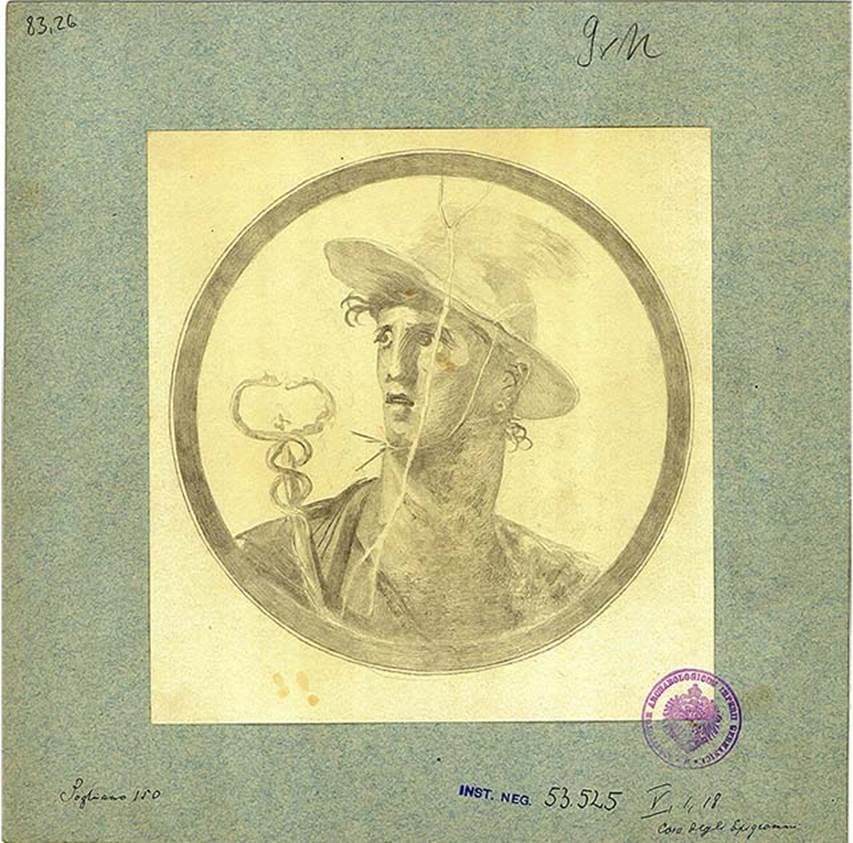
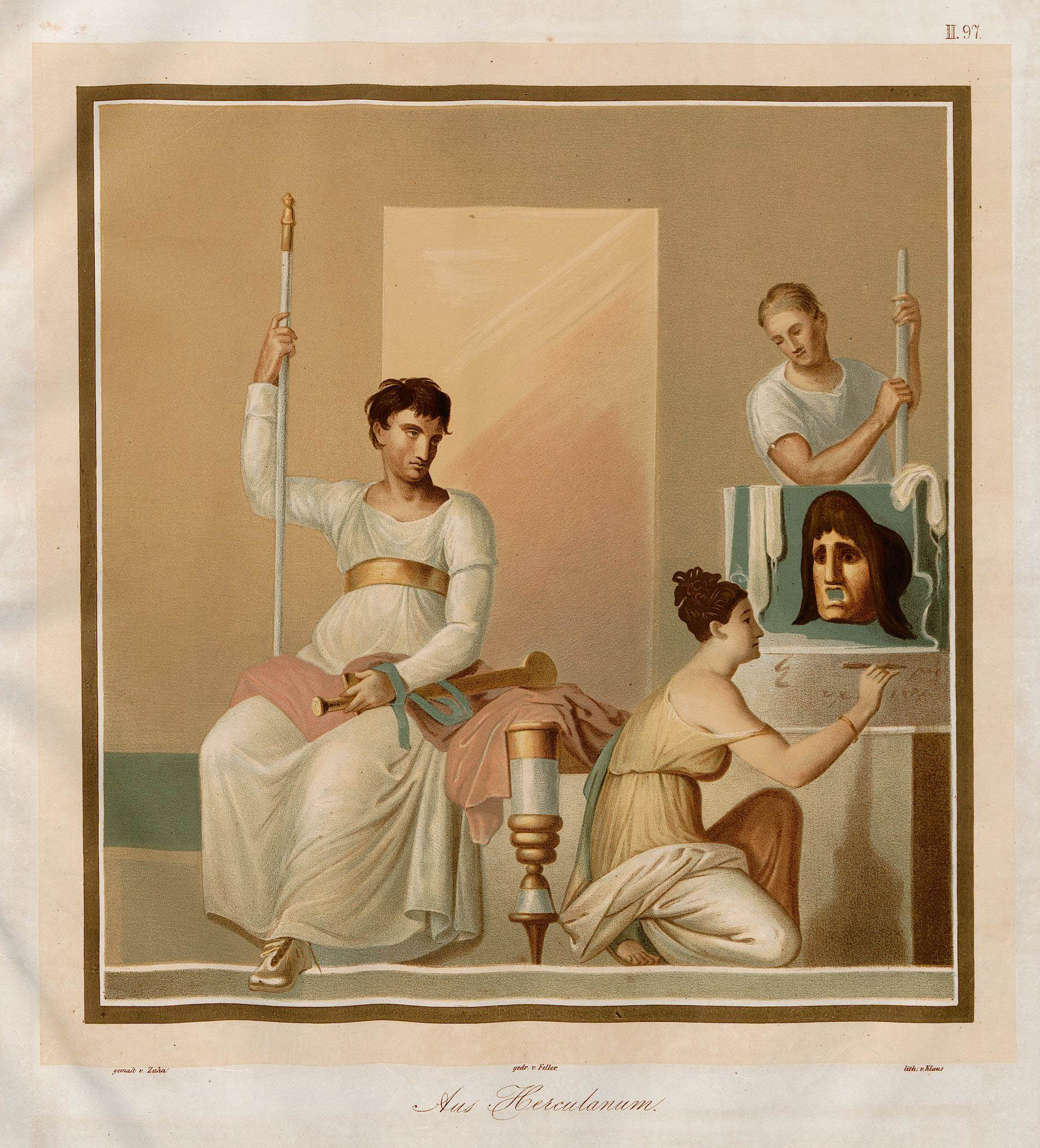
Drawing after a Pompeian wall painting — German Archaeological Institute, 1877
- 4
- epithets
- 3
- cult sites
- 1
- offspring
- 0
- unions
- 1
- recorded birth
Vitals
- Kind
- Olympian
- Generation
- 4
- Domains
- boundaries and crossings, messages, theft and trade, guiding the dead
- Accent
- Messenger — crossings, errands, the rainbow
- Sacred symbols
- the kerykeion, winged sandals, the traveller's hat, the herm at the roadside
- Principal cult sites
- Mount Kyllene, Athens, roadsides and boundary stones everywhere
What they were called
Ἀργειφόντης
slayer of Argos
Ψυχοπομπός
guide of souls
διάκτορος
the runner, the one who gets through
δολοφραδής
deviser of tricks
Lineage
See in the tree
Notable myths
The First Day
Born at dawn on Kyllene, Hermes climbed out of the cradle, found a tortoise at the door and made the first lyre from its shell, then walked to Pieria and took fifty of Apollo's cattle, driving them backwards so the tracks pointed the wrong way and wearing brushwood sandals to hide his own. Caught out and hauled to Zeus, he lied fluently. Then he played the lyre, Apollo wanted it more than the cattle, and they traded.
Homeric Hymns, Hymn to Hermes 17-573
Priam in the Greek Camp
Priam went alone at night into the camp of the army besieging his city to beg for his son's body. Zeus sent Hermes, who met him in the dark as a young man, put the sentries to sleep, drove the wagon through the gate and left him at Achilles' door. Then he woke him before dawn so he could get out again.
Homer, Iliad 24.331-694
The account
Hermes was born in the morning, invented the lyre by lunchtime, stole Apollo's cattle in the afternoon and was back in his cradle pretending to be a baby by evening. The Homeric Hymn tells it as comedy and it is the best joke in Greek religion: dragged before Zeus, he denies everything in a speech of transparent and confident lies, and Zeus laughs. He is the god of every kind of crossing — from one place to another, from one owner to another, from one world to the next. He carries messages, escorts the dead down, guides Priam through the Greek camp at night, brings Persephone back up, and stands as a stone pillar at the edge of a property or a road. Theft and commerce are the same department because both are transfers, and the Greeks were relaxed about the overlap. He is also the god who solves things: sent to kill hundred-eyed Argos, sent to make Kalypso let Odysseus go, sent to hand out whatever Zeus has decided.
Ancient sources
- Hesiod, Theogony 938-939
- Homeric Hymns, Hymn to Hermes 17-573
- Homer, Iliad 24.331-694
Where a line reference is not given, the work is cited without one rather than guessed at.
Image credit
- Title
- Medallion from the atrium of the House of the Greek Epigrams Pompeii depicting Hermes (Mercury) with petasus and caduceus 1877
- Artist
- German Archaeological Institute, Roman Department, unidentified painters;
- Date
- 1877
- Licence
- Public domain
_with_petasus_and_caduceus_1877.jpg)