Sea
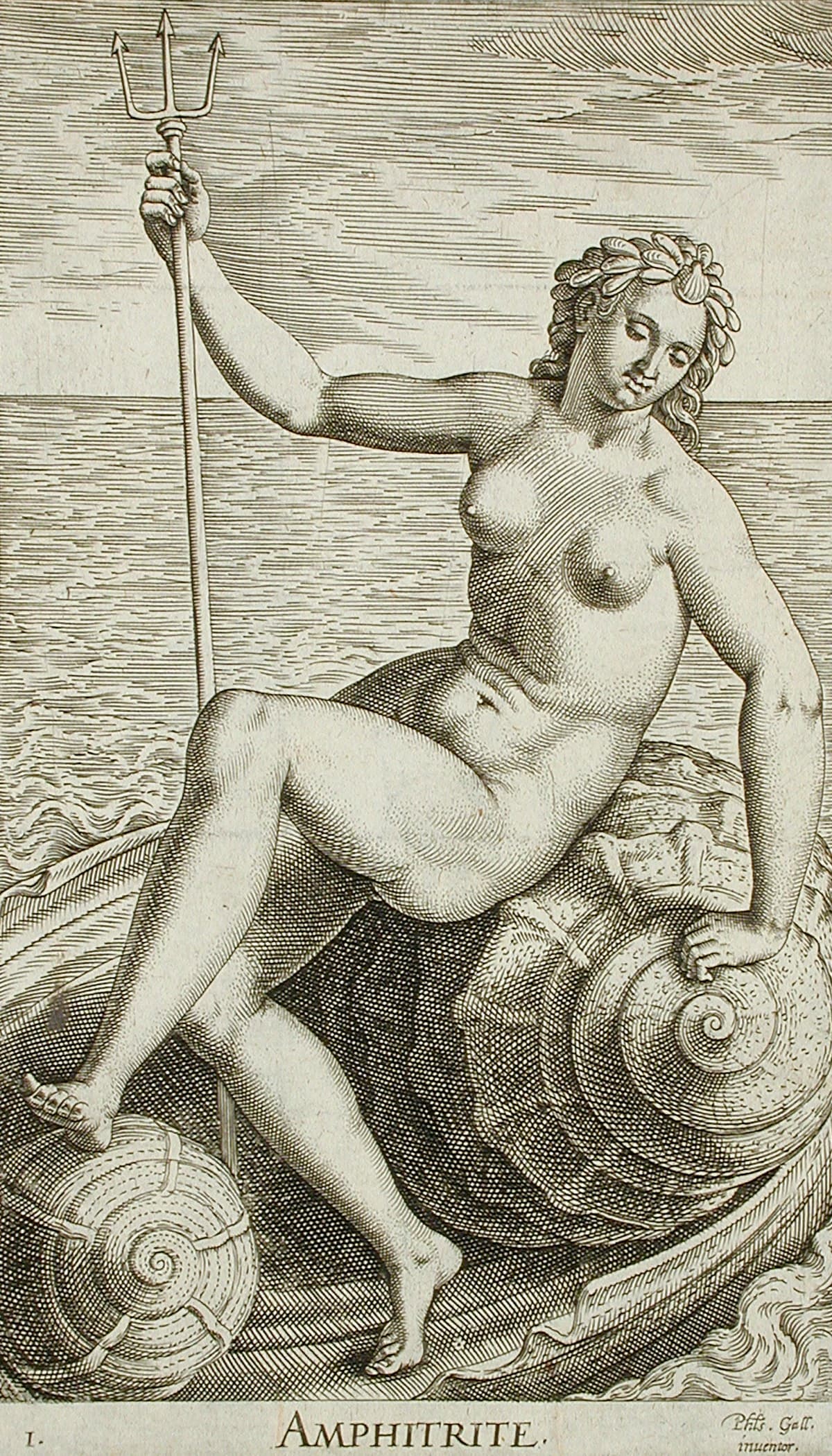
Amphitrite
ἈμφιτρίτηRoman: Salacia
Ran to the ends of the earth to avoid marrying the sea, and was talked back by a dolphin.
Engraving, 1587 — LACMA M.88.91.381b
- 2
- epithets
- 3
- cult sites
- 1
- offspring
- 1
- union
- 1
- recorded birth
Vitals
- Kind
- Nymph
- Generation
- 2
- Domains
- the sea's surface, the swell, the queenship of the water
- Accent
- Sea — salt and fresh water, the swell, the river
- Sacred symbols
- the crab-claw crown, the net, the dolphin
- Principal cult sites
- Tenos, Syros, Corinth
What they were called
κυανῶπις
dark-eyed
ἁλοσύδνη
sea-born
Lineage
See in the treeDescent
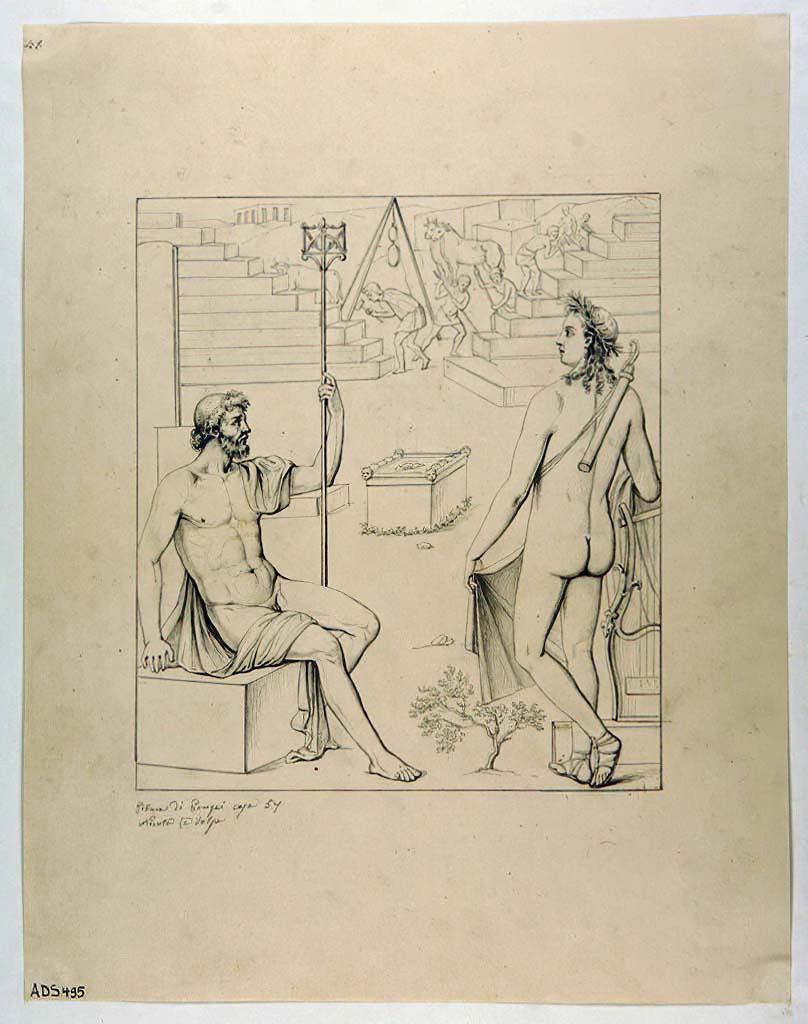
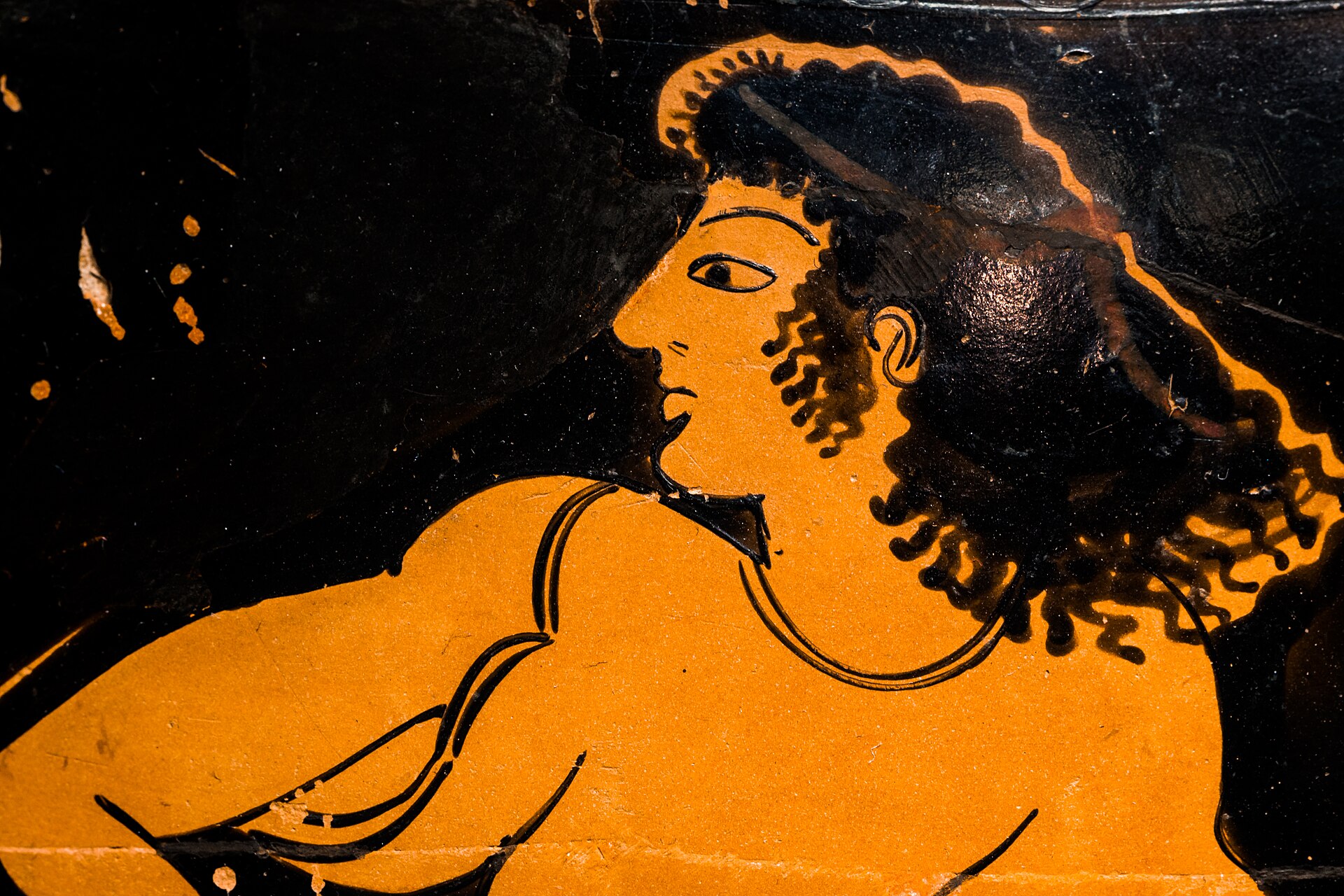 FatherNereusApollodorus, Bibliotheca
Her mother is the Okeanid Doris, outside the v1 roster. Hesiod counts Amphitrite among the fifty Nereids; a separate tradition makes her an Okeanid instead.
Offspring in this roster
Notable myths
The Dolphin's Errand
Amphitrite fled Poseidon's proposal to the furthest edge of the sea, where Atlas stands. Poseidon sent searchers, and a dolphin located her and made the case for the marriage persuasively enough that she consented. For the service the dolphin was set among the stars, which is the constellation Delphinus.
Hyginus, De Astronomica 2.17 (Roman-era)
The account
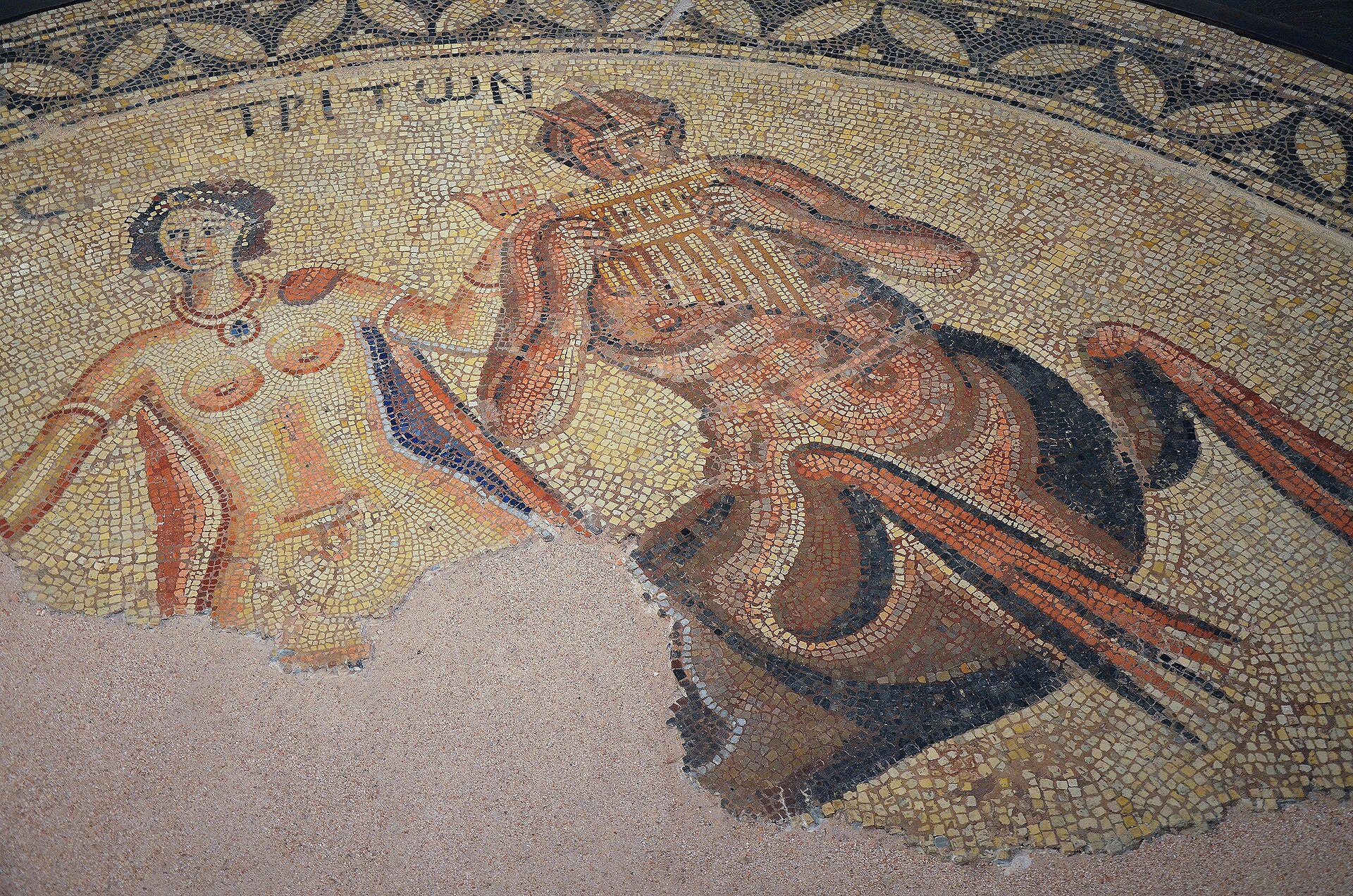
Amphitrite is the queen of the sea and, unusually for a Greek marriage story, she got a negotiation. Poseidon wanted her; she went off to Atlas at the far edge of the world to avoid it. He sent messengers, and a dolphin found her and argued the case so well that she agreed to come back — and Poseidon put the dolphin in the sky as a constellation for it. That is a version in which the woman is persuaded rather than seized, and the Greeks kept a monument to the persuasion. Homer uses her name almost as a synonym for the sea itself: the loud-moaning Amphitrite, where the sea-monsters are, over which Odysseus travels. She and Poseidon have Triton, and in the Odyssey it is she who breeds the creatures that Charybdis and the rest belong to. In art she rides beside her husband in the chariot drawn by hippocamps, wearing a net over her hair and crab claws in it. She is one of very few figures here who is worshipped as a queen and not as a function.
Ancient sources
- Apollodorus, Bibliotheca 1.2.7
- Hyginus, De Astronomica 2.17
Where a line reference is not given, the work is cited without one rather than guessed at.
Image credit
- Title
- Amphitrite
- Artist
- Philip Galle (Holland, Haarlem, 1537-1612)
- Date
- 1587
- Licence
- Public domain
