Revel
Hebe
ἭβηRoman: Iuventas
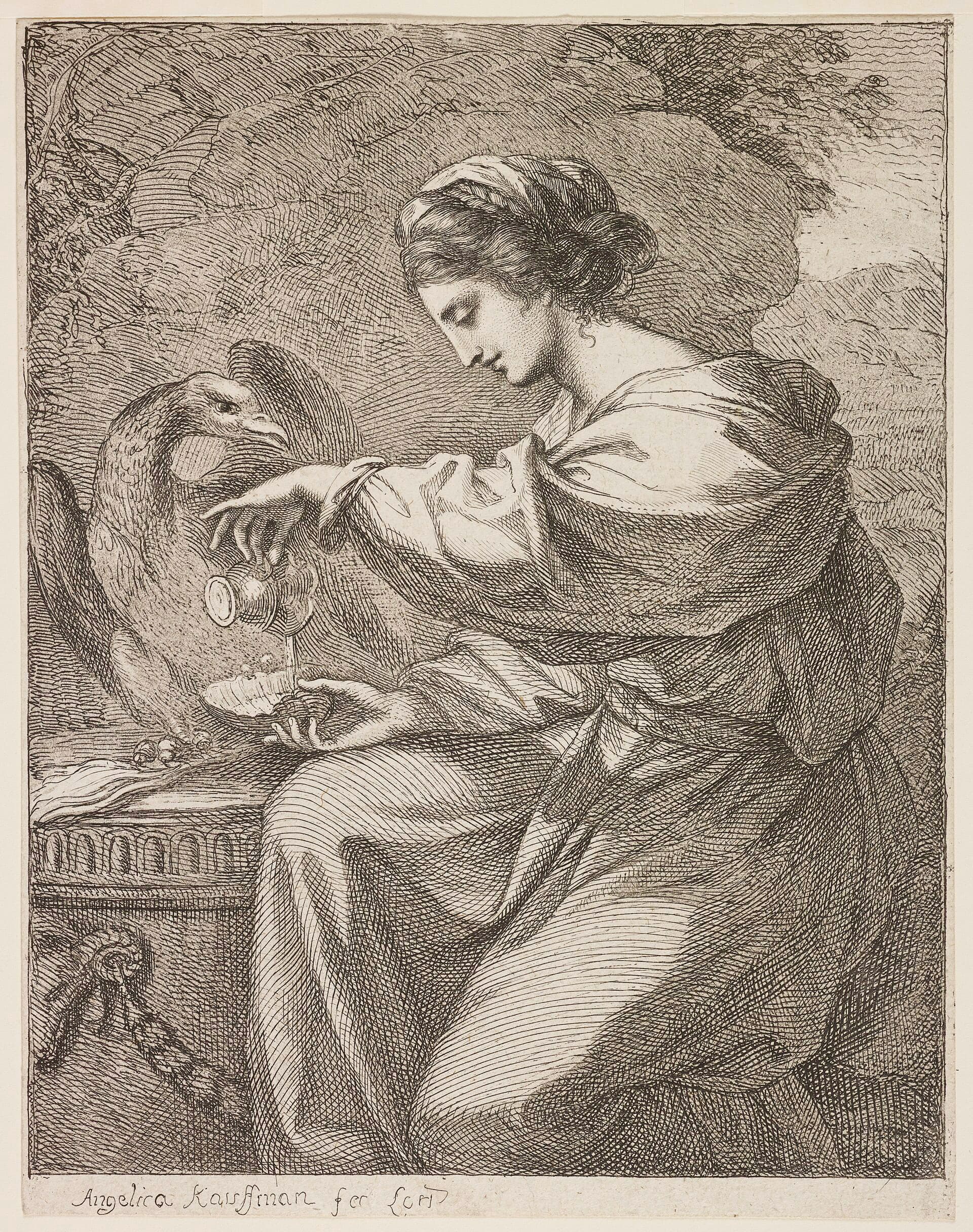
Poured the nectar until a Trojan boy was brought up to do it instead.
1770 — Museum of New Zealand Te Papa Tongarewa
- 2
- epithets
- 3
- cult sites
- 0
- offspring
- 0
- unions
- 1
- recorded birth
Vitals
- Kind
- Minor god
- Generation
- 3
- Domains
- youth, the cup at the feast, the prime of life
- Accent
- Revel — wine, theatre, youth, release
- Sacred symbols
- the wine cup, the pitcher, ivy
- Principal cult sites
- Phlious, Sikyon, Athens
What they were called
καλλίσφυρος
fair-ankled
Δία
her Phliasian cult name, meaning the freer
Lineage
See in the tree
Offspring in this roster
None recorded among the figures modelled here.
Notable myths
The Grove with No Statue
At Phlious, Pausanias found a sanctuary of Hebe in a cypress grove, where the goddess was worshipped under the name Dia and there was no image of her — the old statue, he was told, had been hidden, and none had replaced it. The place gave asylum, and freed prisoners hung their fetters on the trees.
Pausanias, Description of Greece 2.13.3-4 (Roman-era)
The account
Hebe is youth in the specific sense of the years when a person is at their physical peak, and her job on Olympos is to pour the nectar. Homer shows her doing it, and also helping her brother Ares out of his armour and washing him after a defeat, and harnessing the horses to Hera's chariot — she is the household's competent young daughter. She is displaced as cupbearer when Zeus takes Ganymede, and the tradition does not comment on how she felt about it. Her marriage is the reward at the end of the longest career in Greek myth: after the pyre on Oita, Herakles is made immortal and given Hebe as his wife, so the man who spent his life on impossible labours gets youth permanently. Her cult at Phlious was unusual and interesting — Pausanias says the sanctuary was a grove of cypresses, that there was no statue, and that it was a place of asylum where suppliants were safe and prisoners who were released hung their chains on the trees.
Ancient sources
- Hesiod, Theogony 921-923
- Pausanias, Description of Greece 2.13.3-4
Where a line reference is not given, the work is cited without one rather than guessed at.
Image credit
- Title
- MA I386039 TePapa Hebe full
- Artist
- Angelica Kauffmann
- Date
- 1770
- Licence
- Public domain
