War
Ares
ἌρηςRoman: Mars
Everything about war that nobody wants to say out loud.
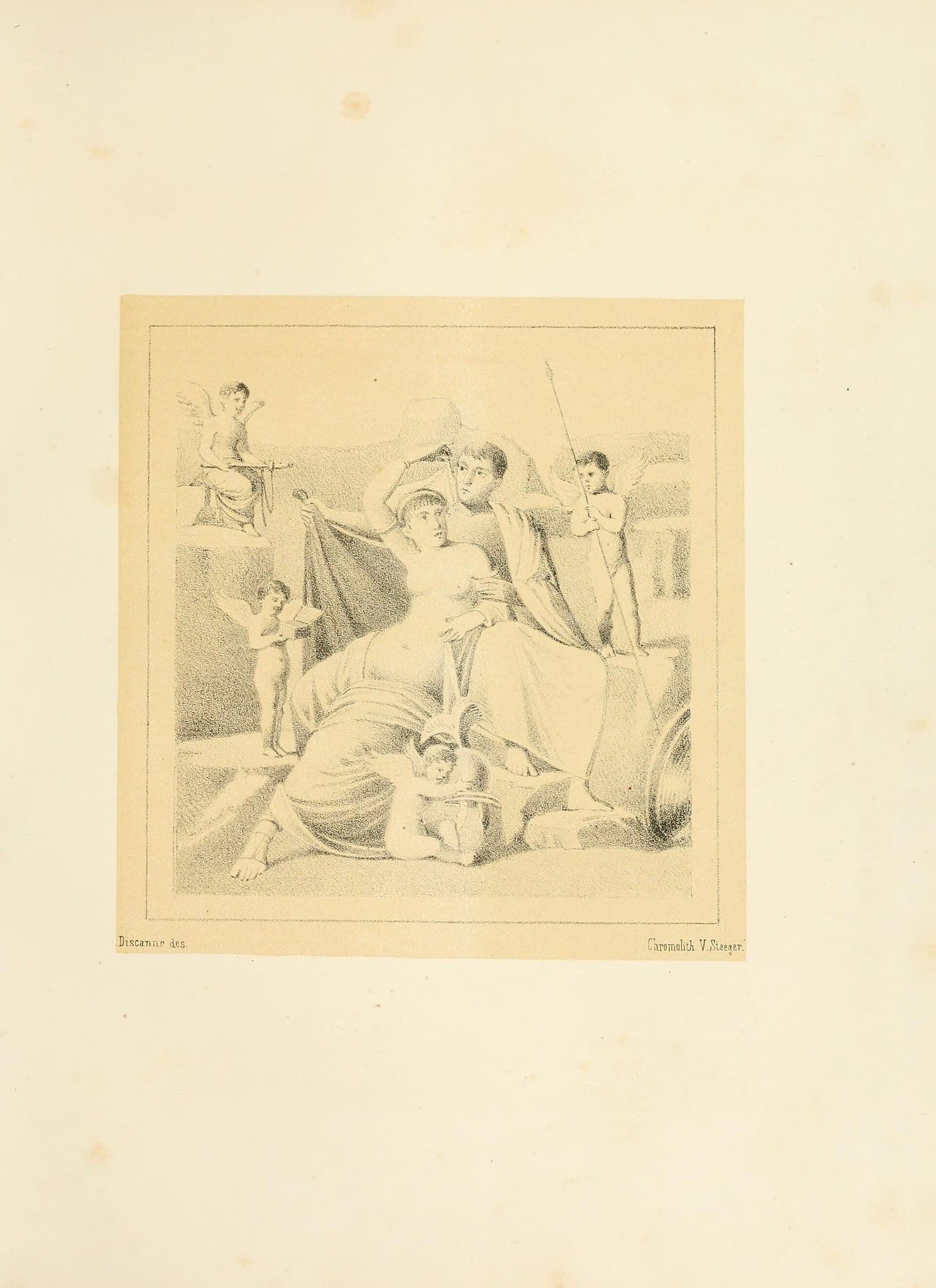
Drawing after a Pompeian wall painting — 1882
- 4
- epithets
- 3
- cult sites
- 1
- offspring
- 1
- union
- 1
- recorded birth
Vitals
- Kind
- Olympian
- Generation
- 3
- Domains
- battle, slaughter, the courage that is indistinguishable from rage
- Accent
- War — battle, strife, victory
- Sacred symbols
- the spear, the dog, the vulture, the burning torch
- Principal cult sites
- Thrace, Sparta, the Areopagus at Athens
What they were called
βροτολοιγός
bane of mortals
μιαιφόνος
stained with slaughter
τειχεσιπλήτης
stormer of walls
ἀλλοπρόσαλλος
shifting from side to side
Lineage
See in the tree
Offspring in this roster
Notable myths
The Net
Helios saw Ares and Aphrodite together and told Hephaistos, who forged chains finer than spider silk and invisible, hung them over the bed, and announced he was leaving for Lemnos. The two were caught and could not move. Hephaistos called the gods in to look, and the laughter went on a long time; Apollo asked Hermes whether he would take the shame to be in that position, and Hermes said he would.
Homer, Odyssey 8.266-366
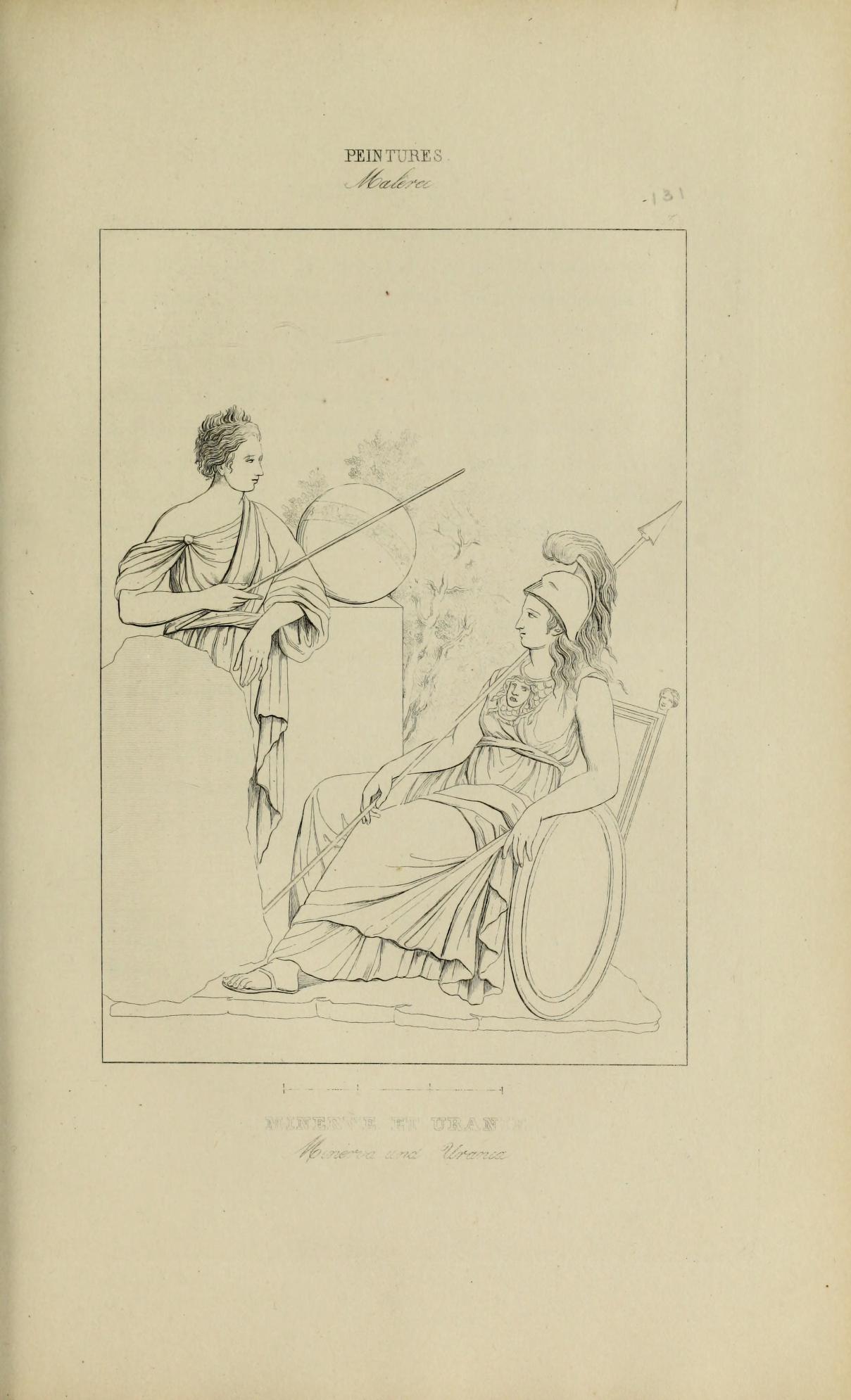
Beaten by Athena, Twice
At Troy, Athena guided Diomedes' spear into Ares' belly and he shrieked and fled to Zeus, who told him to stop whining. Later she picked up a boundary stone and hit him with it herself, knocking him flat over seven acres, and stood over him pointing out that she was stronger and that he never learned.
Homer, Iliad 5.846-906, 21.391-414
The account
The Greeks did not like Ares and did not pretend otherwise. Zeus tells him to his face in the Iliad that he is the most hateful to him of all the gods on Olympos, because strife and wars and battles are always dear to him. He loses constantly: Athena knocks him down with a boulder and laughs; Diomedes, a mortal with her help, puts a spear in him and he bellows like nine thousand men and runs home to complain; two Giants once shut him in a bronze jar for thirteen months and nobody noticed. Set against Athena, who is strategy, he is the part of war that is only violence — the noise, the panic, the wound. His children by Aphrodite are Phobos and Deimos, Rout and Terror, and they drive his chariot. What redeems the entry slightly is that the affair with Aphrodite is the one story where he is happy, and it ends with him caught in a net in front of an audience of laughing gods.
Ancient sources
- Hesiod, Theogony 921-923
- Homer, Odyssey 8.266-366
- Homer, Iliad 5.846-906, 21.391-414
Where a line reference is not given, the work is cited without one rather than guessed at.
Image credit
- Title
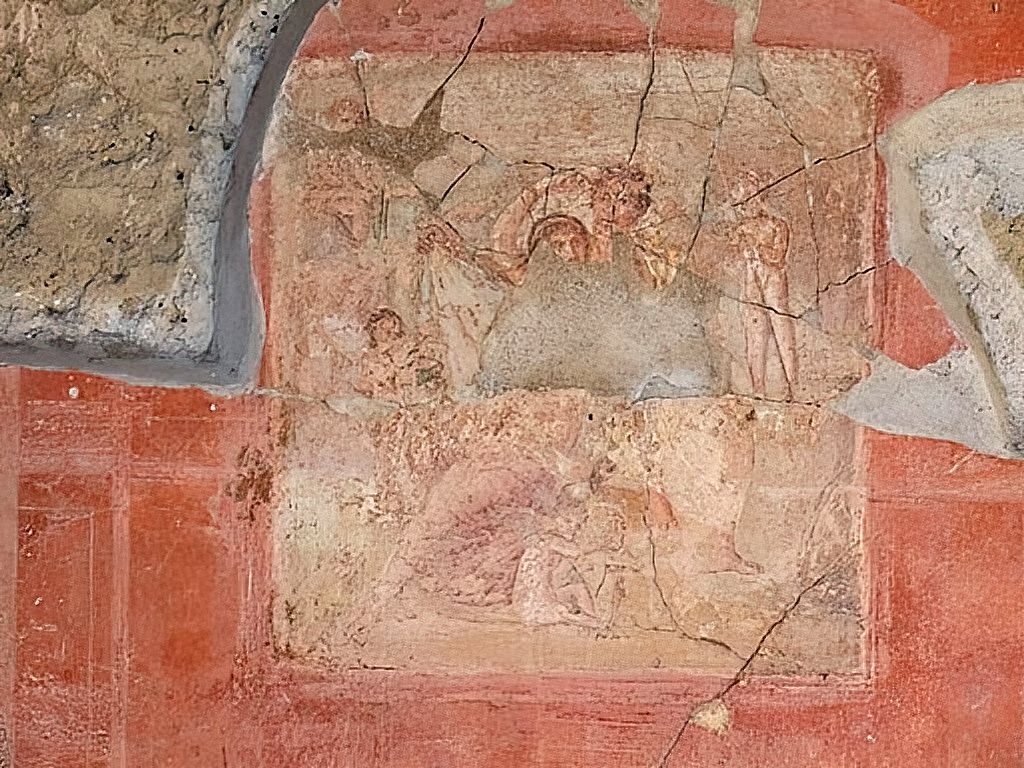
- Venus at her toilette with Mars at her shoulder from exedra o House of the Greek Epigrams
- Artist
- Geremia Discanno (d. 1907)
- Date
- 1882
- Licence
- Public domain
