Love
Eros
ἜρωςRoman: Amor
The oldest god in Hesiod and the youngest one in every later poem.
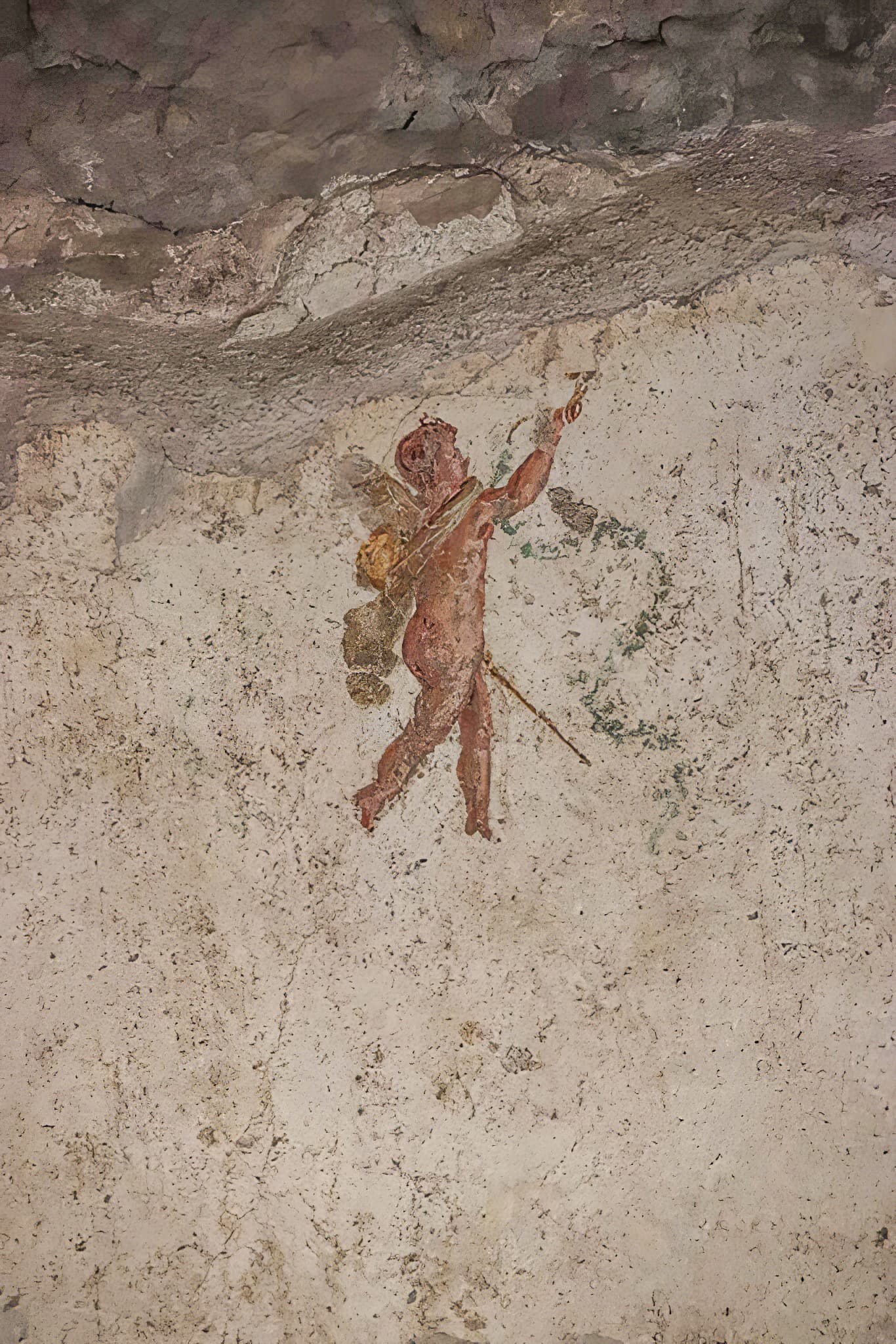
Wall painting, House of the Vettii, Pompeii — 1st century BCE–1st century CE
- 2
- epithets
- 2
- cult sites
- 0
- offspring
- 0
- unions
- 2
- recorded births
Vitals
- Kind
- Primordial
- Generation
- 0
- Domains
- desire, the force that makes things combine
- Accent
- Love — desire, grace, marriage
- Sacred symbols
- the bow, the torch, wings
- Principal cult sites
- Thespiae, Athens
What they were called
λυσιμελής
loosener of limbs
κάλλιστος
most beautiful among the deathless gods
Lineage
See in the treeDescent
No parent recorded — Hesiod names them among the first things.
Named among the very first things, with Chaos and Gaia.
Variant traditions
Apollodorus, Bibliotheca
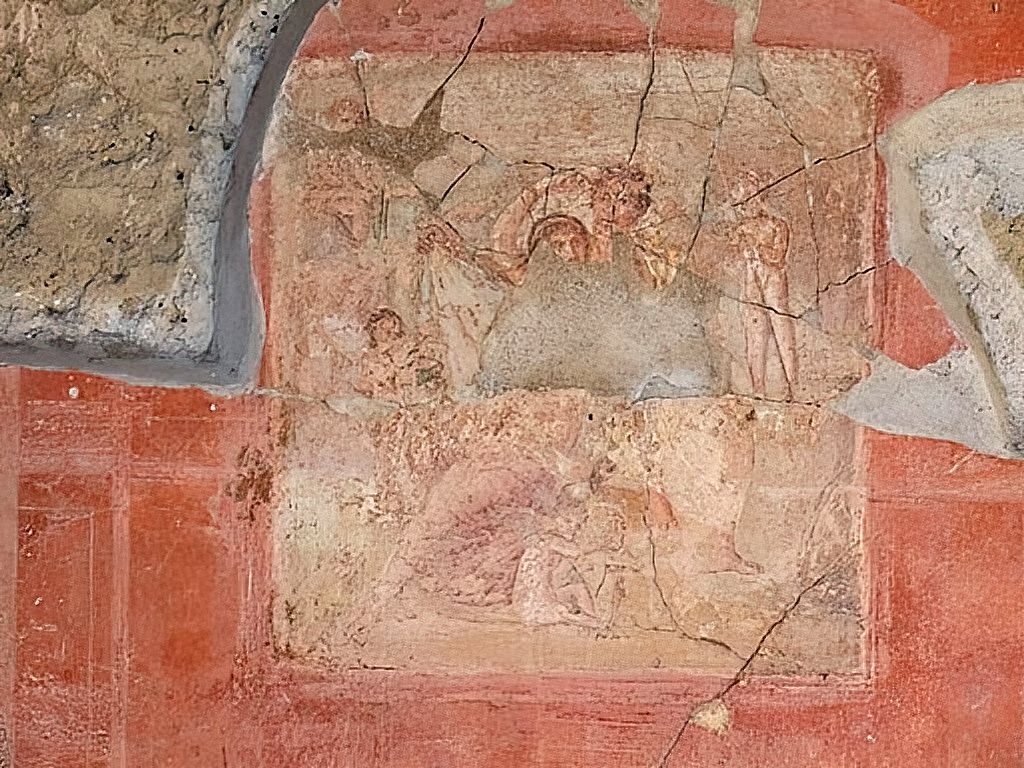
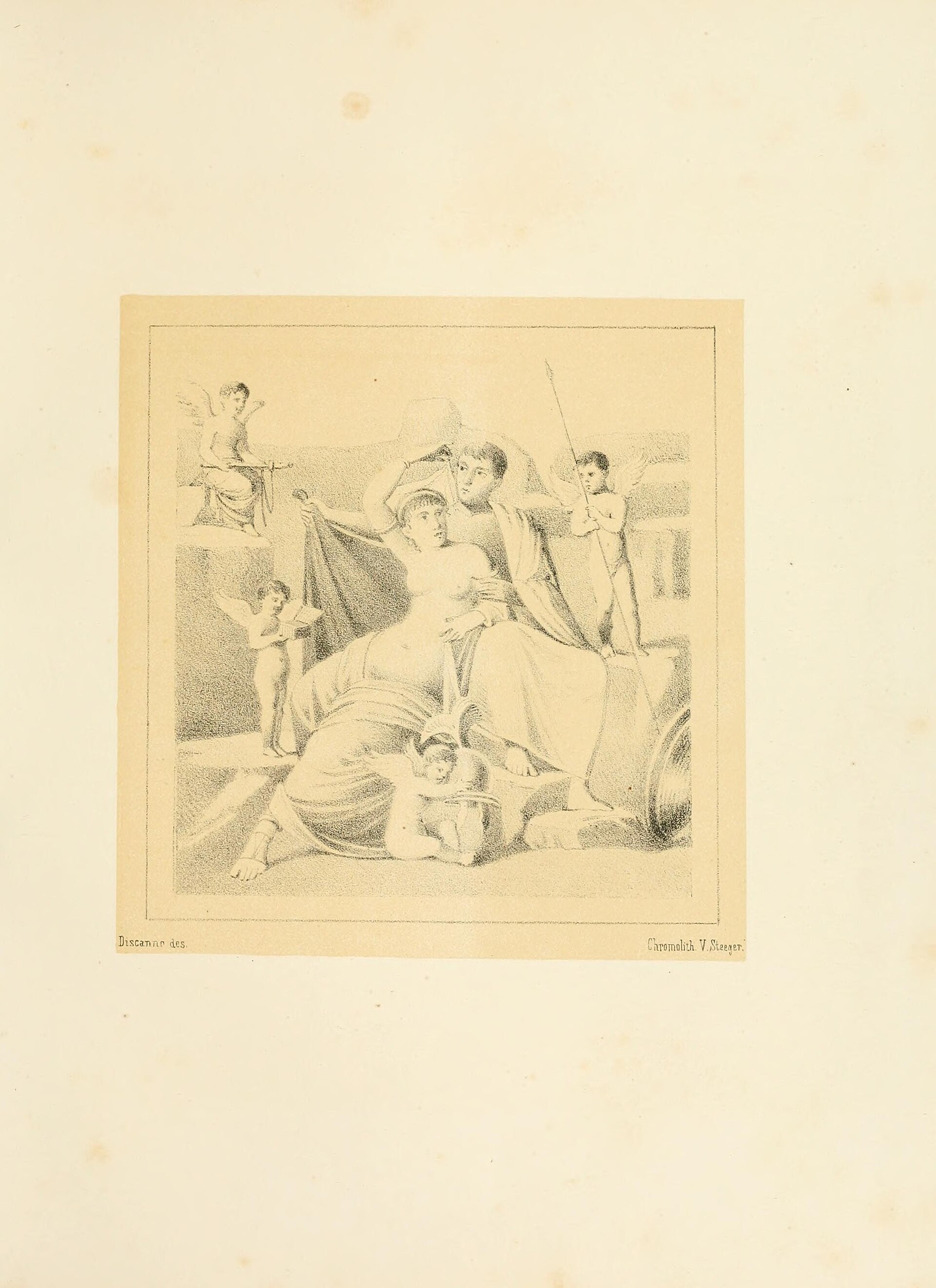
The later and far more familiar version, which makes the oldest god a child of two Olympians.
Offspring in this roster
None recorded among the figures modelled here.
Ties
Notable myths
First and Necessary
Hesiod lists Eros immediately after Chaos, Gaia and Tartaros, before any union has taken place. The placement is an argument rather than a story: attraction has to already exist before anything can generate anything, so the force that joins things is as old as the things themselves.
Hesiod, Theogony 120-122
The account
Two figures share this name and they are almost opposites. Hesiod's Eros is one of the first things that exists, arriving with Chaos and Gaia before there is anything to desire, and he is a cosmological necessity: without him nothing would combine and the genealogy would stop at the first generation. Hesiod calls him the most beautiful of the deathless gods, the one who loosens the limbs and overpowers the mind and the sensible counsel of everyone, gods included. The later Eros is a boy with a bow who works for his mother, causes trouble at her direction, and is eventually multiplied into a crowd of Erotes decorating vases and walls. Roman Cupid is that second figure. Both are kept here under one entry with two parentages, because the split is the interesting thing about him: the same god is either the reason the universe holds together or a mischievous child, depending on which century is telling it.
Ancient sources
- Hesiod, Theogony 116-122
- Apollodorus, Bibliotheca
- Hesiod, Theogony 120-122
Where a line reference is not given, the work is cited without one rather than guessed at.
Image credit
- Title
- House of the Vettii VI 15,1 Pompeii 2023 Painted figure of cupid from south wall of cubiculum (f) courtesy of Klaus Heese
- Artist
- 1st century CE unknown Roman artist; original photography by Klaus Heese
- Date
- 1st century BCE - 1st century CE
- Licence
- Public domain
_courtesy_of_Klaus_Heese.jpg)