Forge
Hephaistos
ἭφαιστοςRoman: Vulcanus
The only Olympian who works, and the only one thrown out of heaven twice.
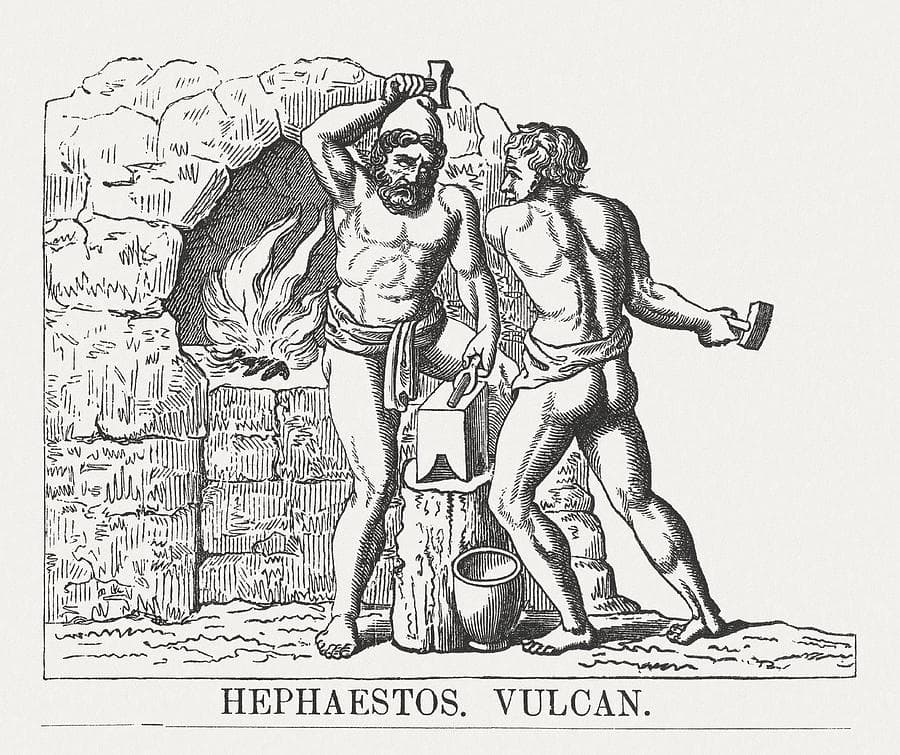
Engraving, published 1878
- 3
- epithets
- 3
- cult sites
- 0
- offspring
- 0
- unions
- 2
- recorded births
Vitals
- Kind
- Olympian
- Generation
- 3
- Domains
- fire under control, metalwork, invention
- Accent
- Forge — fire under control, metal, the hearth
- Sacred symbols
- the hammer and tongs, the anvil, the workman's cap, the automaton
- Principal cult sites
- Lemnos, Athens (the Hephaisteion), Mount Etna
What they were called
κλυτοτέχνης
famous for craft
ἀμφιγυήεις
lame in both legs, or strong in both arms
πολύμητις
of many devices
Lineage
See in the treeDescent
 Bore them aloneHeraHesiod, Theogony
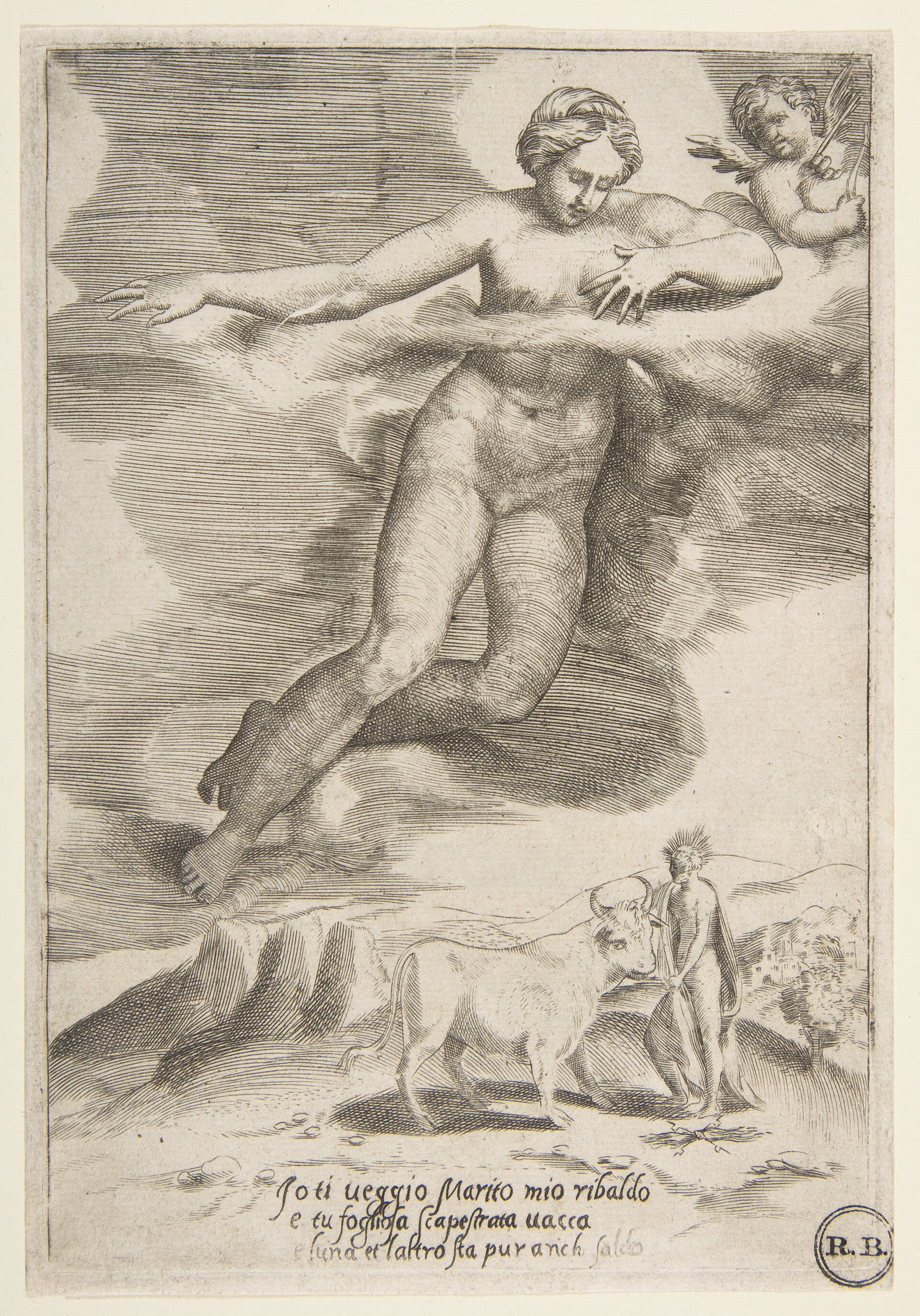
Hesiod is explicit: Hera bore him without any union, in anger and rivalry with her husband, after Zeus produced Athena from his head.
Variant traditions
Homer, Iliad 1.571-579
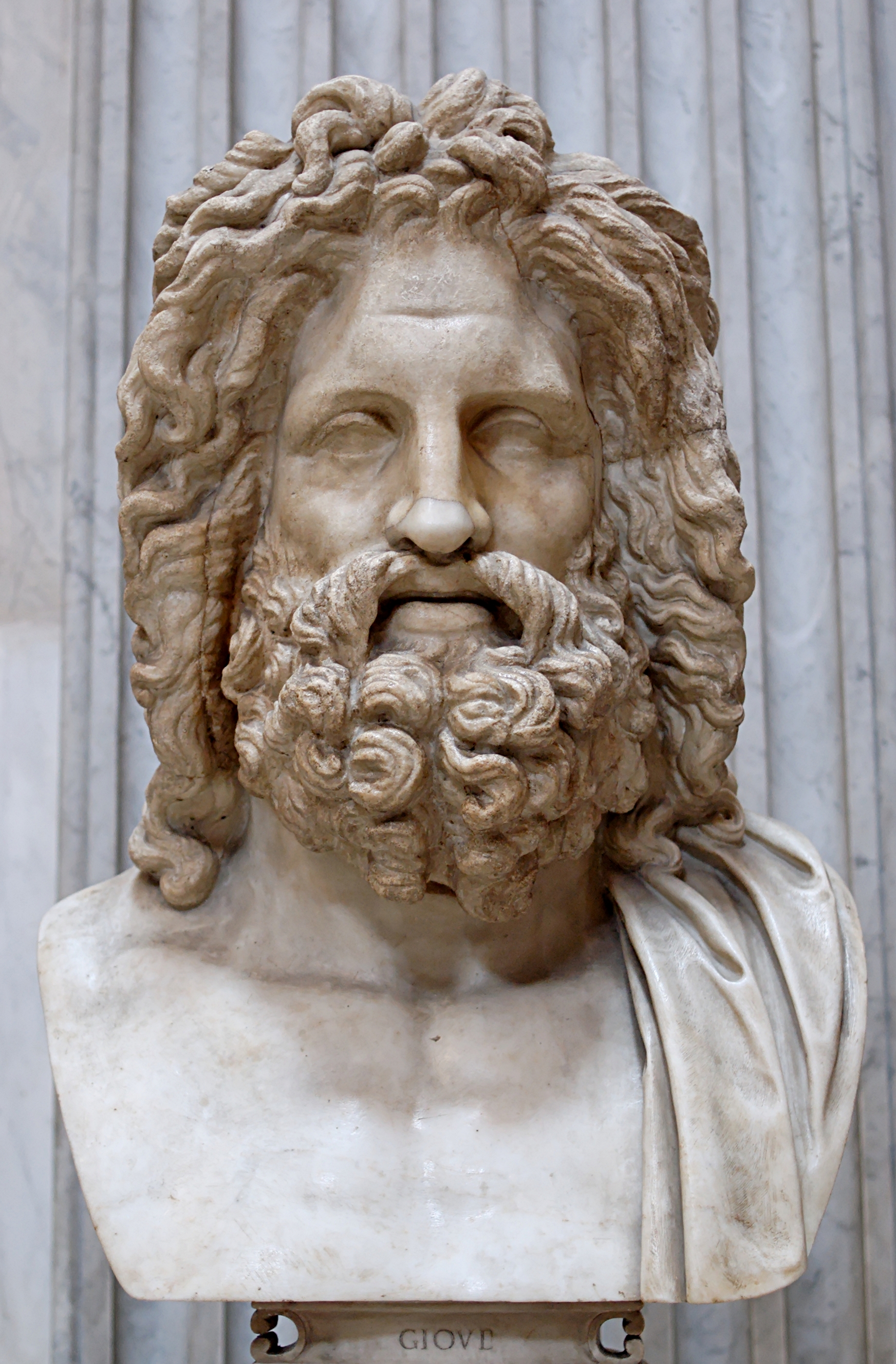
In Homer he calls Hera mother and Zeus father in the same speech, and there is no hint of a fatherless birth.
Offspring in this roster
None recorded among the figures modelled here.
Notable myths
The Fall to Lemnos
Hephaistos reminds Hera that he once tried to help her and Zeus caught him by the foot and threw him off the divine threshold. He fell all day and came down on Lemnos at sunset with very little life left in him, and the Sintian men there took care of him. He tells the story in the middle of a quarrel, to make the point that nobody wins an argument with Zeus.
Homer, Iliad 1.590-594
The Shield of Achilles
Asked by Thetis for armour, Hephaistos worked twenty bellows at once and made a shield with the earth, the sky, the sea, the sun and moon and every constellation on it, then two cities — one at a wedding and a lawsuit, one under siege — then ploughing, harvest, a vineyard, cattle, a dance floor, and the river of Ocean running round the rim. The description takes a hundred and thirty lines and is the longest sustained account of the ancient world at peace that survives.
Homer, Iliad 18.478-608
The account
Hephaistos is the Olympian with a trade and a disability, and the tradition connects the two without ever quite saying so. Hesiod has Hera produce him alone, out of spite, after Zeus produced Athena from his head — a parthenogenesis that is explicitly a reply. Homer knows nothing of that and treats him as the son of both. On the lameness the sources also split: Hera threw him out of Olympos at birth because he was lame, or he was lame because Zeus threw him out for taking Hera's side in an argument, and he fell a whole day and landed on Lemnos. Either way he came back and he built everything: the gods' houses, Achilles' shield, Zeus's sceptre and thunderbolts, the golden women who support him as he walks, self-moving tripods that go to the assembly on their own. He is married to Aphrodite, who is unfaithful with Ares, and his revenge is the finest piece of engineering in Homer. He is the god of making the thing work regardless.
Ancient sources
- Hesiod, Theogony 927-929
- Homer, Iliad 1.571-579
- Homer, Iliad 1.590-594
- Homer, Iliad 18.478-608
Where a line reference is not given, the work is cited without one rather than guessed at.
Image credit
- Title
- Hephaestus, published in 1878
- Artist
- Illustrated by Engravings on Wood.
- Date
- 1878, upload: 2022-11-27
- Licence
- Public domain
