Revel
Dionysos
ΔιόνυσοςRoman: Bacchus
Arrives as a stranger, is refused, and destroys the household that refused him.
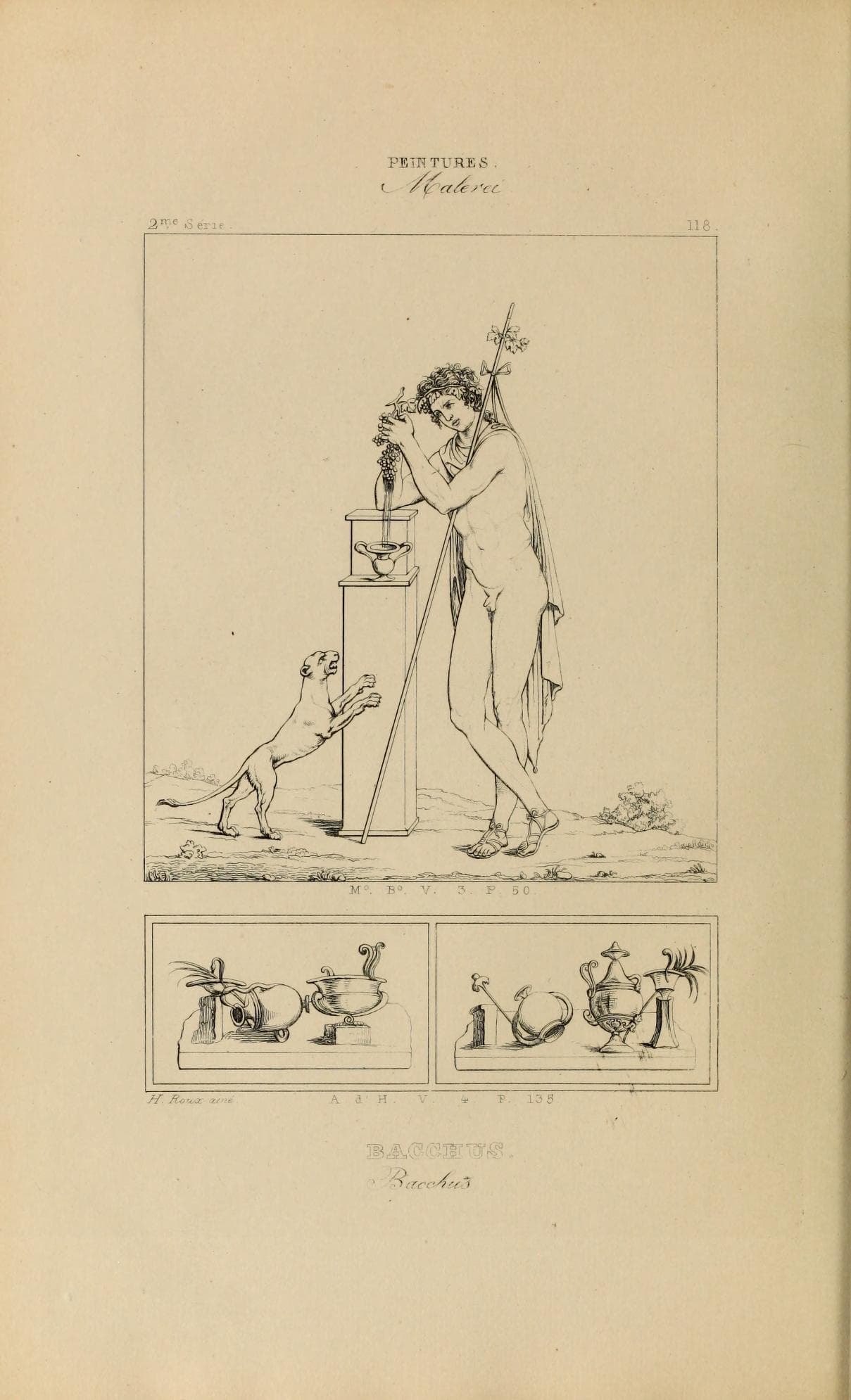
Drawing after a Roman wall painting — Henri Roux the Elder, 1870
- 4
- epithets
- 4
- cult sites
- 1
- offspring
- 1
- union
- 2
- recorded births
Vitals
- Kind
- Olympian
- Generation
- 3
- Domains
- wine, theatre, possession, the release of what is held in
- Accent
- Revel — wine, theatre, youth, release
- Sacred symbols
- the thyrsos, the vine, the leopard, the mask, ivy
- Principal cult sites
- Thebes, Athens (the Theatre of Dionysos), Naxos, Delphi in winter
What they were called
Ἐλευθερεύς
the liberator
Διθύραμβος
he of the double door — of the twice-born
Βρόμιος
the roaring one
Ὠμηστής
eater of raw flesh
Lineage
See in the treeDescent
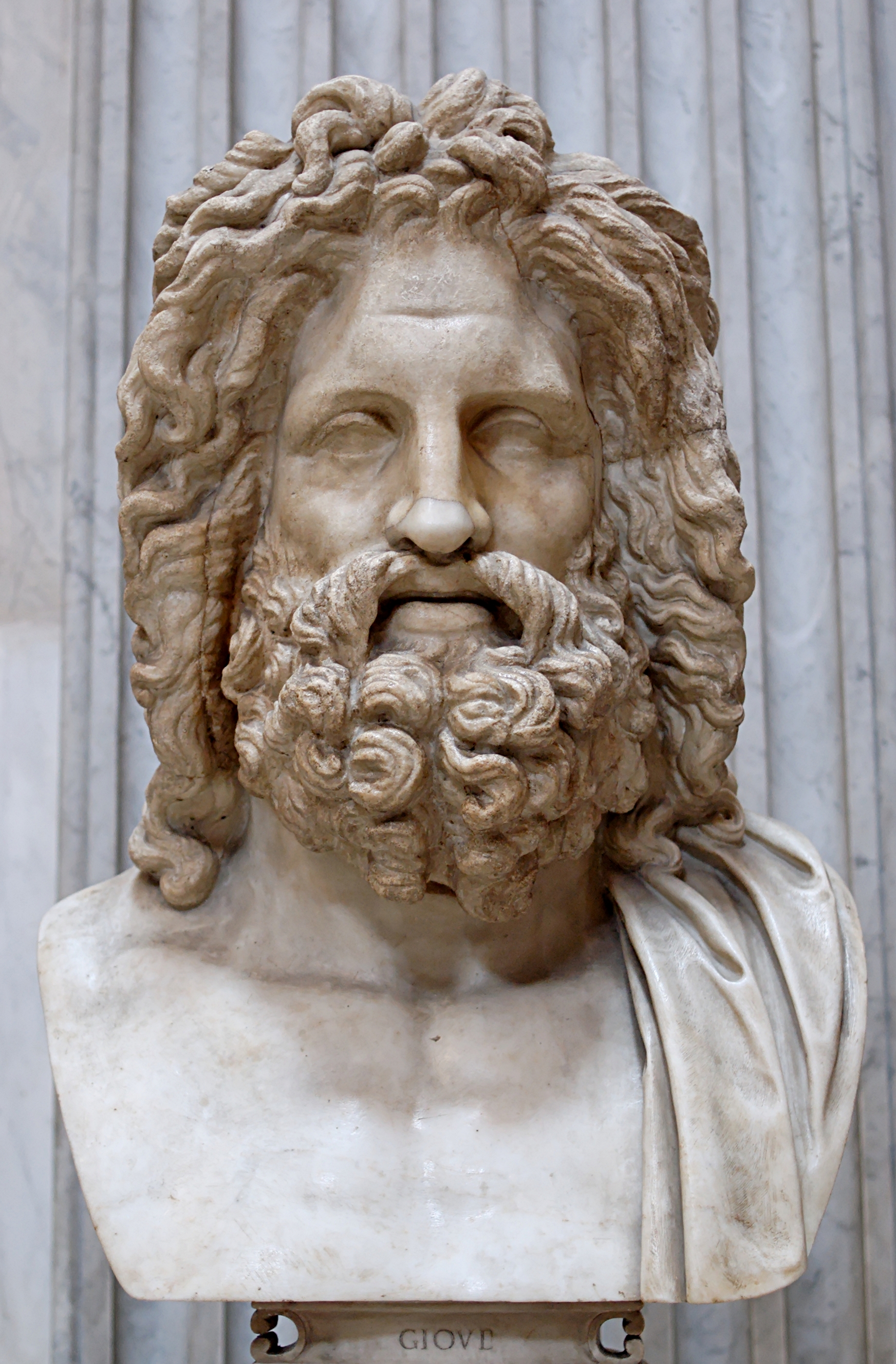 FatherZeusHesiod, Theogony
His mother is Semele, daughter of Kadmos, a mortal — outside the v1 roster, which covers divine figures only. Zeus took the unborn child from her body and carried it sewn into his thigh, which is why he is called the twice-born.
Variant traditions
Diodorus Siculus, Library of History 5.75.4
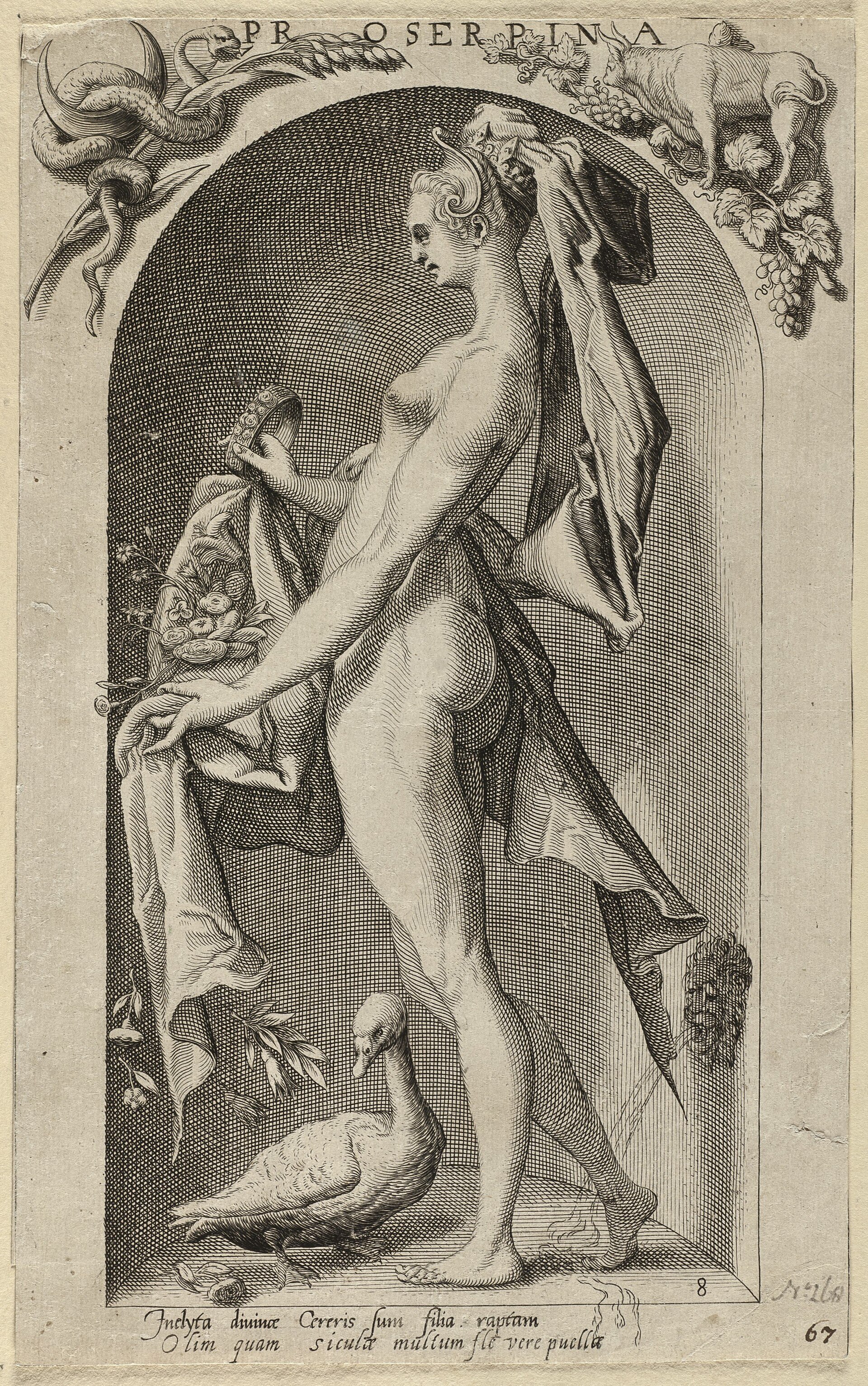
The Orphic Dionysos-Zagreus, torn apart by the Titans as an infant and reassembled. A separate and much stranger theology attached to the same name.
Offspring in this roster
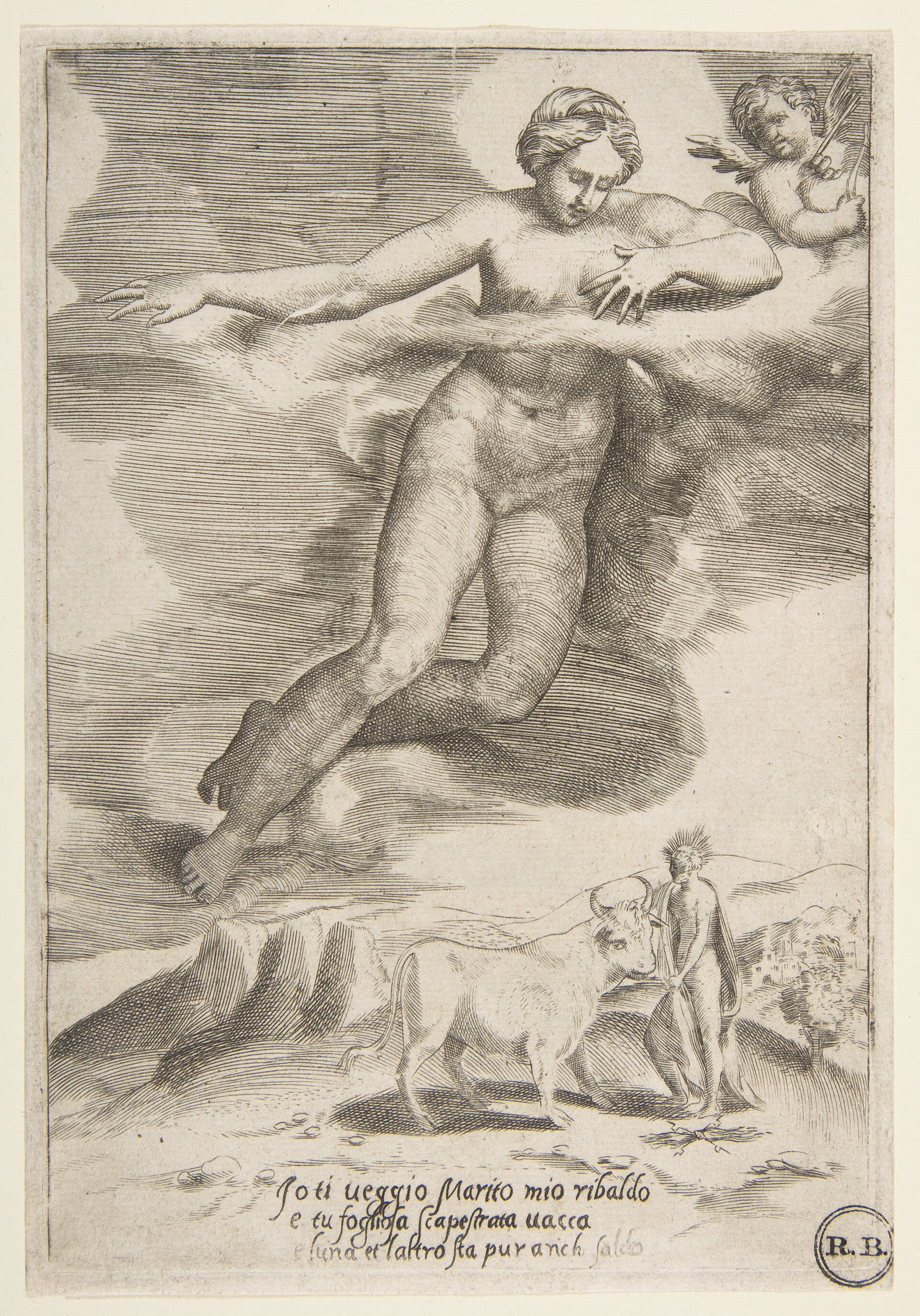
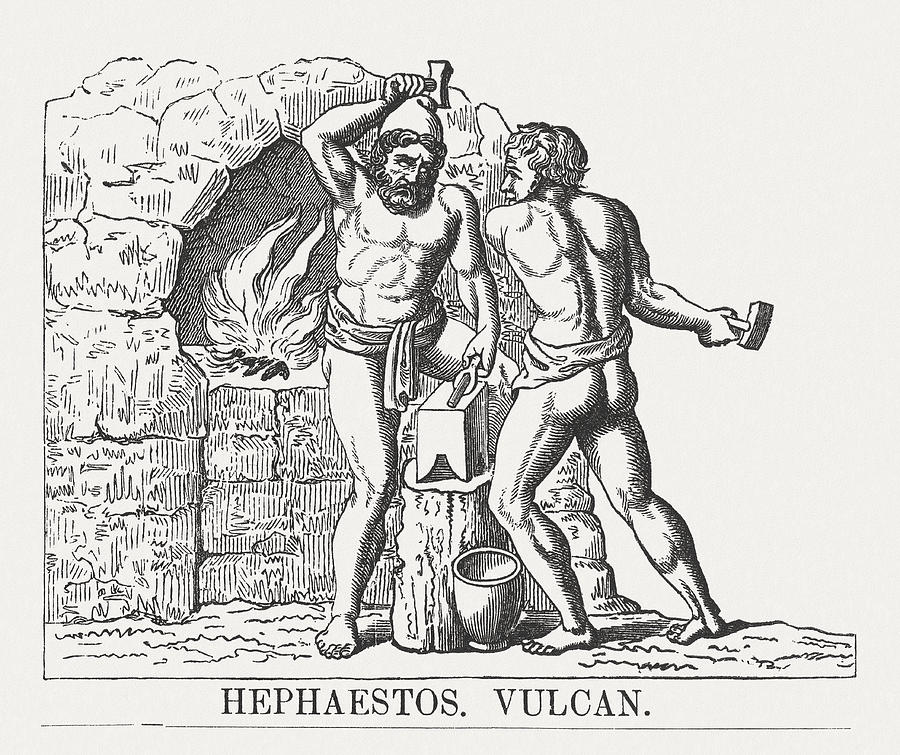
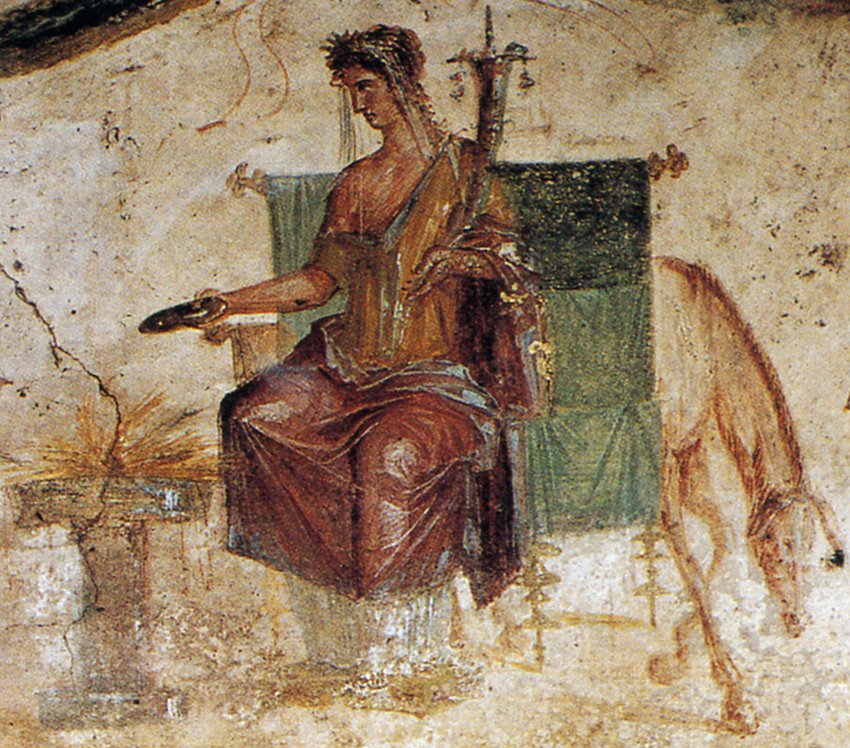
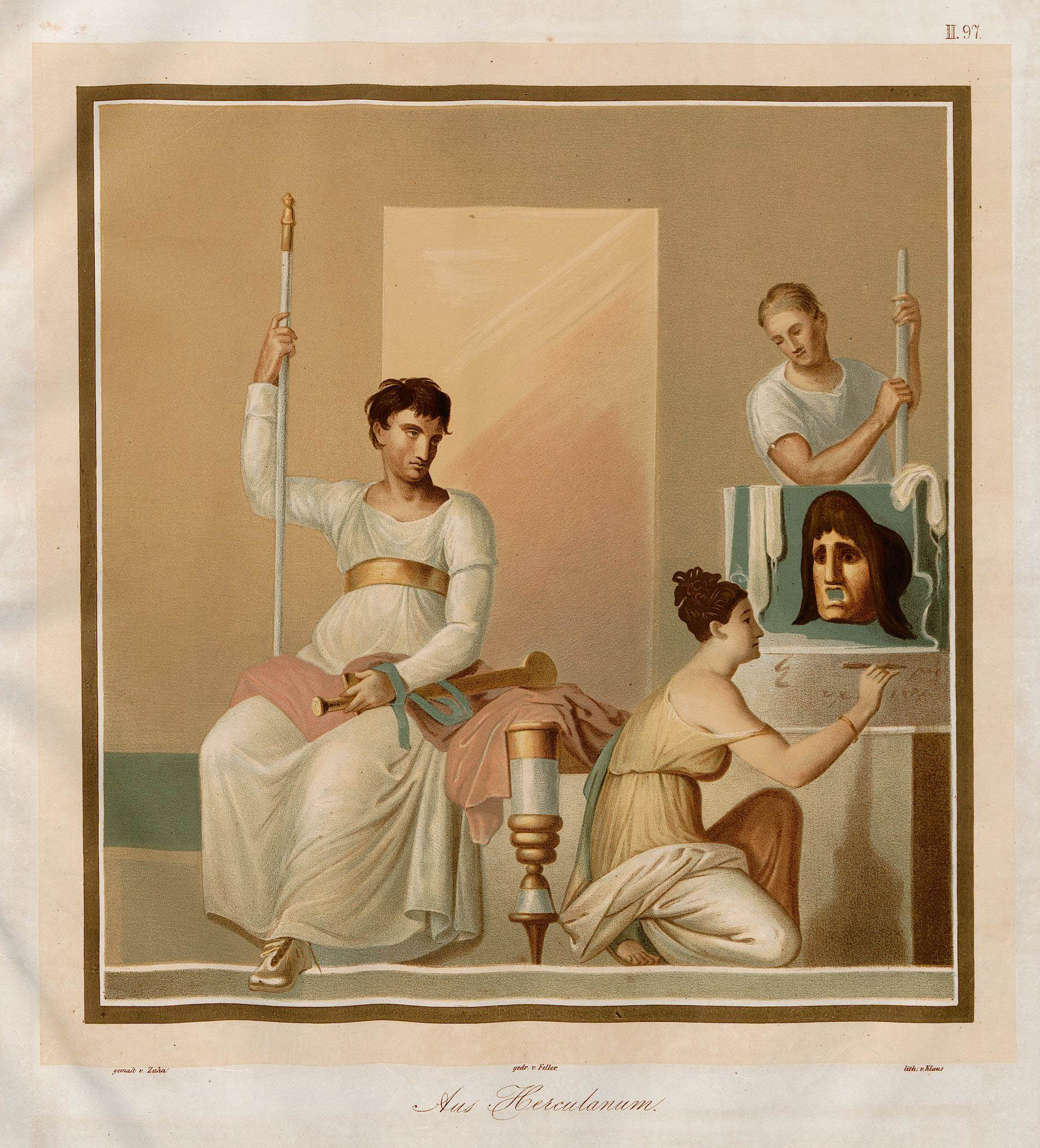
Notable myths
Pentheus on the Mountain
Pentheus refused to admit that his cousin was a god and had him arrested. Dionysos, calm throughout, walked out of the prison, then persuaded the king to dress as a woman and go up the mountain to spy on the rites. The women found him, and his mother Agaue, out of her mind, led the tearing. She came down carrying his head and boasting until her father made her look at it.
Euripides, Bacchae
The Pirates
Tyrrhenian pirates took a beautiful young man off a headland, meaning to sell him, and the ropes would not hold him. The helmsman said he was a god and was ignored. Wine ran through the ship, a vine grew up the mast, a bear appeared amidships and the god became a lion. The crew jumped overboard and turned into dolphins. He spared the helmsman.
Homeric Hymns, Hymn to Dionysos 6-54
The account
Dionysos is the god who was not there and then is, and the stories are all about the cost of not recognising him in time. He is born twice — once from Semele, who asked to see Zeus as he really was and was burned to nothing, and again out of Zeus's thigh, where the unfinished child was sewn to develop. He comes to Greece looking like a foreigner, young and effeminate, with a following of women who have left their houses. Pentheus of Thebes refuses to accept him, arrests him, and is torn apart on the mountain by his own mother, who carries his head home believing it is a lion's. That is the Bakchai, and it is not an argument for restraint or for indulgence; it is about what happens when a city tries to legislate an experience out of existence. He is also the god of the theatre, and every surviving Greek tragedy was first performed at his festival. Wine, mask, chorus and possession are one thing: the temporary and licensed condition of being someone else.
Ancient sources
- Hesiod, Theogony 940-942
- Diodorus Siculus, Library of History 5.75.4
- Euripides, Bacchae
- Homeric Hymns, Hymn to Dionysos 6-54
Where a line reference is not given, the work is cited without one rather than guessed at.
Image credit
- Title
- Drawing of Bacchus from ancient Roman mural in Pompeii by Henri Roux the Elder, 1870
- Artist
- Henri Roux the Elder, 1870
- Date
- 1870
- Licence
- Public domain
