Forge
Hestia
ἙστίαRoman: Vesta
Refused two gods and a throne, and gets the first offering at every sacrifice.
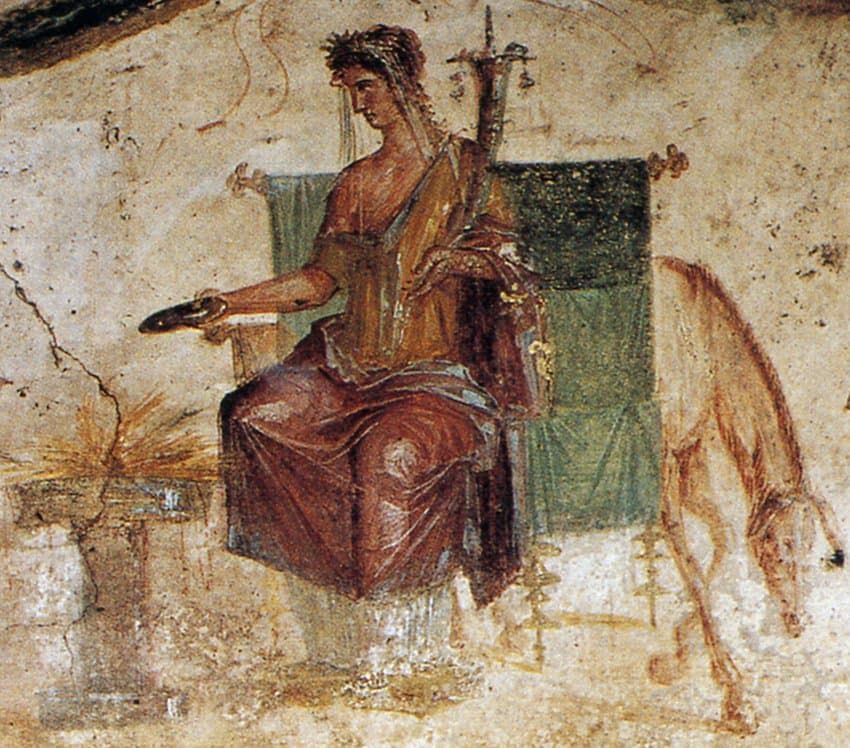
Wall painting, Pompeii — 1st century BCE/CE
- 2
- epithets
- 3
- cult sites
- 0
- offspring
- 0
- unions
- 1
- recorded birth
Vitals
- Kind
- Olympian
- Generation
- 2
- Domains
- the hearth, the household, the fire a city keeps lit
- Accent
- Forge — fire under control, metal, the hearth
- Sacred symbols
- the hearth fire, the kettle, the plain veil
- Principal cult sites
- every hearth, the prytaneion of every Greek city, Delphi
What they were called
πρέσβειρα
eldest, first in honour
Ἑστία
the hearth itself
Lineage
See in the tree
Offspring in this roster
None recorded among the figures modelled here.
Notable myths
The Oath and the Portion
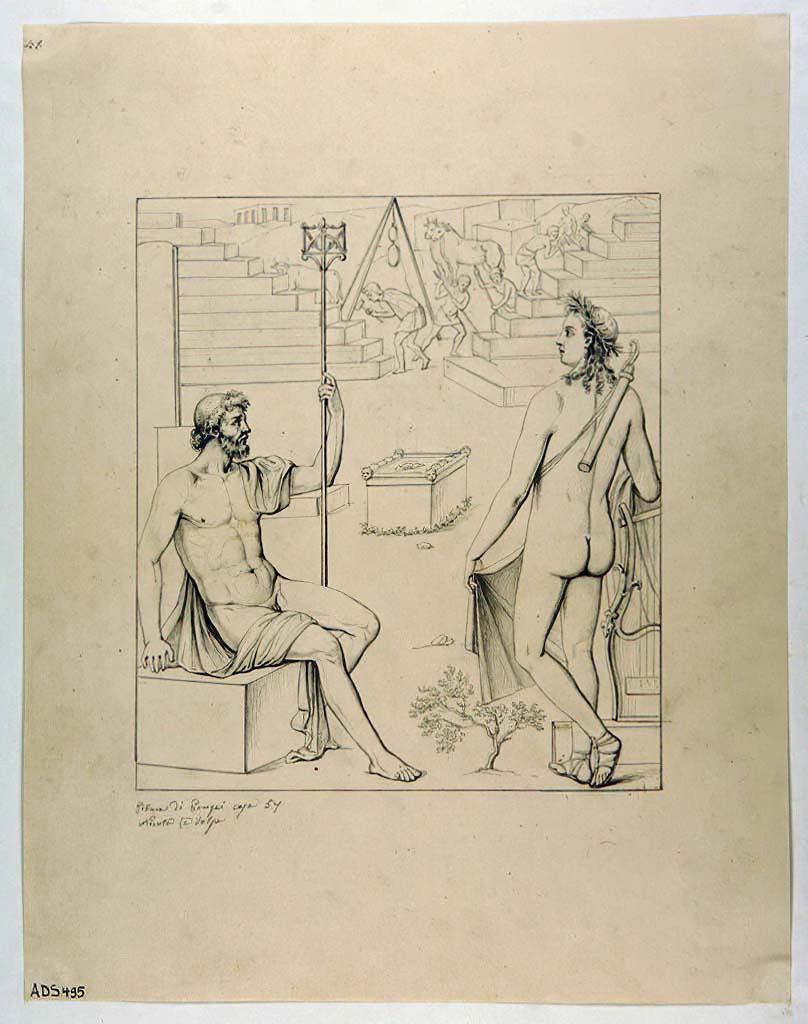
Poseidon and Apollo both pressed Hestia to marry. She refused firmly, touched the head of Zeus and swore to remain a virgin for all time. Zeus gave her a fine honour in place of a marriage: she sits in the middle of the house and takes the fat of the offering, and in all the temples of the gods she has a share.
Homeric Hymns, Hymn to Aphrodite 21-32
The account
Hestia was the first child Kronos swallowed and the last he brought up, which makes her both the eldest and the youngest of the six. Poseidon and Apollo both wanted her; she refused them, laid her hand on Zeus's head and swore to stay unmarried forever, and he gave her instead the middle of the house and the richest portion — the first offering at every sacrifice and a share in every temple of every god. That is a good trade. She almost never appears in narrative. She has no adventures, no quarrels and, unusually, almost no images: she is the one Olympian who is more often a fire than a figure. Her importance is structural and constant rather than dramatic. Every Greek city kept a public hearth in the prytaneion that was never allowed to go out, and colonists carried fire from it to light the hearth of the new city, so that a settlement a thousand miles away was demonstrably the same household. Some later lists drop her from the twelve in favour of Dionysos. She does not seem to have minded.
Ancient sources
- Hesiod, Theogony 453-458
- Homeric Hymns, Hymn to Aphrodite 21-32
Where a line reference is not given, the work is cited without one rather than guessed at.
Image credit
- Title
- Fresco of Vesta-Hestia from Pompeii
- Artist
- Mario Enzo Migliori
- Date
- 1st century BC/AD
- Licence
- Public domain
