Wild
Rhea
ῬέαRoman: Ops
Handed her husband a stone and kept the child.
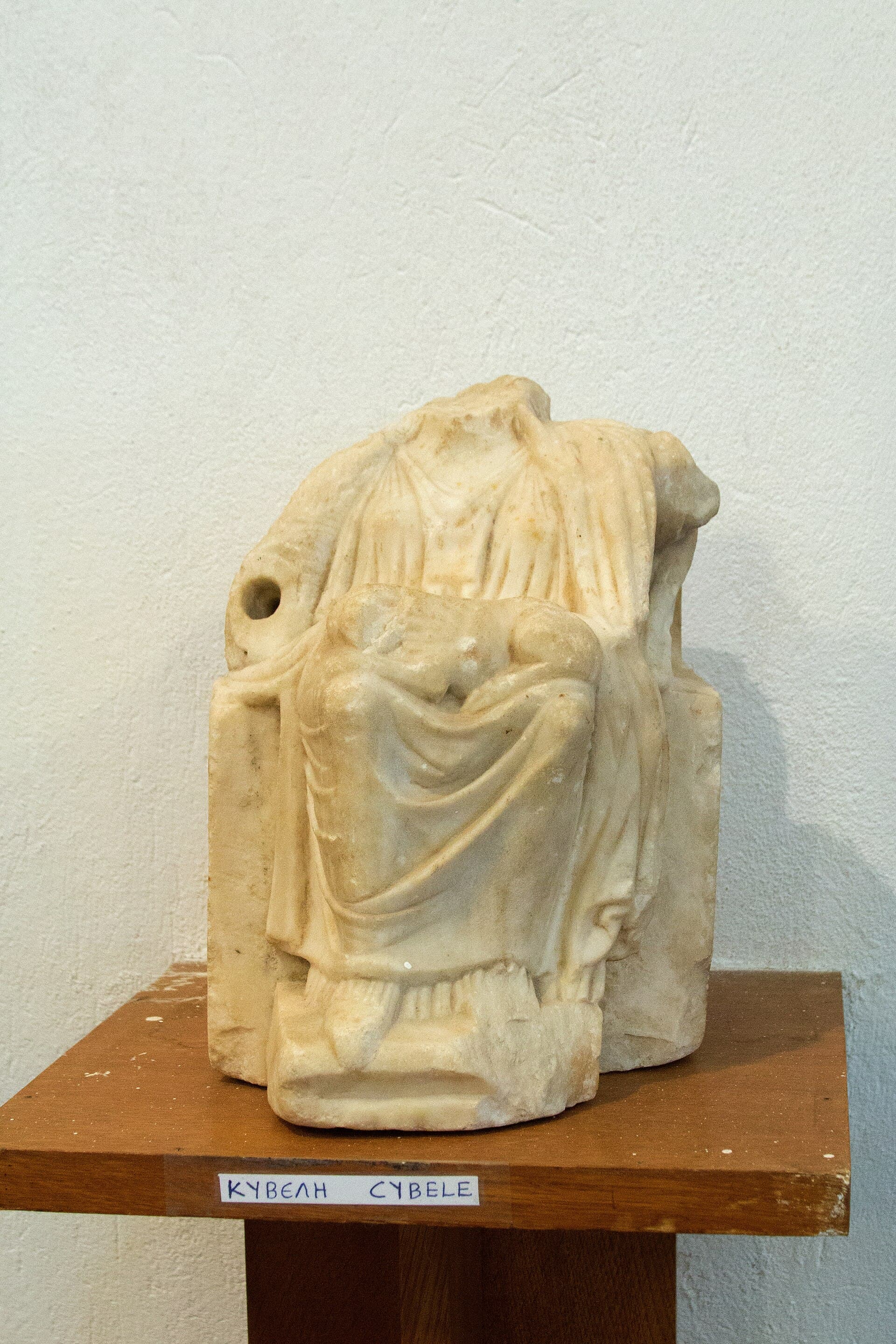
Marble, Roman period — Archaeological Museum, Apeiranthos, Naxos
- 2
- epithets
- 3
- cult sites
- 6
- offspring
- 1
- union
- 1
- recorded birth
Vitals
- Kind
- Titan
- Generation
- 1
- Domains
- motherhood, the mountains, generation
- Accent
- Wild — the hunt, the mountain, the uncultivated
- Sacred symbols
- the lion, the tympanum, the mural crown
- Principal cult sites
- Crete, Mount Ida, Phaistos
What they were called
Μήτηρ θεῶν
mother of the gods
εὔστεφανος
well-crowned
Lineage
See in the tree
Notable myths
The Cave on Mount Ida
Rhea gave birth to Zeus in secret and left him to be raised in a Cretan cave, fed on goat's milk and honey while armed dancers drowned out his crying with drums and shield-clatter. Every version of the story agrees on the hiding and disagrees on the mountain, the nurse and the diet, which is a fair sign of how much local cult wanted a share of it.
Hesiod, Theogony 477-484
The account
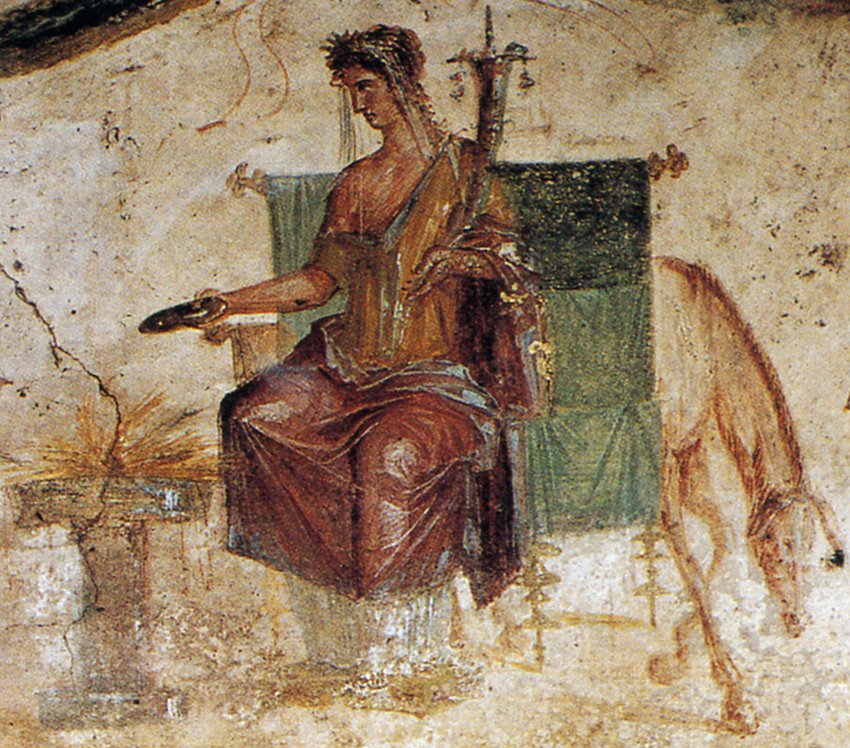
Rhea bore the six eldest Olympians and watched Kronos swallow the first five. Hesiod says she was held by unrelenting grief, which is one of the few emotional statements in the poem. When she was carrying Zeus she went to her own parents and asked for a plan, and they gave her one. She delivered in Crete at night, hid the infant in a cave on Mount Aigaion, and gave Kronos a swaddled stone. The Kouretes danced and clashed their shields around the cave so that the crying could not be heard. Later Greek cult identified her closely with the Anatolian mother goddess Kybele, and she acquired lions, a drum and a mountain retinue that Hesiod's Rhea does not have. Her role in the Theogony is narrow and decisive: she is the point at which the cycle of fathers destroying sons is broken, and it is broken by a deception rather than by force.
Ancient sources
- Hesiod, Theogony 132-138
- Hesiod, Theogony 477-484
Where a line reference is not given, the work is cited without one rather than guessed at.
Image credit
- Title
- Cybele, marble, Roman Age, Naxos, AM Apeiranhtos, 176952
- Artist
- Zde
- Date
- Unknown
- Licence
- CC BY-SA 4.0
