Love
The Charites
ΧάριτεςRoman: Gratiae
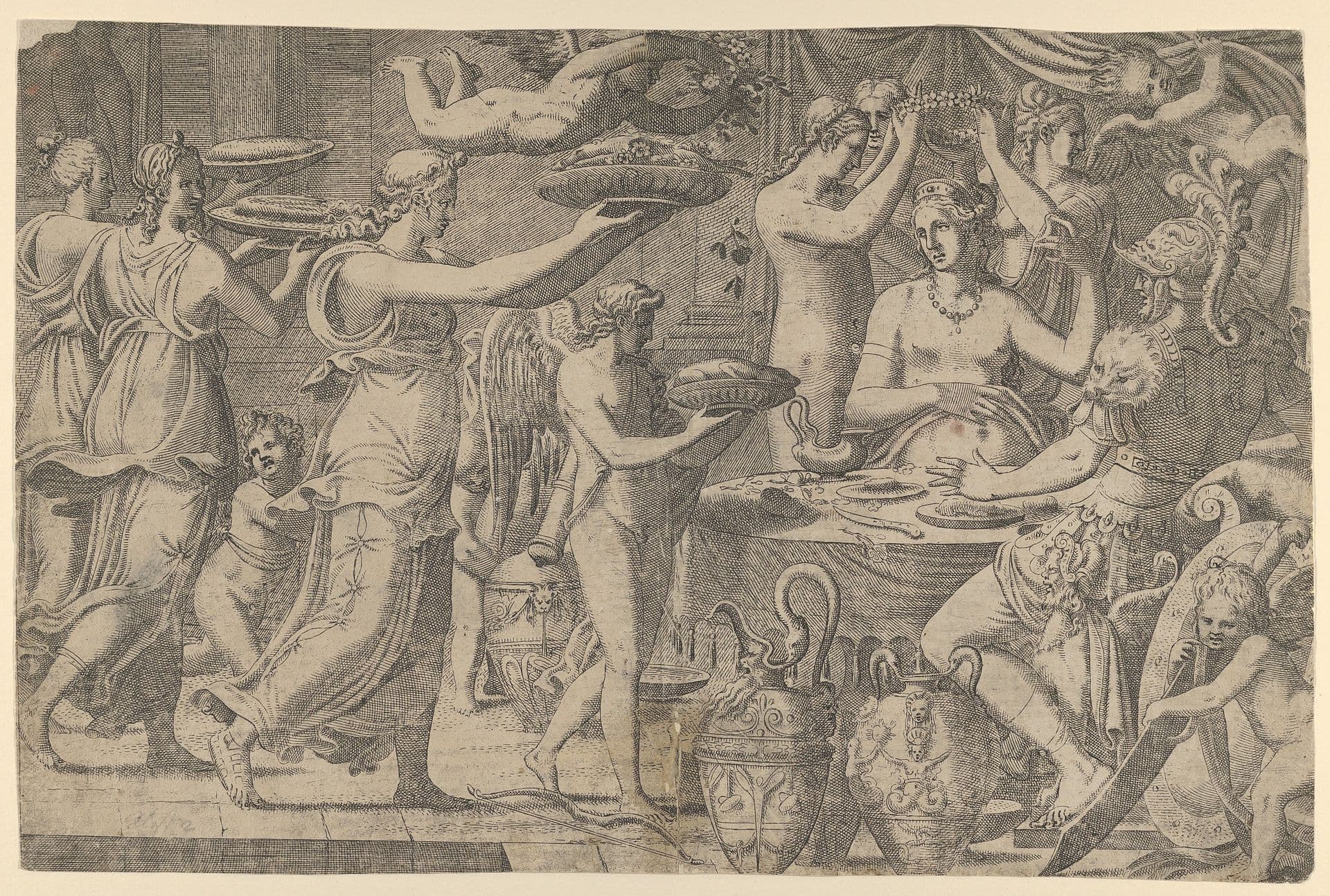
Charm as a real force, and one of them was sold to Sleep as a bribe.
Print, 1545–50 — Metropolitan Museum of Art
- 2
- epithets
- 3
- cult sites
- 0
- offspring
- 0
- unions
- 2
- recorded births
Vitals
- Kind
- Collective
- Generation
- 3
- Domains
- grace, the pleasure of a thing well made, gratitude and the returned favour
- Accent
- Love — desire, grace, marriage
- Sacred symbols
- the rose, the myrtle, the linked hands
- Principal cult sites
- Orchomenos in Boiotia, Paphos, Sparta
- Members
- Aglaia, splendour
- Euphrosyne, good cheer
- Thaleia, abundance
What they were called
Χάριτες
the graces, the favours
καλλίκομοι
lovely-haired
Lineage
See in the treeDescent
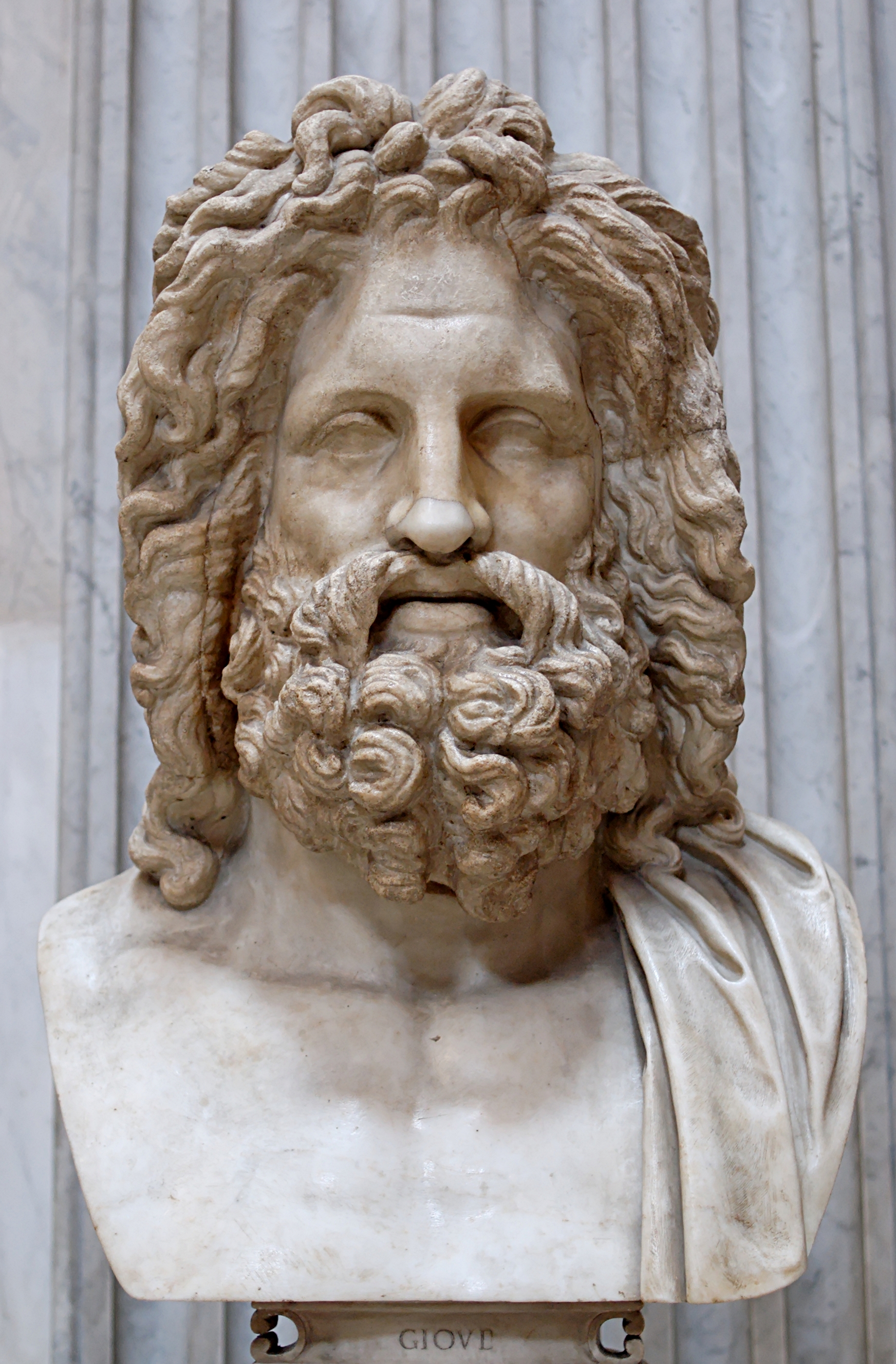 FatherZeusHesiod, Theogony
Their mother is the Okeanid Eurynome, outside the v1 roster.
Variant traditions
Anacreon, Fragments
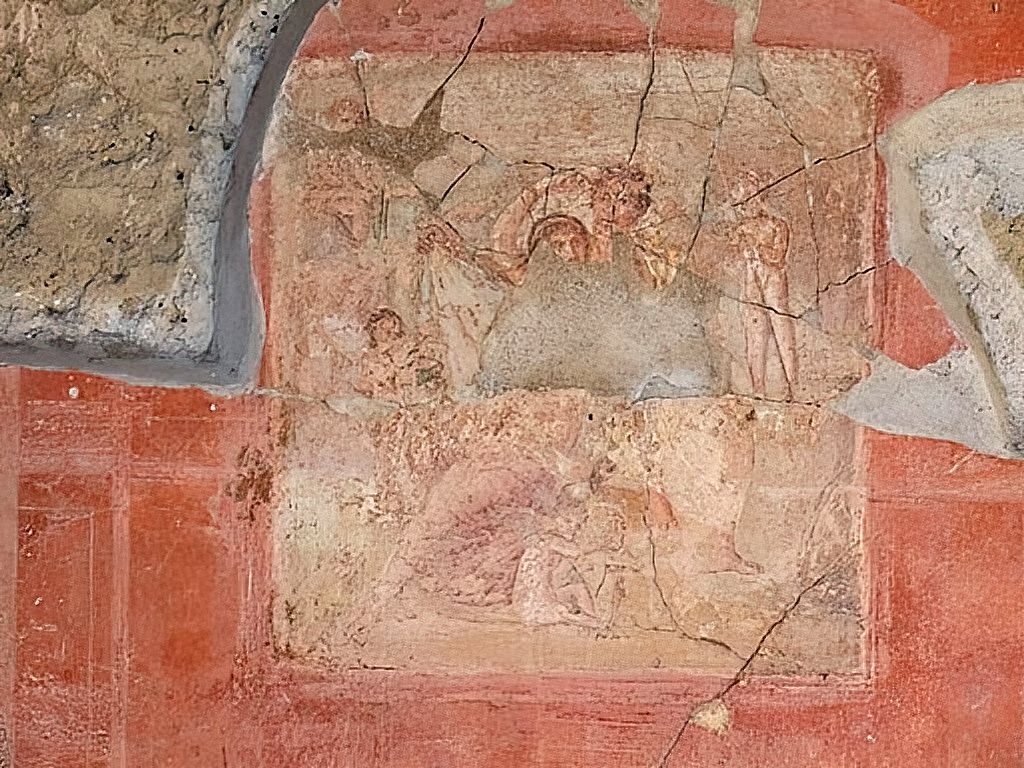
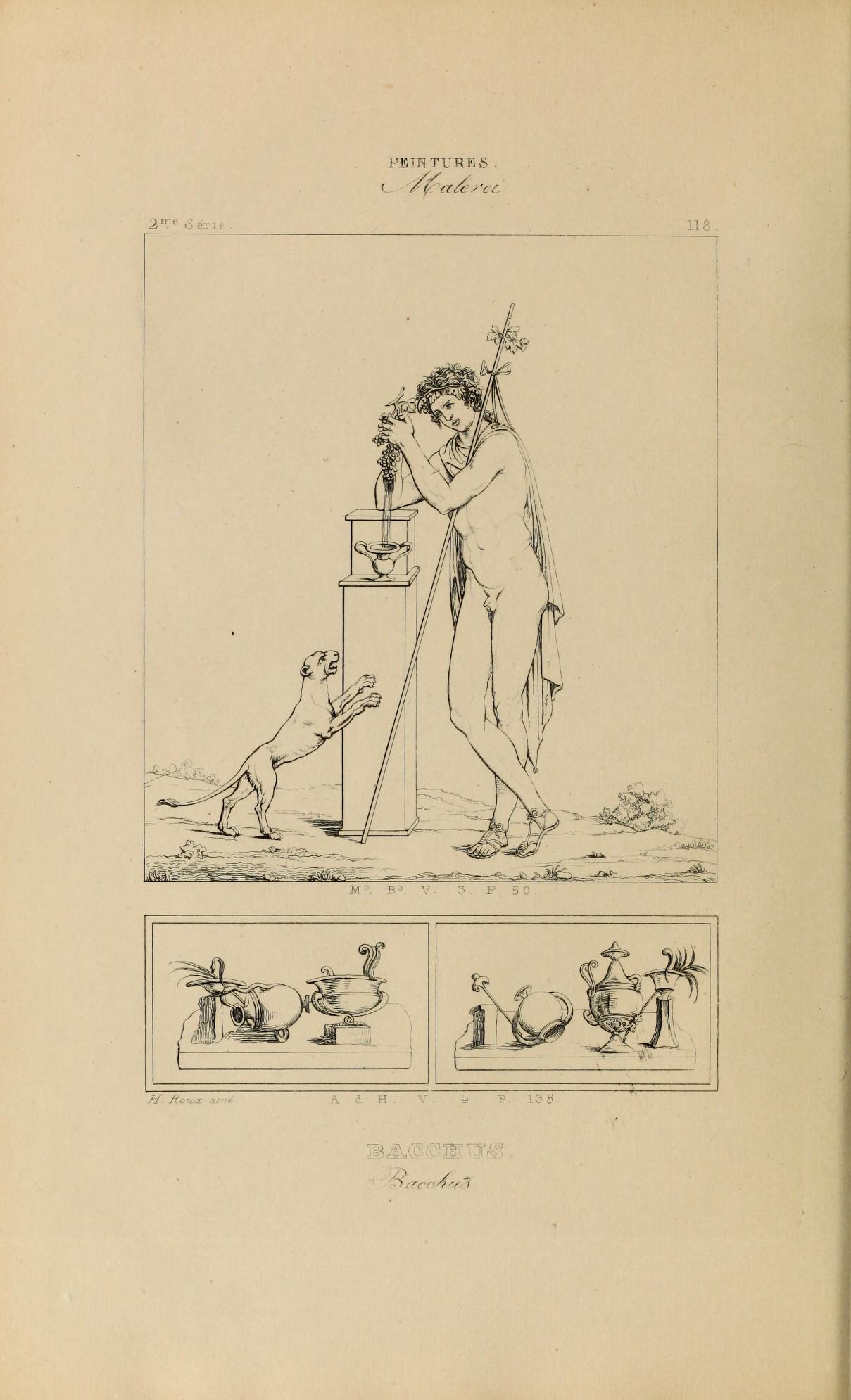
A later pairing that makes charm the child of wine and desire, which is a joke and also an argument.
Offspring in this roster
None recorded among the figures modelled here.
Notable myths
Pasithea
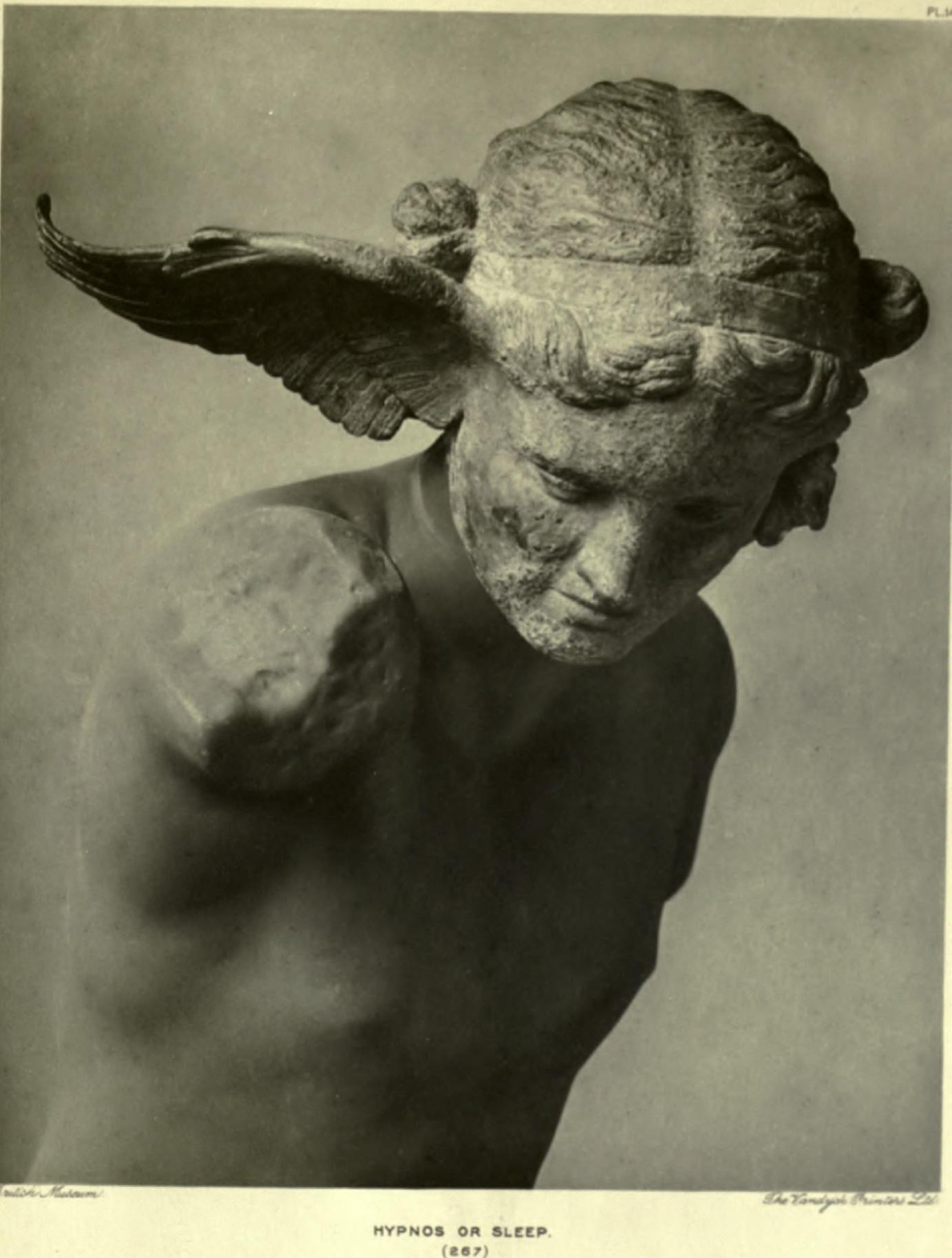
Hypnos refused to put Zeus to sleep until Hera named the price. She offered one of the younger Graces, and he made her swear by the Styx to give him Pasithea specifically, whom he had wanted all his days. He got her. The Iliad reports the whole negotiation without comment.
Homer, Iliad 14.267-276
The Stones at Orchomenos
Pausanias says the Charites were first worshipped at Orchomenos by Eteokles, and that the images the Orchomenians revered were stones which they believed had fallen out of the sky. Statues in human form were only added later, and set up beside them.
Pausanias, Description of Greece 9.38.1 (Roman-era)
The account
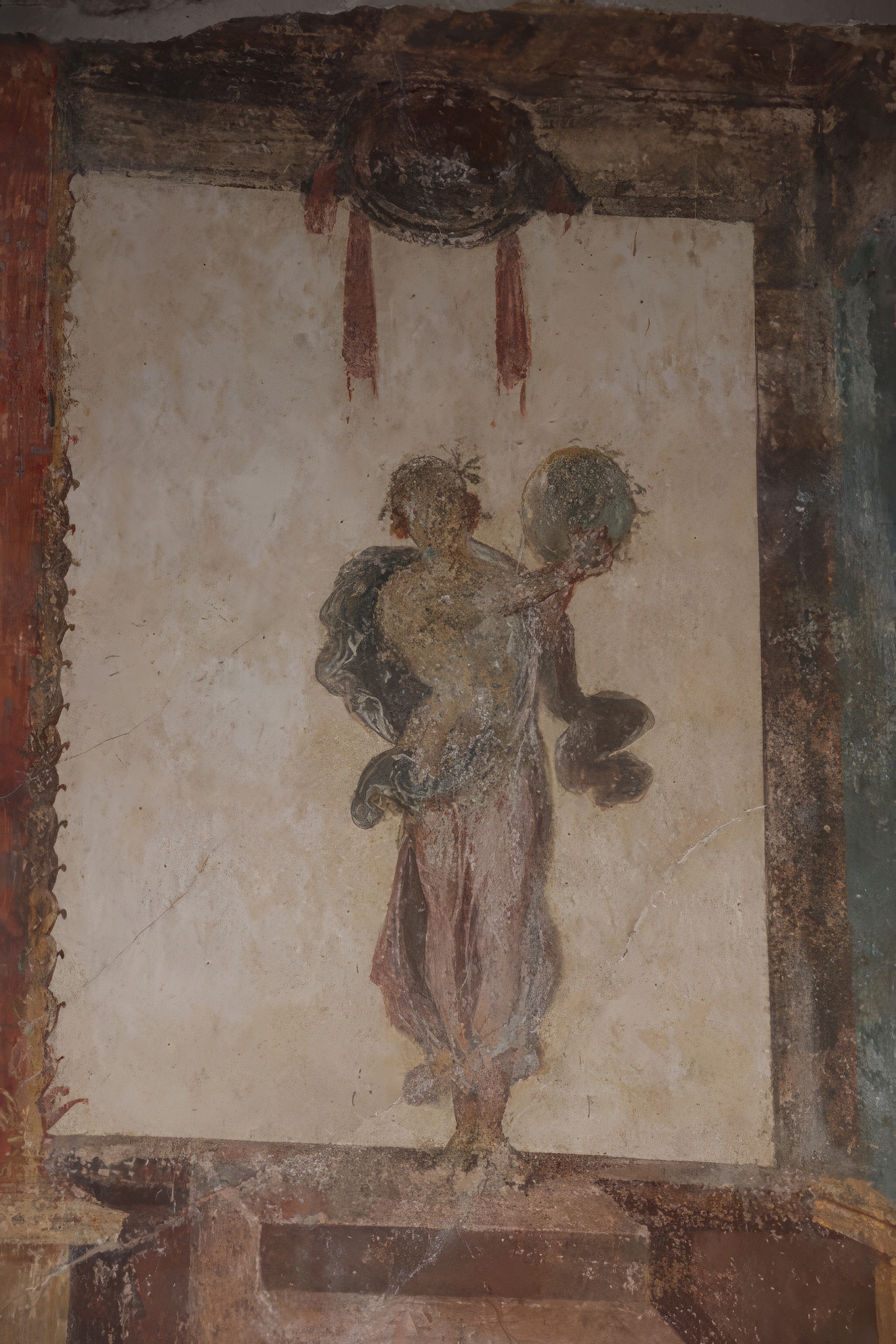
Charis is one of those Greek words that does several jobs: the beauty of a made thing, the delight it produces, the favour someone does you, and the thanks you owe for it. The Charites are that whole circuit personified, and Hesiod names three — Aglaia, Euphrosyne and Thaleia — and says that desire drips from their eyes and their glance loosens the limbs. They attend Aphrodite, bathe her and dress her, and they weave; in the Iliad, Hera bribes Hypnos with one of them, Pasithea, whom he has wanted for a long time, which is a startling glimpse of a divine person being traded for a favour in a poem about honour. Their cult at Orchomenos in Boiotia was old and important, and Pausanias reports that the objects worshipped there were three stones that had fallen from the sky. They are usually shown as three women linked, one facing away, and the composition became one of the most copied images in Western art. Seneca reads the arrangement as giving, receiving and returning a benefit.
Ancient sources
- Hesiod, Theogony 907-911
- Anacreon, Fragments
- Homer, Iliad 14.267-276
- Pausanias, Description of Greece 9.38.1
Where a line reference is not given, the work is cited without one rather than guessed at.
Image credit
- Title
- Mars and Venus Served by Cupid and the Graces
- Artist
- Léon Davent / Luca Penni
- Date
- 1545–50
- Licence
- CC0
