Night
Hekate
ἙκάτηRoman: Trivia
Honoured by Zeus above every other god, and worshipped at the doorstep.
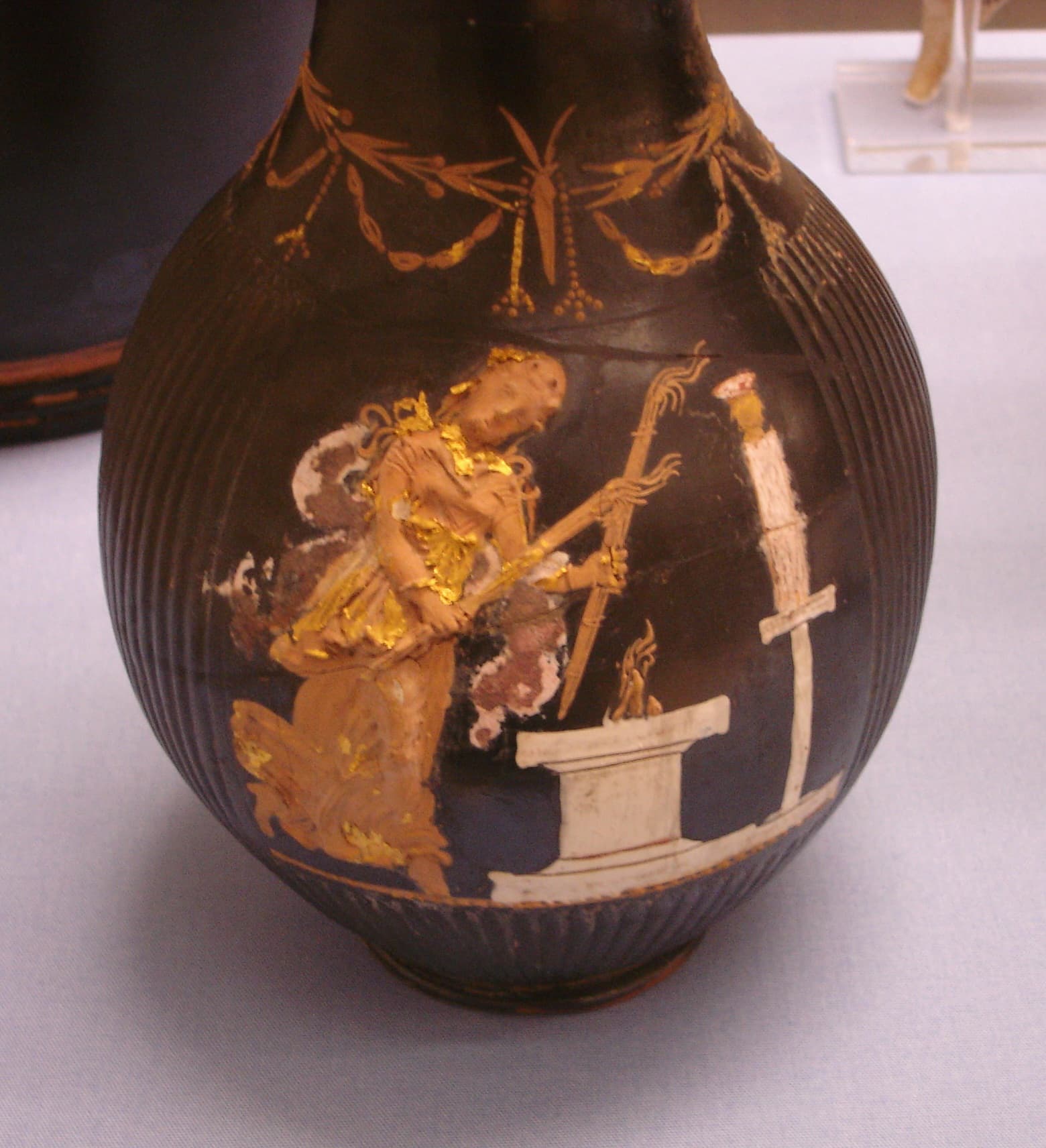
Attic vase — British Museum G17
- 4
- epithets
- 3
- cult sites
- 0
- offspring
- 0
- unions
- 1
- recorded birth
Vitals
- Kind
- Chthonic
- Generation
- 3
- Domains
- crossroads, the moon at its darkest, witchcraft, the boundary of the house
- Accent
- Night — darkness, the moon, sleep, the crossroads
- Sacred symbols
- twin torches, the key, the dog, the triple form
- Principal cult sites
- Lagina in Caria, Aigina, Athenian doorways and crossroads
What they were called
Τριοδῖτις
of the three ways
Κλειδοῦχος
key-holder
Προπύλαια
before the gate
Φωσφόρος
light-bringer
Lineage
See in the treeDescent
Her father is the Titan Perses, son of Krios, who is not in the v1 roster.
Offspring in this roster
None recorded among the figures modelled here.
Notable myths
The One Who Heard
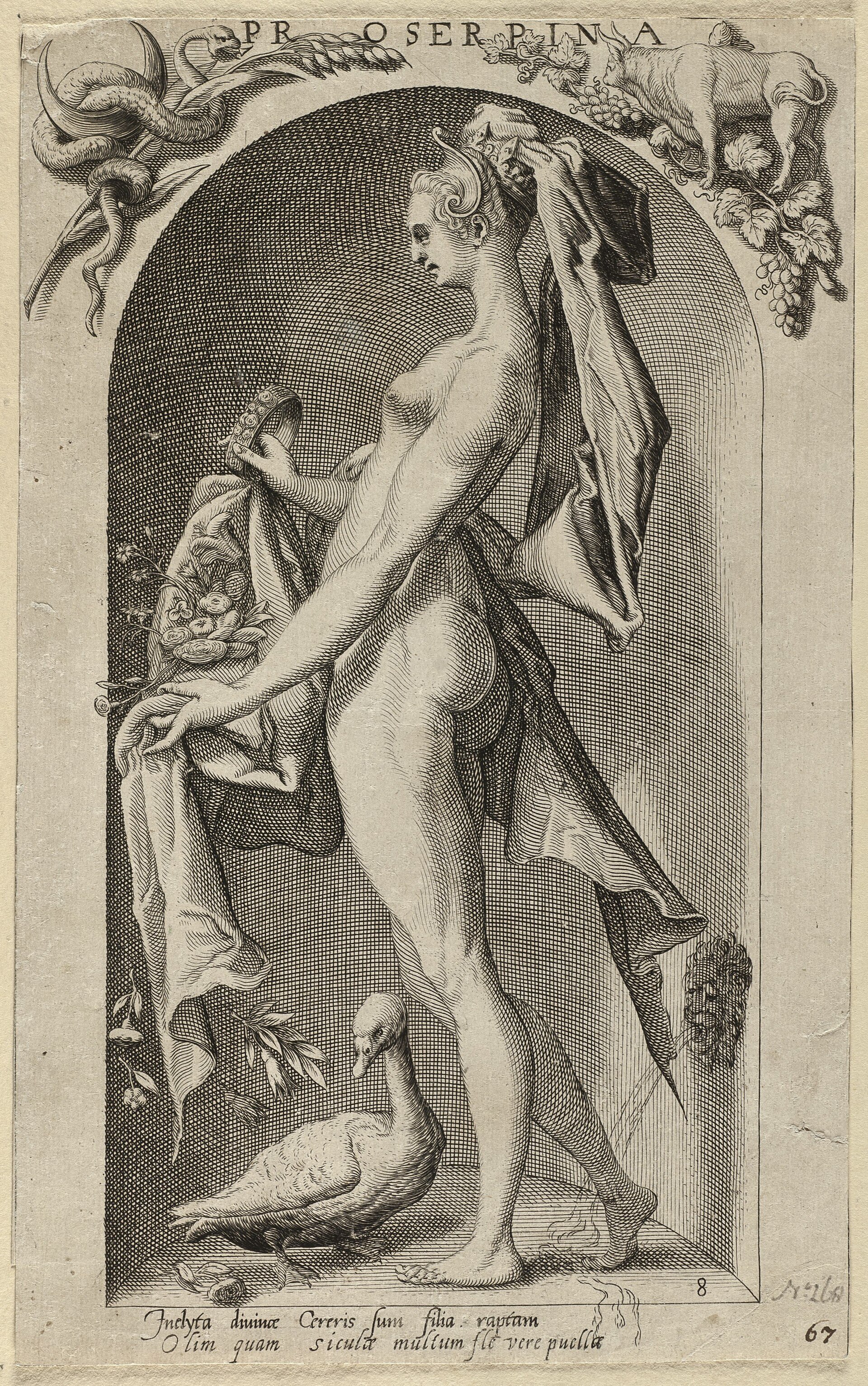
When Persephone screamed, only two heard: Helios overhead, and Hekate in her cave, who caught the sound but not the sight. On the tenth day she came to Demeter with a torch in each hand and said what little she knew. When the girl came back, Hekate embraced her, and from then on she went before her and behind her.
Homeric Hymns, Hymn to Demeter 22-25, 51-61, 438-440
The Portion Zeus Did Not Take
Hesiod says that when Zeus took power he did not strip Hekate of anything she had held under the Titans. She kept her share of the earth, the barren sea and the starry sky, and he gave her more. The passage is unusual because it describes a transfer of power in which somebody simply keeps what they had.
Hesiod, Theogony 411-452
The account
Hesiod stops the Theogony for thirty-five lines to praise Hekate, and nobody is sure why. She keeps her share of earth, sea and sky from the older order; Zeus took nothing from her and honoured her above everyone; she gives victory in battle and in athletics, helps kings judge, brings in fish and raises herds. It reads like a hymn from a local tradition dropped into the poem intact. Everywhere else she is narrower and stranger. In the Hymn to Demeter she is the one who heard the girl cry out, joins the search with torches, and afterwards goes before and behind Persephone permanently — the escort at the boundary between the worlds. By the classical period she stands at crossroads and in doorways in triple form facing three ways, receives meals left out at the new moon, and is the goddess sorceresses call on: Medea's patron, and the power invoked in most surviving curse tablets. Guardian and menace are not separable in her. She is what you want on your side of the threshold.
Ancient sources
- Hesiod, Theogony 409-411
- Homeric Hymns, Hymn to Demeter 22-25, 51-61, 438-440
- Hesiod, Theogony 411-452
Where a line reference is not given, the work is cited without one rather than guessed at.
Image credit
- Title
- Hekate BM G17
- Artist
- Unknown artist Unknown artist
- Date
- Unknown
- Licence
- Public domain
