Sea
Okeanos
ὨκεανόςRoman: Oceanus
The river running round the edge of the world, and the father of three thousand more.
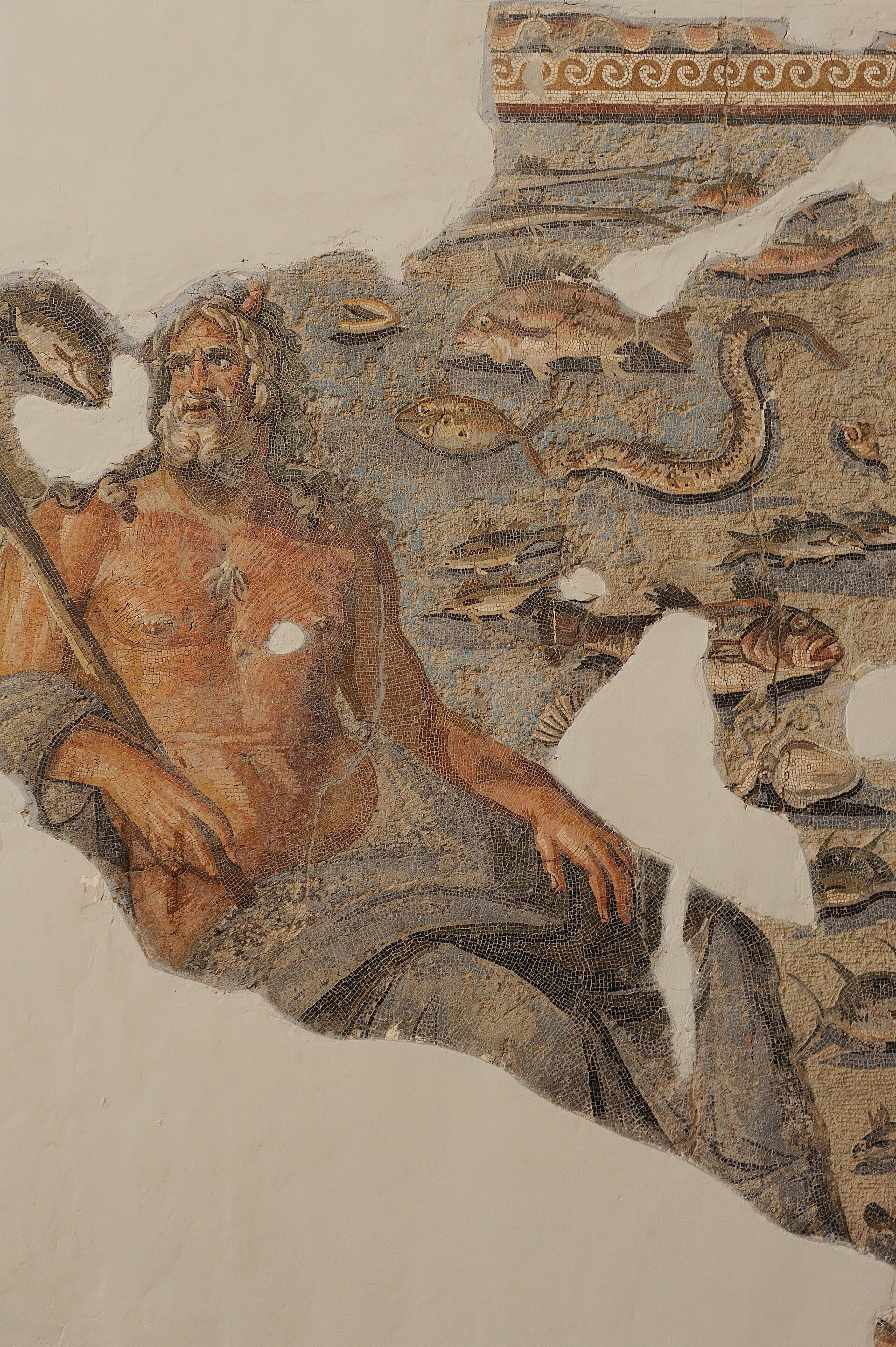
Roman floor mosaic — Antakya Archaeological Museum
- 2
- epithets
- 0
- cult sites
- 3
- offspring
- 1
- union
- 1
- recorded birth
Vitals
- Kind
- Titan
- Generation
- 1
- Domains
- the world-encircling river, fresh water, the source of all rivers
- Accent
- Sea — salt and fresh water, the swell, the river
- Sacred symbols
- the river that circles the world, the crab-claw horns, the serpent's tail
- Principal cult sites
- No cult attested
What they were called
βαθυρρείτης
deep-flowing
ἀψόρροος
back-flowing on itself
Lineage
See in the tree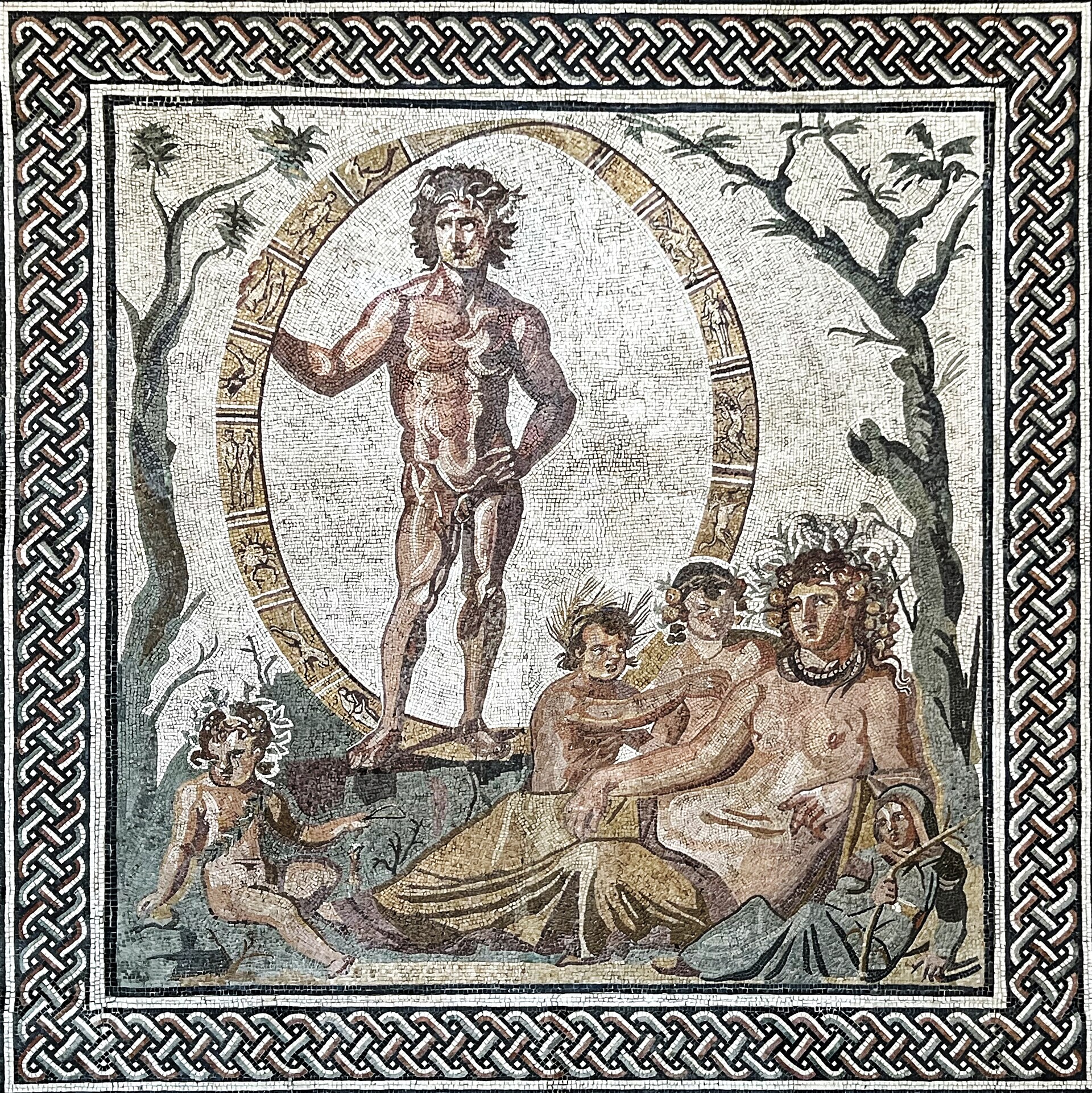
Notable myths
The Titan Who Stayed Out
When the Titans went to war with the Olympians, Okeanos did not go with them. Hesiod says nothing about why. Aeschylus imagines him instead as a well-meaning elder who flies in to advise the chained Prometheus to moderate his tone, is refused, and leaves — a Titan whose survival is inseparable from his unwillingness to commit.
Hesiod, Theogony 337-370
The account
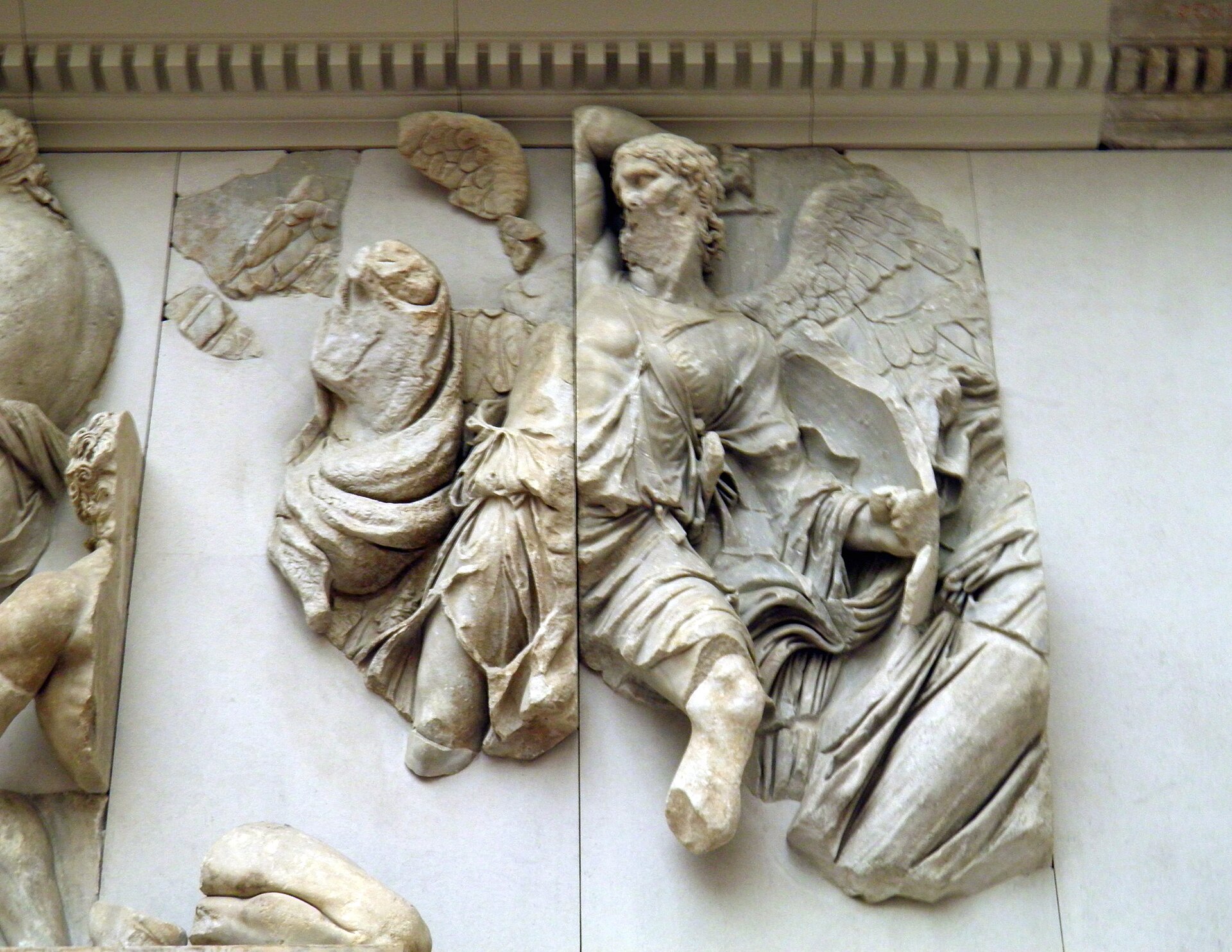
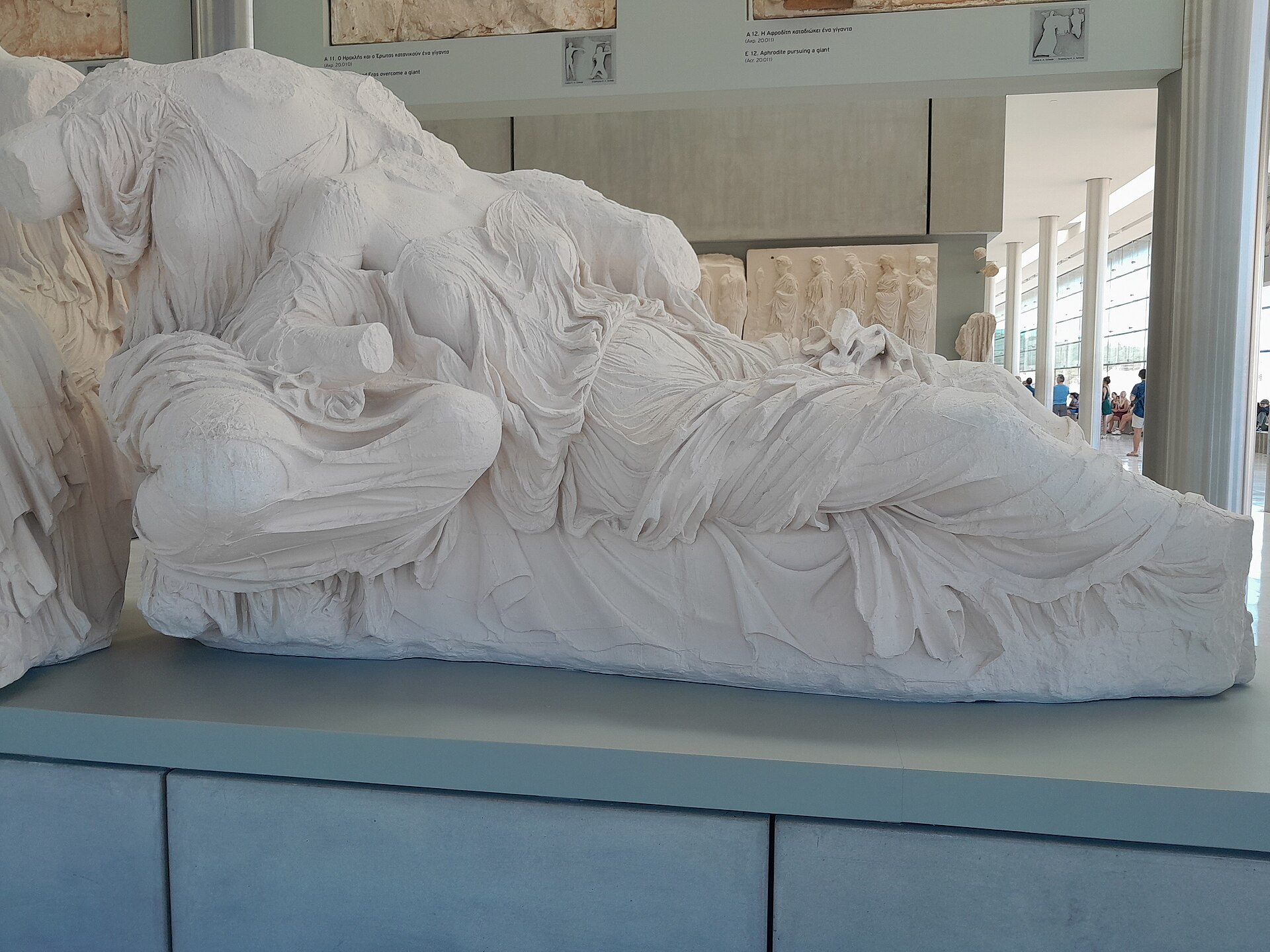
Okeanos is not the sea. He is the fresh-water river that runs in a circle around the rim of the world, and every river, spring and well is his child by Tethys — Hesiod counts three thousand daughters and as many sons, and admits that no one can name them all. Among the daughters are Styx, Metis, Dione, Klymene and Doris, which puts him behind a great deal of the later genealogy. Alone of the Titans he takes no part in the war against Zeus. Homer goes further and makes him the origin of everything: in one passage of the Iliad, Okeanos and Tethys are called the source from which the gods came. Later cosmology reduced him from a person to a boundary, and by the classical period 'ocean' is a place on a map. In art he keeps a strange, archaic body — a horned bearded head, sometimes a serpent's coil below the waist — belonging to the generation before the human-shaped gods.
Ancient sources
- Hesiod, Theogony 132-138
- Hesiod, Theogony 337-370
Where a line reference is not given, the work is cited without one rather than guessed at.
Image credit
- Title
- Antakya Archaeological Museum Thetis and Oceanus mosaic Oceanus in 2008 01
- Artist
- Dosseman
- Date
- Unknown
- Licence
- CC BY-SA 4.0
