Sun
Hyperion
ὙπερίωνRoman: Hyperion
Father of the sun, the moon and the dawn, and almost nothing else.
- 1
- epithet
- 0
- cult sites
- 3
- offspring
- 1
- union
- 1
- recorded birth
Vitals
- Kind
- Titan
- Generation
- 1
- Domains
- light, the one who goes above
- Accent
- Sun — daylight, the dawn, far-shooting brightness
- Sacred symbols
- the light before sunrise
- Principal cult sites
- No cult attested
What they were called
Ὑπερίων
he who travels above
Lineage
See in the tree
Offspring in this roster
Notable myths
The Three Lights
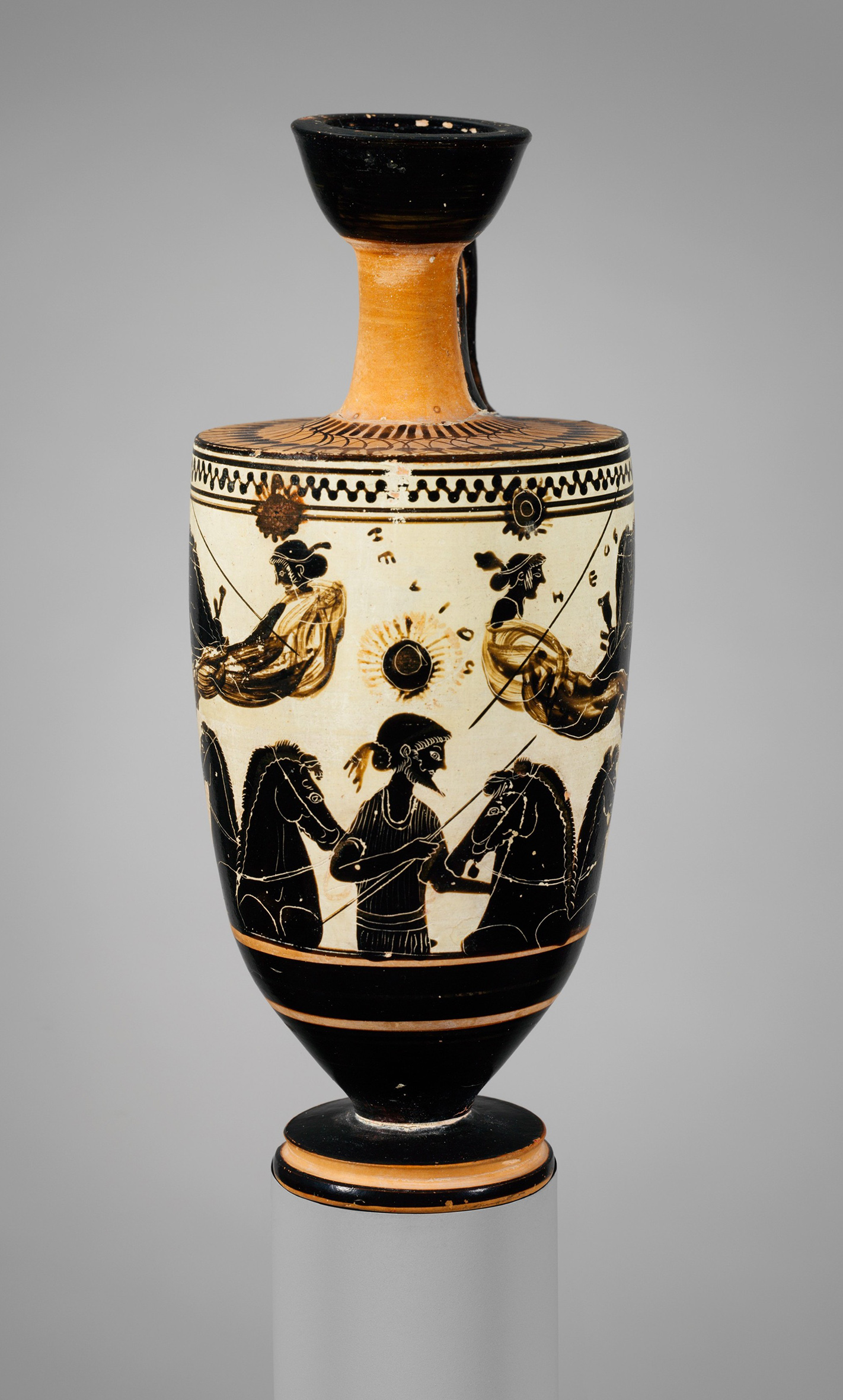
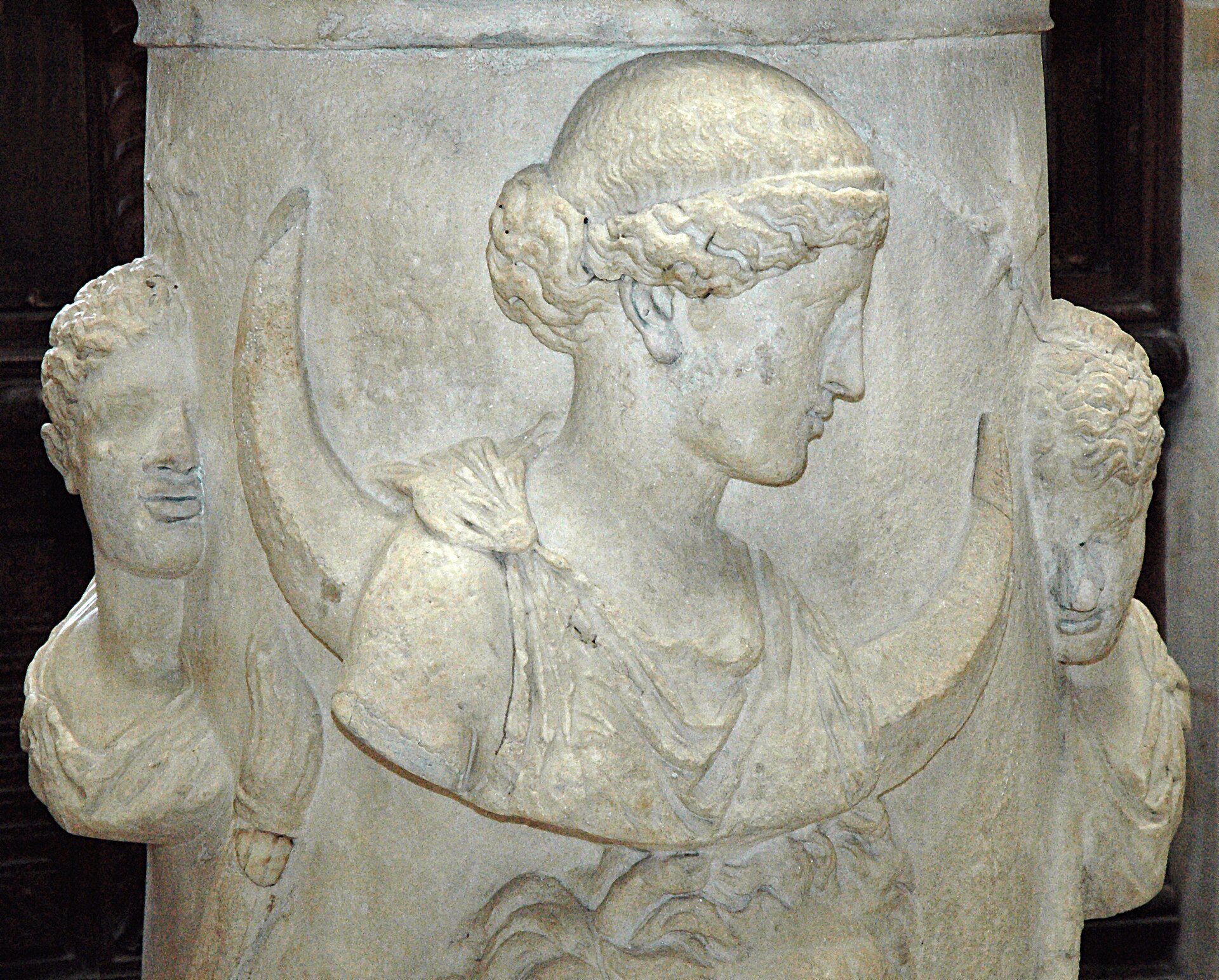
Theia bore great Helios, bright Selene and Eos who shines on everyone, having yielded in love to Hyperion. Hesiod gives the union two lines and moves on. Those two lines account for daylight, moonlight and the dawn, which is more of the observable world than most of the poem's longer episodes cover.
Hesiod, Theogony 371-374
The account
Hyperion is a Titan of light who is almost entirely defined by his children. With his sister Theia he fathers Helios, Selene and Eos — sun, moon and dawn — which makes his union the single most consequential one in the Titan generation for anybody who has to tell the time. He himself does nothing in the surviving myths. He has no scene, no quarrel and no cult that we can identify with confidence. The name means something like 'the one who goes above', and Homer uses it so often as an epithet of Helios that in several passages it is impossible to tell whether father and son are being distinguished at all; the Odyssey speaks of Hyperion Helios as one figure. That collapse is characteristic of the Titan generation. They are the powers whose functions were later taken over, cleanly and completely, by their own descendants.
Ancient sources
- Hesiod, Theogony 132-138
- Hesiod, Theogony 371-374
Where a line reference is not given, the work is cited without one rather than guessed at.
Image credit
No classical portrait of this figure survives, so the mark on this page is generated from their Greek initial and their domain accent rather than taken from an artwork.